


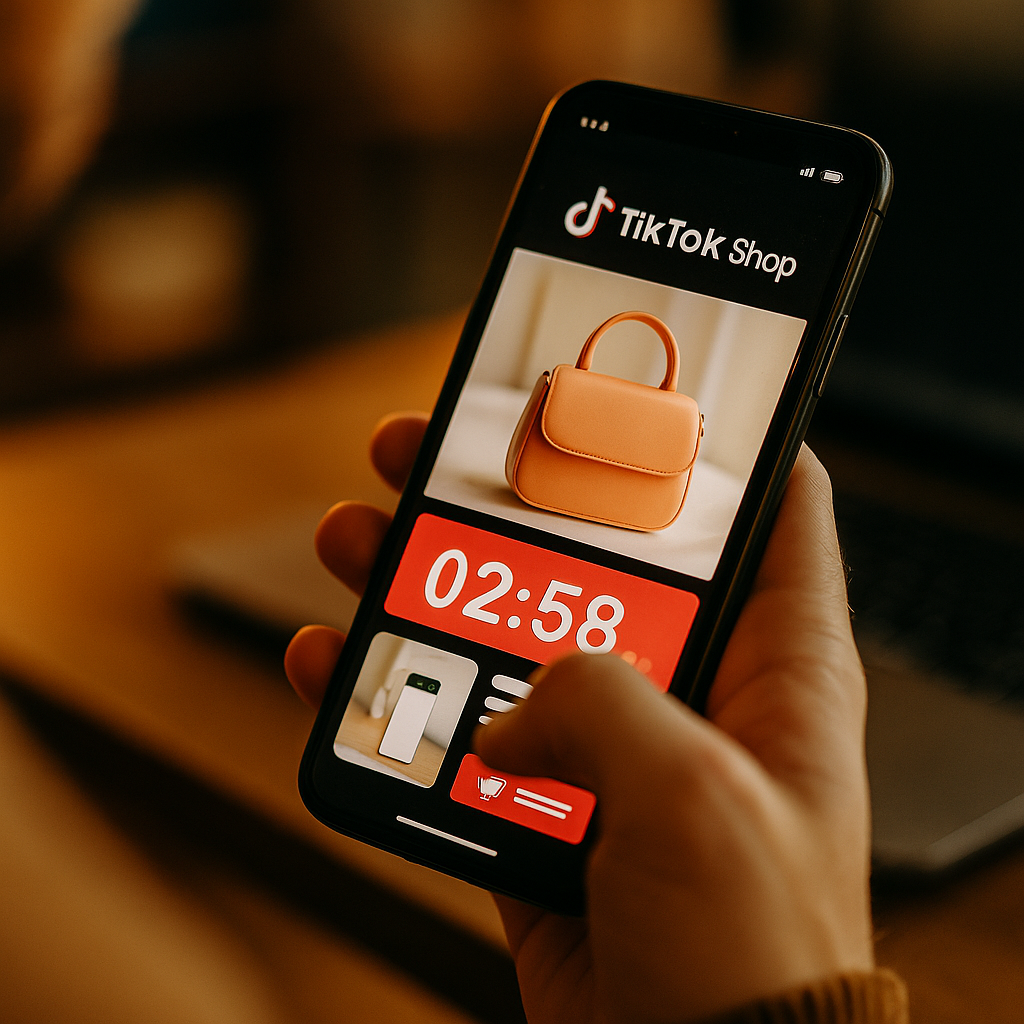
Forty-two states now have deceptive-scarcity or false-urgency statutes on the books, and TikTok Shop livestream countdown timers are exhibit A in a growing wave of enforcement letters. A single line of disclosure language, or the absence of one, is the difference between a defensible promotion and a five-figure state AG inquiry. If your Q4 livestream script still says “sale ends soon” with a timer resetting every night, you have a problem.
This isn’t a TikTok-specific rule. It’s a patchwork of state consumer protection laws, several written decades before livestream shopping existed, now being applied to countdown clocks, “only 3 left” overlays, and auto-restarting flash sales. Brands treating disclosure as an afterthought are going to eat the cost of that patchwork in Q4, when livestream volume and legal scrutiny both spike.
Why Countdown Timers Draw Regulatory Attention
Countdown timers work because they trigger loss aversion. That’s not controversial — it’s basic consumer psychology, and it’s why TikTok Shop leans so heavily on the feature during livestream events. The problem starts when the timer doesn’t reflect reality. If a “24-hour flash sale” clock hits zero and simply restarts with the same discount, that’s not urgency. In the eyes of regulators in states like California, New York, and Texas, that’s a false representation of scarcity designed to induce a purchase decision the consumer wouldn’t otherwise make.
State deceptive-scarcity provisions generally sit inside broader unfair-and-deceptive-acts-and-practices (UDAP) statutes. They don’t require proof of intent in most cases — just proof that a reasonable consumer was misled. That’s a much lower bar than FTC enforcement typically requires, and it’s why plaintiffs’ attorneys have started filing state-level class actions instead of waiting on federal action.
A countdown timer that resets nightly isn’t a marketing tactic anymore in twelve-plus states — it’s documented evidence of a deceptive practice, and the burden of proof favors the consumer.
Our earlier breakdown of countdown timers vs state scarcity laws mapped which states have the strictest standards. If you haven’t reviewed that against your Q4 calendar, do it before you finalize a single livestream script.
What “Disclosure” Actually Means for a Countdown Timer
Disclosure isn’t a disclaimer buried in bio text. For countdown timers specifically, regulators and plaintiffs’ firms are looking at three things: accuracy, proximity, and repeatability.
- Accuracy — Does the timer reflect a real, fixed end date tied to an actual inventory or pricing event?
- Proximity — Is the qualifying language (e.g., “while supplies last,” “price returns after event”) visible on-screen near the timer, not just in a pinned comment or show notes?
- Repeatability — Does the same “limited time” offer run again next week with an identical structure? If so, courts have found that pattern alone undermines the scarcity claim.
Here’s the uncomfortable part: most brands write disclosure language for the FTC’s endorsement guides and assume it covers scarcity claims too. It doesn’t. Endorsement disclosure tells consumers a relationship exists between a creator and a brand. Scarcity disclosure tells consumers the truth about supply, timing, and pricing. They’re separate compliance obligations, and TikTok Shop livestreams stack both on top of each other in real time. If your legal team is only reviewing for one, you’re exposed on the other. Our livestream price claim audit framework separates the two review tracks for exactly this reason.
Drafting Language That Survives State Scrutiny
Generic disclosure templates won’t cut it once you’re operating across 40+ state jurisdictions simultaneously, which is exactly what a national TikTok Shop livestream does. Here’s what actually holds up:
- State the real trigger event. Instead of “Sale ends soon!” use language tied to a verifiable fact: “Price valid through 11:59 PM ET, [date], or while the 500-unit allocation lasts, whichever comes first.” Specificity is your friend here — vague urgency language is precisely what triggers UDAP claims.
- Disclose restock policy up front. If the item will be restocked at the same price next week, say so. Concealing restock plans while running a countdown is one of the most commonly cited violations in state AG complaints against livestream retailers.
- Keep qualifying text on-screen, not just spoken. Verbal disclosure during a fast-moving livestream doesn’t satisfy most state “clear and conspicuous” standards. TikTok’s overlay tools let you pin qualifying text directly beneath the timer graphic — use them.
- Match your CRM and ad claims to the livestream script. If your email flow says “back in stock Monday” while your livestream implies permanent scarcity, that inconsistency alone is discoverable evidence in litigation.
- Version and timestamp every script. Store the exact disclosure language used in each broadcast, tied to the actual inventory count at broadcast time. If a state AG or plaintiff’s firm requests records, you want a clean audit trail, not a scramble through Slack messages.
None of this is complicated legal drafting. It’s closer to inventory-management documentation dressed up as marketing copy. But it requires marketing, legal, and ops to actually talk to each other before the “LIVE” button gets pressed, which, based on what we hear from compliance teams heading into Q4, is still not happening at most mid-size brands.
The Multi-State Compliance Reality
Here’s where it gets genuinely difficult: language that satisfies California’s Unfair Competition Law might still fall short of New York’s General Business Law Section 349, and Texas’s Deceptive Trade Practices Act has its own case history around “limited time” claims tied to auto-renewing promotions. A single livestream reaches all three audiences at once. You can’t geofence a TikTok Shop broadcast the way you can a paid ad campaign.
The practical answer isn’t 50 separate scripts. It’s writing to the strictest applicable standard and applying it universally. Our 50-state compliance matrix is built for exactly this — identifying which states have codified scarcity provisions with real enforcement history (California, New York, Illinois, and Texas are the ones we’d flag first for Q4 review) versus states where guidance is thinner but still present in general UDAP language.
According to eMarketer, livestream shopping in the U.S. is projected to keep growing at double-digit rates through the holiday quarter, which means more brands running more countdown-driven promotions than any prior Q4. Volume plus regulatory attention is not a combination you want to be unprepared for.
Where This Intersects With Influencer Contracts
If a creator is running the livestream on your behalf, your disclosure obligations don’t disappear — they multiply. The creator’s script, the on-screen timer graphic, and any verbal urgency claims all need to trace back to brand-approved language. This is why disclosure timing needs to be written into the contract itself, not handled as a verbal instruction before broadcast.
Our influencer contract checklist covers the approval-chain language brands need for this exact scenario: who signs off on scarcity claims, how far in advance, and what happens if a creator ad-libs an urgency claim that wasn’t pre-approved. That last scenario happens more than brands admit. A creator riffing “this is literally the last batch, guys” on a live broadcast, unscripted, can create liability for the brand regardless of whether marketing approved that specific line.
An unscripted urgency claim from a creator mid-livestream is still your brand’s liability — TikTok Shop’s merchant-of-record structure doesn’t shield you from what gets said on camera.
Pair contract-level controls with a pre-broadcast script audit. Our pre-Q4 script audit framework and the broader livestream price claim audit framework both give legal and marketing teams a shared checklist to run before every broadcast goes live, not after a complaint arrives.
What This Costs You If You Skip It
State AG inquiries into deceptive scarcity practices typically start as a letter requesting broadcast records and script archives, not a lawsuit. But brands that can’t produce clean documentation — accurate timers, disclosed restock policies, consistent messaging across channels — escalate fast into consent decrees or settlements. The FTC’s own guidance on unfair and deceptive practices reinforces that state actions often run parallel to, not instead of, federal scrutiny once a pattern is flagged publicly.
The fix costs a few hours of legal review per campaign cycle. The failure to fix it costs months of discovery, settlement negotiation, and reputational cleanup during your highest-revenue quarter. That math isn’t close.
Get your disclosure language, restock policy, and creator scripts reviewed together, before your first Q4 livestream airs, not after a state AG’s office sends the first letter.
FAQs
What counts as a “deceptive scarcity” violation in a TikTok Shop livestream?
Generally, it’s any claim about limited time, limited quantity, or price urgency that doesn’t match the actual facts — such as a countdown timer that resets nightly, or “only X left” messaging when inventory isn’t actually constrained. Most state UDAP statutes evaluate this from the “reasonable consumer” standard, not intent.
Do I need different disclosure language for each state?
Not necessarily. Most brands write to the strictest applicable state standard (commonly California, New York, or Illinois) and apply it nationally, since a single livestream reaches every state at once and geofencing isn’t practical.
Does verbal disclosure during a livestream satisfy state requirements?
Usually not on its own. Most state “clear and conspicuous” standards expect qualifying language to appear visibly on-screen near the claim, not just spoken quickly during a fast-moving broadcast.
Who is liable if a creator makes an unscripted urgency claim on a live broadcast?
The brand typically retains liability regardless of whether the claim was pre-approved. This is why disclosure and approval language needs to be built into the influencer contract, not left as a verbal instruction.
How does scarcity disclosure differ from FTC endorsement disclosure?
Endorsement disclosure informs consumers of a paid relationship between a brand and creator. Scarcity disclosure addresses the accuracy of timing, quantity, and pricing claims. They’re separate legal obligations and require separate review during script approval.
What documentation should brands keep for each livestream?
A timestamped copy of the script, the actual inventory count or promotion end date at broadcast time, and the exact on-screen disclosure language used. This creates an audit trail if a state AG or plaintiff’s firm requests records later.
FAQs
What counts as a “deceptive scarcity” violation in a TikTok Shop livestream?
Generally, it’s any claim about limited time, limited quantity, or price urgency that doesn’t match the actual facts — such as a countdown timer that resets nightly, or “only X left” messaging when inventory isn’t actually constrained. Most state UDAP statutes evaluate this from the “reasonable consumer” standard, not intent.
Do I need different disclosure language for each state?
Not necessarily. Most brands write to the strictest applicable state standard (commonly California, New York, or Illinois) and apply it nationally, since a single livestream reaches every state at once and geofencing isn’t practical.
Does verbal disclosure during a livestream satisfy state requirements?
Usually not on its own. Most state “clear and conspicuous” standards expect qualifying language to appear visibly on-screen near the claim, not just spoken quickly during a fast-moving broadcast.
Who is liable if a creator makes an unscripted urgency claim on a live broadcast?
The brand typically retains liability regardless of whether the claim was pre-approved. This is why disclosure and approval language needs to be built into the influencer contract, not left as a verbal instruction.
How does scarcity disclosure differ from FTC endorsement disclosure?
Endorsement disclosure informs consumers of a paid relationship between a brand and creator. Scarcity disclosure addresses the accuracy of timing, quantity, and pricing claims. They’re separate legal obligations and require separate review during script approval.
What documentation should brands keep for each livestream?
A timestamped copy of the script, the actual inventory count or promotion end date at broadcast time, and the exact on-screen disclosure language used. This creates an audit trail if a state AG or plaintiff’s firm requests records later.
Top Influencer Marketing Agencies
The leading agencies shaping influencer marketing in 2026
Agencies ranked by campaign performance, client diversity, platform expertise, proven ROI, industry recognition, and client satisfaction. Assessed through verified case studies, reviews, and industry consultations.
Moburst

-
2

The Shelf
Boutique Beauty & Lifestyle Influencer AgencyA data-driven boutique agency specializing exclusively in beauty, wellness, and lifestyle influencer campaigns on Instagram and TikTok. Best for brands already focused on the beauty/personal care space that need curated, aesthetic-driven content.Clients: Pepsi, The Honest Company, Hims, Elf Cosmetics, Pure LeafVisit The Shelf → -
3

Audiencly
Niche Gaming & Esports Influencer AgencyA specialized agency focused exclusively on gaming and esports creators on YouTube, Twitch, and TikTok. Ideal if your campaign is 100% gaming-focused — from game launches to hardware and esports events.Clients: Epic Games, NordVPN, Ubisoft, Wargaming, Tencent GamesVisit Audiencly → -
4

Viral Nation
Global Influencer Marketing & Talent AgencyA dual talent management and marketing agency with proprietary brand safety tools and a global creator network spanning nano-influencers to celebrities across all major platforms.Clients: Meta, Activision Blizzard, Energizer, Aston Martin, WalmartVisit Viral Nation → -
5

The Influencer Marketing Factory
TikTok, Instagram & YouTube CampaignsA full-service agency with strong TikTok expertise, offering end-to-end campaign management from influencer discovery through performance reporting with a focus on platform-native content.Clients: Google, Snapchat, Universal Music, Bumble, YelpVisit TIMF → -
6

NeoReach
Enterprise Analytics & Influencer CampaignsAn enterprise-focused agency combining managed campaigns with a powerful self-service data platform for influencer search, audience analytics, and attribution modeling.Clients: Amazon, Airbnb, Netflix, Honda, The New York TimesVisit NeoReach → -
7

Ubiquitous
Creator-First Marketing PlatformA tech-driven platform combining self-service tools with managed campaign options, emphasizing speed and scalability for brands managing multiple influencer relationships.Clients: Lyft, Disney, Target, American Eagle, NetflixVisit Ubiquitous → -
8

Obviously
Scalable Enterprise Influencer CampaignsA tech-enabled agency built for high-volume campaigns, coordinating hundreds of creators simultaneously with end-to-end logistics, content rights management, and product seeding.Clients: Google, Ulta Beauty, Converse, AmazonVisit Obviously →