


Only 22% of consumers now start their purchase journey with a Google search, according to recent eMarketer tracking of discovery behavior. The rest? They’re asking ChatGPT, scrolling TikTok, or trusting a creator they’ve followed for years. The rebuilt marketing funnel isn’t a metaphor anymore. It’s an operational reality, and most brand media plans haven’t caught up.
For decades, marketers drew the funnel the same way: awareness at the top, consideration in the middle, purchase at the bottom, a tidy triangle you could staff, budget, and report against. That model is broken. Not bent, not stretched — broken. Discovery now happens through AI intermediaries that summarize, rank, and recommend before a consumer ever visits a brand’s website. And the trust that used to be built through repeated ad exposure is now built through creators who’ve spent years earning an audience’s attention one video at a time.
Why the Linear Funnel Stopped Working
The classic funnel assumed a controllable sequence. Brand runs awareness campaign. Consumer sees ad multiple times. Consumer researches. Consumer buys. Marketers could map media spend to each stage and expect a predictable conversion rate to follow.
That sequence has collapsed into something closer to a loop, or a mesh, depending on which consultant’s deck you’re reading. A shopper might discover a product through a creator’s unboxing video, ask an AI assistant to compare it against three competitors, see a retargeting ad that reinforces the creator’s claim, then circle back to the same creator’s follow-up video before finally purchasing. Awareness, consideration, and validation now happen almost simultaneously, often within the same ten-minute scroll session.
Our own reporting on AI-mediated product discovery found that consumers increasingly treat AI tools as a research shortcut, not a final destination. That changes what “top of funnel” even means. If an AI assistant is summarizing your product reviews before a consumer lands on your site, your top-of-funnel content strategy needs to serve machines and humans at once.
The funnel didn’t disappear. It folded in on itself, compressing awareness, consideration, and validation into a single, AI-mediated scroll session.
AI-Mediated Discovery: The New Gatekeeper
Search engines used to be neutral pipes. Type a query, get ten blue links, click through. Generative AI tools don’t work that way. They synthesize an answer, cite a handful of sources, and often eliminate the click entirely.
This is what our earlier piece on zero-click search flagged as a structural shift, not a temporary anomaly. If your brand isn’t cited in the AI’s synthesized answer, you’re invisible to a growing share of buyers, regardless of your organic ranking.
What does this mean operationally? Marketing teams need to think about generative engine optimization as a distinct discipline, not a subtask bolted onto existing SEO workflows. GEO requires structured content, clear entity relationships, and consistent third-party validation (reviews, creator mentions, forum discussions) that AI models can cite with confidence.
It also means brand reputation management now extends into territory most marketing teams have never audited. Our coverage of AI-curated answers as a reputation battleground makes the point plainly: if you’re not monitoring what AI tools say about your brand, you’re flying blind on a channel that’s actively shaping purchase decisions.
The Trust Deficit AI Alone Can’t Solve
Here’s the tension. Consumers use AI for efficiency, but they still don’t fully trust it. Data covered in our report on marketer distrust of AI-powered labels found that even the people building these systems have doubts about their accuracy and bias. Consumers are catching on too.
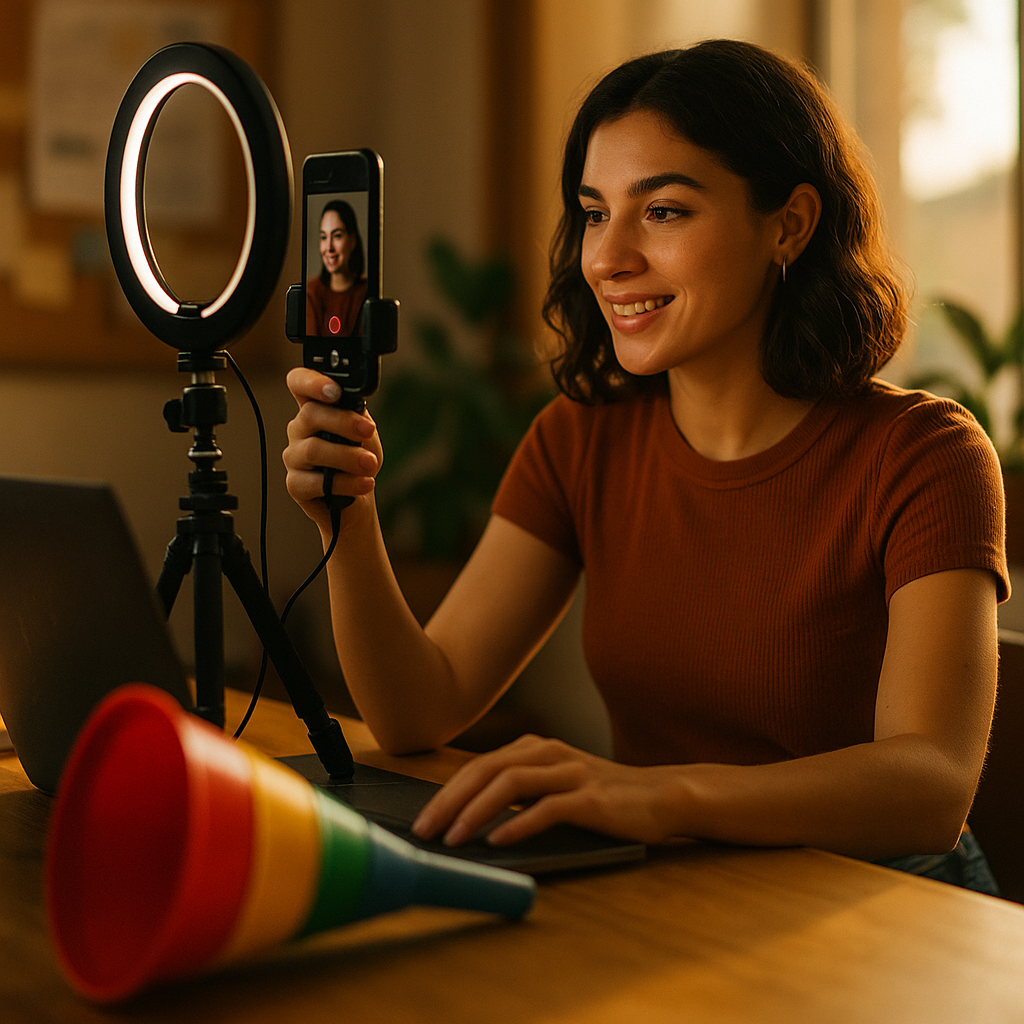
That distrust is exactly why creator-led storytelling has become the connective tissue between AI-mediated discovery and final purchase. An AI summary might tell a shopper what a product does. A creator tells them whether it’s worth their money, and why someone who looks and lives like them would actually use it.
Creator-Led Storytelling Fills the Trust Gap
Creator spend crossed $12 billion and counting, and it’s no longer treated as an experimental line item. As we detailed in creator spend hitting core media budget status, brands are folding influencer investment into working media plans the same way they’d budget for paid search or programmatic display. That’s a meaningful shift in how CFOs and CMOs view the channel.
Why creators specifically? Because storytelling format outperforms algorithmic content on the metric that actually predicts purchase intent: attention quality, not just reach. Research summarized in creator storytelling’s watch-time advantage found a 22% longer watch time for narrative-driven creator content compared to algorithmically optimized short-form clips. That’s not a vanity metric. Longer watch time correlates with deeper product comprehension, which correlates with lower return rates and higher lifetime value.
Brands are also rethinking what “attention” should even mean as a KPI. The piece on active attention as the real KPI argues convincingly that passive impressions are a weak proxy for influence. A viewer who pauses, rewinds, comments, or shares is doing something fundamentally different than one who lets a video autoplay in the background. Media planners who still buy against raw impressions are, frankly, buying blind.
Format Matters More Than Ever
Not all creator content earns equal trust. Sensory categories like beauty and food benefit disproportionately from unscripted, texture-and-taste-forward UGC, a pattern documented in sensory UGC’s advantage over studio content. Meanwhile, platform choice shapes funnel stage performance in ways brands are only now mapping systematically.
Our breakdown of TikTok and YouTube budget allocation by funnel stage shows TikTok still dominating early discovery, while YouTube’s longer shelf life makes it a stronger mid-funnel workhorse, a point reinforced in our analysis of YouTube’s shelf-life advantage. A video posted eighteen months ago can still be surfacing in search and recommendation feeds today, quietly doing consideration-stage work long after the campaign budget was spent.
What Replaces the Funnel Diagram?
If not a funnel, then what? Most practitioners are converging on a looping model: discovery, validation, purchase, and advocacy that feeds back into discovery for the next shopper. Creators sit at every loop point. AI sits at the validation layer, summarizing and ranking the creator content, reviews, and brand claims that consumers surface.
Brands that treat this as one continuous system, rather than separate awareness and conversion budgets, are seeing better efficiency. Comfrt’s approach, detailed in our case study on its 500-creator content engine, is a useful proof point: rather than commissioning polished campaigns from a traditional agency, the brand built an always-on content pipeline designed to feed both human discovery and AI-mediated summarization simultaneously.
This has real budget implications. As covered in influencer spend hitting 25% of media budgets, marketers are being forced to rebuild media mix models that were never designed to account for creator content doing double duty as both awareness driver and AI-citation source. The old model measured creator content purely on engagement. The new model has to measure it on citability, too: is this content structured and credible enough that an AI tool will reference it when answering a comparison query?
Creator content now does double duty: it drives human engagement and feeds the AI models that increasingly mediate purchase decisions before a human ever visits your site.
Operational Realities: Budget, Risk, and Measurement
None of this works without rethinking budget allocation. Integrated brand mentions inside a creator’s regular content and dedicated, brand-commissioned videos carry very different cost structures and different trust signals. Our cost analysis of integrated versus dedicated creator content found dedicated video fees now outpacing integrated placements in many rate cards, a trend also explored in dedicated fees overtaking integrated rates. Brands need to decide, category by category, which format actually earns durable trust versus which just buys a temporary spike in impressions.
Risk mitigation matters just as much. Approval workflows built for a linear campaign calendar don’t hold up when content needs to go live in near real-time to ride a trend or respond to a competitor’s move. Automated content review tools are helping close that gap; our report on AI content checks cutting approval time found measurable reductions in campaign turnaround when brands automated compliance and brand-safety review rather than routing every asset through manual legal sign-off.
Transparency is non-negotiable here, both for regulatory reasons and for consumer trust. The FTC’s endorsement guidelines already require clear disclosure for sponsored creator content, and that scrutiny is only intensifying as AI-generated summaries start repackaging creator claims without always preserving disclosure context. Brands that get ahead of this, disclosing AI use and creator relationships proactively, are winning trust rather than losing it, a pattern our team documented in why disclosing AI limits builds trust.
There’s also a skills gap to solve for internally. Teams that understand both AI governance and creator strategy are commanding real premiums in the job market, as we found in coverage of the 40% salary premium for AI governance skills. That’s not a coincidence. It reflects how scarce this hybrid skill set actually is, and how much brands are willing to pay to close the gap rather than risk a compliance misstep or a botched AI rollout.
So What Should Marketers Actually Do?
Start by auditing where your brand shows up in AI-generated answers, not just search rankings. Tools that track brand mentions across generative platforms are still maturing, but manual spot-checks against ChatGPT, Perplexity, and Google’s AI Overviews will tell you more than another SEO audit right now.
Second, rebuild your creator brief templates to account for citability. Ask creators to include specific product details, comparison points, and structured claims that AI models can extract cleanly, not just vibes and vague enthusiasm.
Third, stop budgeting creator spend and AI-search optimization as separate line items. They’re feeding the same discovery loop, and treating them as siloed functions guarantees duplicated effort and missed signal. For more on structuring that combined budget, see our breakdown of the AI-martech spend landscape, which maps where these budgets are actually flowing across the industry.
Frequently Asked Questions
What is the rebuilt marketing funnel?
It’s the shift away from a linear awareness-to-purchase model toward a looping journey where AI-mediated discovery, creator-led storytelling, and validation happen simultaneously rather than in sequence. Consumers often discover, research, and validate a purchase within a single browsing session, frequently before ever visiting a brand’s owned website.
How does AI-mediated discovery change SEO strategy?
Traditional SEO optimizes for search engine rankings and clicks. AI-mediated discovery requires generative engine optimization (GEO), which focuses on getting your brand cited within AI-synthesized answers, even when that results in zero clicks to your site. This requires structured content and consistent third-party validation that AI models can reference confidently.
Why is creator-led storytelling more effective than traditional advertising right now?
Creator content builds trust through perceived authenticity and lived experience, something algorithmic or purely promotional content struggles to replicate. Data shows creator storytelling drives meaningfully longer watch times than algorithm-optimized content, which correlates with stronger purchase intent and lower return rates.
Should brands measure creator content differently now?
Yes. Beyond engagement and reach, brands should evaluate whether creator content is structured clearly enough to be cited by AI tools during comparison searches. Content that serves both human viewers and AI summarization systems delivers more durable value than content optimized for a single platform’s algorithm alone.
What’s the biggest risk in this new funnel model?
Compliance and disclosure gaps. As AI tools repackage creator claims into summarized answers, disclosure context can get lost, creating regulatory risk under FTC endorsement guidelines. Brands need proactive disclosure practices and content review workflows that account for this, not just manual legal review built for a slower campaign cycle.
Next step: Pick one product line, audit how it currently surfaces across ChatGPT, Perplexity, and AI Overviews, then rebrief your next creator campaign to explicitly feed that gap. That single test will tell you more about your rebuilt funnel than any strategy deck.
Frequently Asked Questions
What is the rebuilt marketing funnel?
It’s the shift away from a linear awareness-to-purchase model toward a looping journey where AI-mediated discovery, creator-led storytelling, and validation happen simultaneously rather than in sequence. Consumers often discover, research, and validate a purchase within a single browsing session, frequently before ever visiting a brand’s owned website.
How does AI-mediated discovery change SEO strategy?
Traditional SEO optimizes for search engine rankings and clicks. AI-mediated discovery requires generative engine optimization (GEO), which focuses on getting your brand cited within AI-synthesized answers, even when that results in zero clicks to your site. This requires structured content and consistent third-party validation that AI models can reference confidently.
Why is creator-led storytelling more effective than traditional advertising right now?
Creator content builds trust through perceived authenticity and lived experience, something algorithmic or purely promotional content struggles to replicate. Data shows creator storytelling drives meaningfully longer watch times than algorithm-optimized content, which correlates with stronger purchase intent and lower return rates.
Should brands measure creator content differently now?
Yes. Beyond engagement and reach, brands should evaluate whether creator content is structured clearly enough to be cited by AI tools during comparison searches. Content that serves both human viewers and AI summarization systems delivers more durable value than content optimized for a single platform’s algorithm alone.
What’s the biggest risk in this new funnel model?
Compliance and disclosure gaps. As AI tools repackage creator claims into summarized answers, disclosure context can get lost, creating regulatory risk under FTC endorsement guidelines. Brands need proactive disclosure practices and content review workflows that account for this, not just manual legal review built for a slower campaign cycle.
Top Influencer Marketing Agencies
The leading agencies shaping influencer marketing in 2026
Agencies ranked by campaign performance, client diversity, platform expertise, proven ROI, industry recognition, and client satisfaction. Assessed through verified case studies, reviews, and industry consultations.
Moburst

-
2

The Shelf
Boutique Beauty & Lifestyle Influencer AgencyA data-driven boutique agency specializing exclusively in beauty, wellness, and lifestyle influencer campaigns on Instagram and TikTok. Best for brands already focused on the beauty/personal care space that need curated, aesthetic-driven content.Clients: Pepsi, The Honest Company, Hims, Elf Cosmetics, Pure LeafVisit The Shelf → -
3

Audiencly
Niche Gaming & Esports Influencer AgencyA specialized agency focused exclusively on gaming and esports creators on YouTube, Twitch, and TikTok. Ideal if your campaign is 100% gaming-focused — from game launches to hardware and esports events.Clients: Epic Games, NordVPN, Ubisoft, Wargaming, Tencent GamesVisit Audiencly → -
4

Viral Nation
Global Influencer Marketing & Talent AgencyA dual talent management and marketing agency with proprietary brand safety tools and a global creator network spanning nano-influencers to celebrities across all major platforms.Clients: Meta, Activision Blizzard, Energizer, Aston Martin, WalmartVisit Viral Nation → -
5

The Influencer Marketing Factory
TikTok, Instagram & YouTube CampaignsA full-service agency with strong TikTok expertise, offering end-to-end campaign management from influencer discovery through performance reporting with a focus on platform-native content.Clients: Google, Snapchat, Universal Music, Bumble, YelpVisit TIMF → -
6

NeoReach
Enterprise Analytics & Influencer CampaignsAn enterprise-focused agency combining managed campaigns with a powerful self-service data platform for influencer search, audience analytics, and attribution modeling.Clients: Amazon, Airbnb, Netflix, Honda, The New York TimesVisit NeoReach → -
7

Ubiquitous
Creator-First Marketing PlatformA tech-driven platform combining self-service tools with managed campaign options, emphasizing speed and scalability for brands managing multiple influencer relationships.Clients: Lyft, Disney, Target, American Eagle, NetflixVisit Ubiquitous → -
8

Obviously
Scalable Enterprise Influencer CampaignsA tech-enabled agency built for high-volume campaigns, coordinating hundreds of creators simultaneously with end-to-end logistics, content rights management, and product seeding.Clients: Google, Ulta Beauty, Converse, AmazonVisit Obviously →