


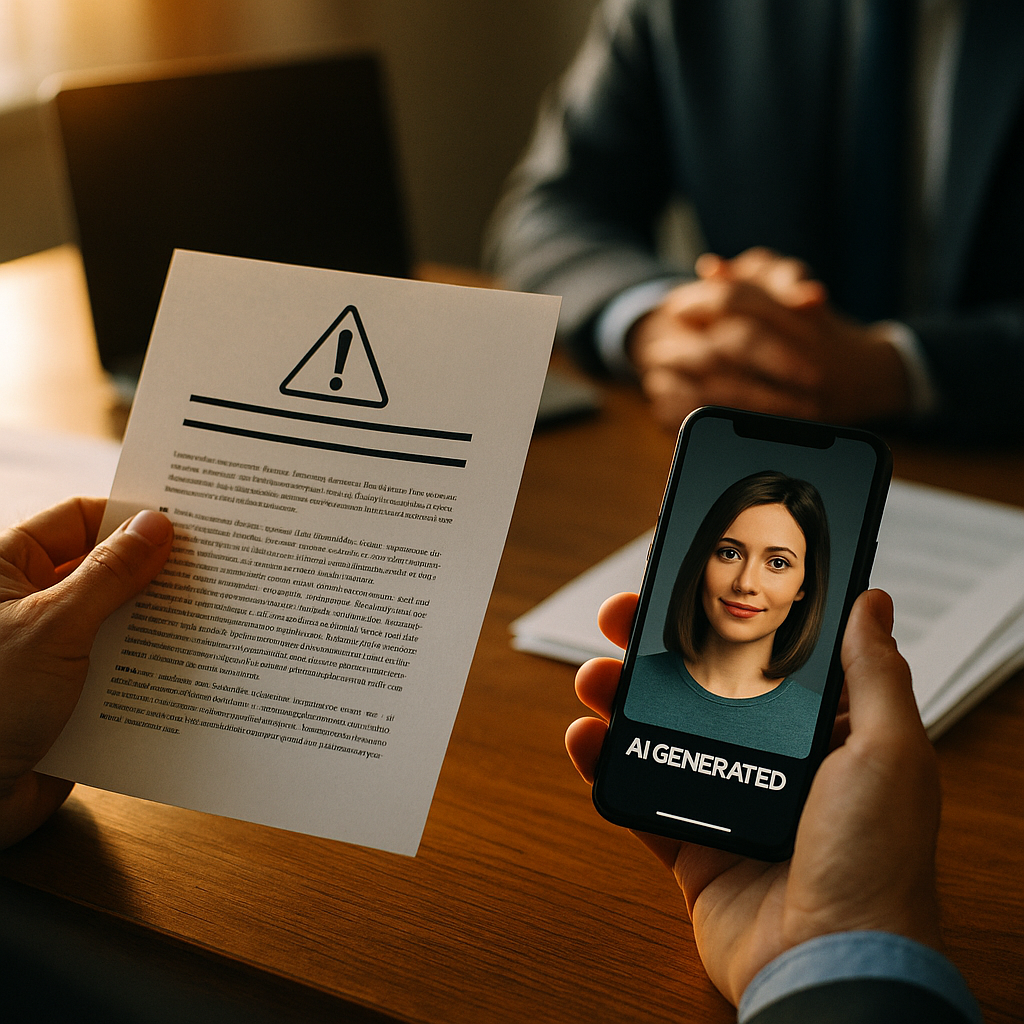
Sixty-two percent of marketers say they’ve tested or deployed an AI avatar in paid media, according to recent industry surveys — yet almost none have a disclosure policy that accounts for a spokesperson who was never born. The FTC Endorsement Guide doesn’t care whether your pitchman is flesh or pixels. It cares whether consumers were misled. That distinction is about to define the next compliance headache for every brand running synthetic influencer content.
Why “It’s Not a Real Person” Doesn’t Get You Off the Hook
Legal teams love to draw a bright line between human endorsers and AI avatars, as if the FTC’s rules simply stop applying once you swap a creator for a rendered face. They don’t. The Endorsement Guide governs any representation that consumers would reasonably interpret as reflecting the opinions, findings, or experiences of someone (or something) other than the advertiser. An AI avatar praising a skincare serum’s results triggers the same material connection and substantiation questions a human micro-influencer would.
Here’s the uncomfortable part: synthetic endorsers can actually create more risk, not less. A human influencer at least has a real experience with the product, however brief. An AI avatar has none. When that avatar says “this changed my skin in two weeks,” there’s no skin, no two weeks, no changed anything. That’s not just a disclosure gap — it’s a fabricated testimonial problem, which lands you squarely in territory the FTC has already targeted through its rule on AI-generated testimonials.
An AI avatar making a first-person product claim isn’t a disclosure risk alone — it’s a fabricated-experience risk, because no experience ever happened.
The Three Layers of Disclosure Synthetic Campaigns Actually Need
Most brands think disclosure means slapping “#ad” on a post and calling it done. With AI avatars, you’re managing three separate disclosure obligations simultaneously, and conflating them is where campaigns get sloppy.
- Synthetic-identity disclosure: Consumers need to know the “person” isn’t real. This isn’t an FTC endorsement issue exclusively — it overlaps with state-level deepfake and AI-labeling laws, plus platform policies from Meta and TikTok that increasingly require AI-content labels.
- Material connection disclosure: Standard endorsement law. If the brand paid for, scripted, or controls the avatar’s statements, that relationship needs disclosure just like a sponsored post from a human creator.
- Substantiation disclosure: Any claim the avatar makes about product performance needs the same evidentiary backing a human testimonial would require. “Reduces wrinkles in 7 days” needs data whether a person or a render says it.
Skip any one of these three, and you’re exposed. Skip all three — which is more common than brands want to admit — and you’ve built a campaign that’s essentially indefensible in a regulatory inquiry.
What “Clear and Conspicuous” Means When the Endorser Isn’t Human
The FTC’s standard language requires disclosures to be clear and conspicuous — hard to miss, easy to understand, placed where the claim itself appears. Translating that to AI avatar content raises some genuinely new questions.
Does a small “AI-generated” watermark in the corner of a 15-second video satisfy “clear and conspicuous”? Almost certainly not, if the avatar is delivering a spoken, first-person product claim with emotional inflection designed to mimic authentic testimony. The more human the avatar performs, the more prominent the disclosure needs to be — a scaling principle borrowed from how courts and regulators have treated deceptive design more broadly. Influencers Time has covered a parallel dynamic in deceptive design enforcement, and the same logic applies here: the more persuasive the format, the higher the disclosure bar.
Practical guidance for brands running avatar campaigns:
- Verbal disclosure (“This is an AI-generated spokesperson”) in addition to on-screen text, especially for video and livestream formats.
- Disclosure timing matched to claim timing — not buried in a description box or appearing only in the first frame before the claim is made.
- Consistent labeling across every cut of the asset, including six-second bumper versions and vertical reformats for Reels or TikTok.
That last point trips up more teams than you’d expect. A brand builds a compliant 30-second hero video, then its media team chops it into five vertical cuts for paid social — and the disclosure text gets cropped out in the reformat. Nobody flags it because “we already disclosed on the original.” The FTC doesn’t grade on original intent. It looks at what the consumer actually saw.
Livestream Avatars Are Their Own Animal
AI avatars hosting livestream shopping shows — a format already exploding on TikTok Shop and gaining traction on Amazon Live — compress the disclosure problem into real time. There’s no editing pass, no compliance review before the words leave the avatar’s mouth, because the script is often generated or adapted live from a large language model responding to chat questions.
This is where brands need an escalation protocol, not just a disclosure template. If an AI avatar starts making unscripted claims mid-stream — “this is the best deal we’ve ever offered,” “only 12 left” — you’ve suddenly got overlapping compliance issues: endorsement disclosure, plus the kind of manufactured urgency problems covered in our deceptive scarcity risk coverage. Brands running livestream avatar programs should build a real-time monitoring layer, not just a pre-approved script, because generative outputs drift from source material more than most legal teams assume.
A pre-approved script doesn’t protect you if the avatar’s live output drifts from it — generative systems improvise, and improvisation is where compliance breaks down first.
Building the Actual Framework: A Five-Step Structure
Enough theory. Here’s what a workable disclosure framework for AI avatar campaigns actually looks like, structured the way a compliance or brand legal team would operationalize it.
- Classify the avatar’s role. Is it a branded mascot clearly presented as fictional (lower risk), or a photorealistic human-presenting spokesperson making first-person claims (high risk)? Your disclosure intensity should scale with realism and claim specificity.
- Map every claim to substantiation. Before the avatar says anything about product performance, require the same evidence chain you’d demand from a paid testimonial — clinical data, user research, or internal test results. Document it the way our substantiation guidance for AI before-and-after claims outlines.
- Standardize disclosure language across formats. One template for video, one for static, one for livestream — all pre-approved by legal, all versioned so creative teams aren’t improvising disclosure copy under deadline pressure.
- Audit reformats and cutdowns. Every derivative asset gets checked for disclosure presence before it goes to media buying. This should be a checklist item in trafficking, not an afterthought.
- Build an escalation path for live or adaptive content. If the avatar operates in real time or via generative script, someone needs authority to interrupt or correct the stream immediately, similar to escalation matrices already used for vertical media ad compliance.
Notice that none of this is exotic. It’s the same discipline brands already apply to human influencer contracts and gifting audits — just extended to a spokesperson category regulators haven’t finished writing specific rules for yet. That absence of avatar-specific FTC guidance is exactly why applying existing endorsement principles conservatively matters more, not less.
The Contract Problem Nobody’s Solved
Who’s liable when an AI avatar makes an unsubstantiated claim — the brand, the ad agency, or the vendor that built the avatar model? Right now, most master service agreements for AI avatar platforms are silent on this, or they push liability entirely onto the brand through standard indemnification boilerplate that nobody negotiated with endorsement law in mind.
Brand legal teams should be adding avatar-specific clauses now, before a regulatory inquiry forces the issue. That includes indemnification language, mandatory pre-approval of claim scripts, audit rights over the training data or prompt structure behind the avatar’s outputs, and — critically — a clause defining who controls the disclosure copy and where it must appear. This mirrors the contract discipline already emerging around platform risk clauses in human creator agreements. If your legal team hasn’t updated vendor contracts for synthetic media specifically, that’s the first fix, not the last.
Regulatory bodies including the Federal Trade Commission have signaled continued interest in AI-driven marketing claims, and industry trackers at eMarketer and Statista show synthetic media spend climbing fast enough that enforcement attention is likely to follow the money. Platform guidance from Meta for Business and TikTok for Business is also evolving in real time, which means your framework needs quarterly review, not a one-time sign-off.
Take the next step now: run one AI avatar asset through all five framework steps this week, flag every gap, and fix your vendor contract before your next campaign brief goes out.
FAQs
Does the FTC Endorsement Guide apply to AI-generated avatars?
Yes. The guide applies to any endorsement that reflects opinions or claims consumers might reasonably attribute to a genuine experience, regardless of whether the endorser is human. AI avatars making product claims fall under the same disclosure and substantiation rules as human influencers.
What’s different about disclosure for synthetic endorsers versus human creators?
Synthetic endorsers add a layer beyond material connection: brands must also disclose that the spokesperson isn’t a real person, and they can’t rely on any actual product experience to substantiate claims, since the avatar never used the product.
Is a small “AI-generated” label enough to satisfy disclosure requirements?
Not usually, especially for realistic avatars making specific performance claims. Disclosure needs to be as prominent and clear as the claim itself, often requiring verbal disclosure in video and livestream formats, not just small on-screen text.
Who is liable if an AI avatar makes an unsubstantiated claim?
Liability typically defaults to the brand under existing endorsement law, but agencies and avatar vendors can share exposure depending on contract terms. Brands should negotiate indemnification, script approval rights, and claim substantiation obligations directly into vendor agreements.
How should brands handle live, unscripted AI avatar content?
Live or generative avatar content needs real-time monitoring and a clear escalation path, since generative scripts can drift from pre-approved language. Treat it like livestream compliance generally, with a designated person able to intervene immediately if claims go off-script.
FAQs
See visible FAQ section above for full content.
Top Influencer Marketing Agencies
The leading agencies shaping influencer marketing in 2026
Agencies ranked by campaign performance, client diversity, platform expertise, proven ROI, industry recognition, and client satisfaction. Assessed through verified case studies, reviews, and industry consultations.
Moburst

-
2

The Shelf
Boutique Beauty & Lifestyle Influencer AgencyA data-driven boutique agency specializing exclusively in beauty, wellness, and lifestyle influencer campaigns on Instagram and TikTok. Best for brands already focused on the beauty/personal care space that need curated, aesthetic-driven content.Clients: Pepsi, The Honest Company, Hims, Elf Cosmetics, Pure LeafVisit The Shelf → -
3

Audiencly
Niche Gaming & Esports Influencer AgencyA specialized agency focused exclusively on gaming and esports creators on YouTube, Twitch, and TikTok. Ideal if your campaign is 100% gaming-focused — from game launches to hardware and esports events.Clients: Epic Games, NordVPN, Ubisoft, Wargaming, Tencent GamesVisit Audiencly → -
4

Viral Nation
Global Influencer Marketing & Talent AgencyA dual talent management and marketing agency with proprietary brand safety tools and a global creator network spanning nano-influencers to celebrities across all major platforms.Clients: Meta, Activision Blizzard, Energizer, Aston Martin, WalmartVisit Viral Nation → -
5

The Influencer Marketing Factory
TikTok, Instagram & YouTube CampaignsA full-service agency with strong TikTok expertise, offering end-to-end campaign management from influencer discovery through performance reporting with a focus on platform-native content.Clients: Google, Snapchat, Universal Music, Bumble, YelpVisit TIMF → -
6

NeoReach
Enterprise Analytics & Influencer CampaignsAn enterprise-focused agency combining managed campaigns with a powerful self-service data platform for influencer search, audience analytics, and attribution modeling.Clients: Amazon, Airbnb, Netflix, Honda, The New York TimesVisit NeoReach → -
7

Ubiquitous
Creator-First Marketing PlatformA tech-driven platform combining self-service tools with managed campaign options, emphasizing speed and scalability for brands managing multiple influencer relationships.Clients: Lyft, Disney, Target, American Eagle, NetflixVisit Ubiquitous → -
8

Obviously
Scalable Enterprise Influencer CampaignsA tech-enabled agency built for high-volume campaigns, coordinating hundreds of creators simultaneously with end-to-end logistics, content rights management, and product seeding.Clients: Google, Ulta Beauty, Converse, AmazonVisit Obviously →