


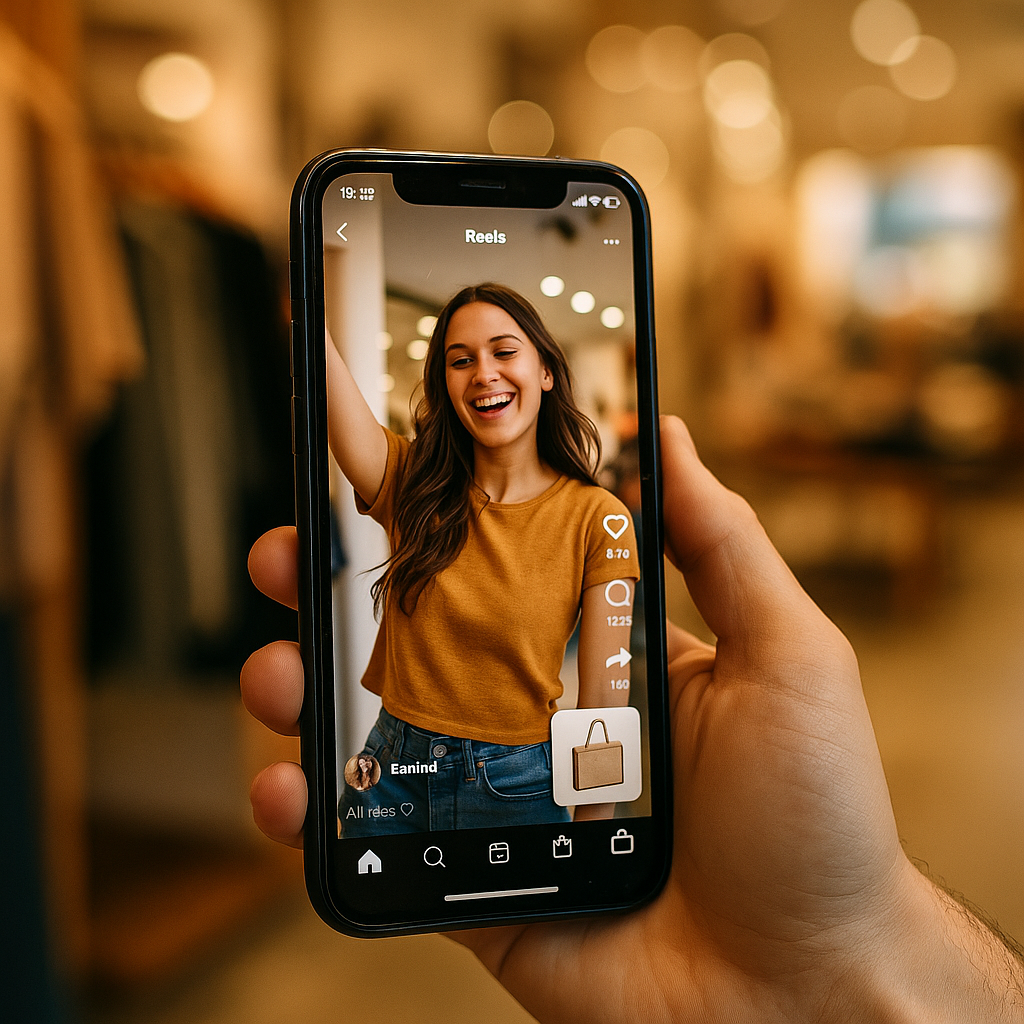
Instagram Reels-first distribution now outperforms shopping-tag-led content by wide margins, yet most brands still build campaigns backward. They design a product tag, bolt a Reel onto it, and wonder why reach stalls at a few thousand views. Meta’s own creator tools show tagged commerce posts get throttled in discovery compared to native, tag-free Reels. If your influencer program still treats the shopping tag as the star of the show, you’re leaving reach on the table.
Why Reels Distribution Beats Shopping Tag Dependency
Here’s the uncomfortable truth: Instagram’s recommendation system was built to reward watch time and shareability, not checkout intent. A Reel with a product tag slapped in the corner signals “ad” to the algorithm before a single frame plays. That signal matters. Meta has been explicit that Reels ranking prioritizes originality and engagement velocity, and tagged commerce content historically underperforms on both fronts because it reads as promotional rather than native.
Brands that flipped the sequence, publishing the Reel as pure entertainment or utility first, then layering shopping tags after the content proves itself, saw meaningfully better distribution. This isn’t a hack. It’s just respecting how the platform actually ranks content.
Treat the shopping tag as a monetization layer you add after distribution, not the reason the content exists in the first place.
The Algorithm Doesn’t Care About Your Product Tags
Instagram’s Reels feed operates on a completely separate logic loop from the Shop tab. One is optimized for discovery and session time, the other for purchase intent. When you frontload a shopping tag, you’re essentially forcing content designed for casual browsing into a commerce framework it wasn’t built to reward on reach alone.
Compare this to how TikTok, Instagram, and YouTube handle funnel stages differently. TikTok Shop videos are designed to convert inside the swipe. Instagram Reels, by contrast, still function primarily as a top-of-funnel discovery engine, even with Shop features layered in. Trying to make Reels behave like TikTok Shop content misreads the platform’s actual mechanics.
Practically, this means your brief needs two distinct passes. Pass one: build the Reel to win watch time, shares, and saves, exactly as you would if commerce didn’t exist. Pass two: decide, after the content performs, whether a shopping tag adds value or just adds friction.
What “Reels-First” Actually Means in a Brief
- Hook in the first 1.5 seconds, with no product mention until value is established.
- Native editing style that matches what’s already trending in the creator’s niche, not brand templates.
- Sound selection tied to trending audio, not a branded jingle.
- Shopping tag added as a secondary CTA, placed after the payoff, never before it.
This structure mirrors what we’ve seen work in Instagram’s visual discovery playbook for lifestyle and ecommerce brands, where content built for browsing consistently outpulls content built for buying.
Building the Playbook: Sequencing Content and Commerce
Most influencer programs collapse content and commerce into one deliverable. That’s the mistake. Reels-first distribution requires you to sequence the two, treating the Reel’s initial 48 to 72 hours as a pure reach test before commerce elements get added or emphasized.
Here’s a sequencing model that’s worked across mid-market DTC brands running 15 to 40 creator partnerships per month:
- Day zero: Creator posts the Reel with no shopping tag, or a minimal, non-intrusive tag if platform rules require product disclosure.
- Day one to three: Monitor watch-through rate and share velocity. If the Reel clears your brand’s benchmark (typically a 35 percent or higher average watch-through for 15 to 30 second content), it’s a candidate for paid amplification.
- Day three onward: Add or emphasize the shopping tag, and consider boosting the post via Advantage+ placements now that organic signals have proven the content works.
This is the inverse of how most brands operate, where the shopping tag goes live at posting and never gets revisited. Sequencing forces discipline: you stop paying creators to make ads and start paying them to make content that happens to sell.
What This Means for Creator Contracts
Reels-first distribution changes what you’re actually buying from a creator. You’re not buying a tagged product placement, you’re buying a piece of content engineered to earn organic reach, with commerce as an optional layer added later. That changes usage rights negotiations, posting windows, and how you structure performance bonuses.
Some brands have started paying a base rate for the Reel itself, plus a performance kicker if the content clears reach thresholds and earns a shopping tag placement. This aligns incentives properly. Creators are rewarded for making genuinely good content, not for cramming in a swipe-up moment that tanks their reach and, by extension, yours.
Where Shopping Tags Still Earn Their Keep
None of this means shopping tags are dead weight. They’re just a secondary channel, not the primary distribution lever. Once a Reel proves itself organically, tags become a low-friction way to capture demand you’ve already generated. The mistake is expecting the tag to generate the demand itself.
Retail and beauty brands running high SKU counts have found tags most useful on evergreen content, Reels that keep pulling views weeks after posting, rather than on trend-jacking content with a short shelf life. If a Reel is going to keep circulating, the tag has time to do its job. If it’s a 48-hour trend ride, the tag rarely earns back the friction it adds to initial discovery.
This is consistent with what we’ve seen play out in how TikTok’s algorithm and Instagram’s feed reward different budget allocations: platforms with strong native commerce infrastructure, like TikTok Shop, reward tag-forward content. Instagram, still catching up on native checkout, rewards content-forward posting with tags as a follow-on layer.
Measurement: Stop Grading Reels on ROAS Alone
If you’re only measuring Reels-first content by direct shopping tag conversions, you’re grading it on the wrong scale. The real value shows up in reach efficiency: cost per thousand views, share rate, and save rate, metrics that predict future organic distribution rather than just capturing last-click revenue.
Track these four metrics separately for tagged versus untagged phases of the same Reel:
- Average watch-through percentage
- Share-to-view ratio
- Save rate (a strong signal for the Instagram algorithm’s long-term ranking)
- Shop tag click-through rate, measured only after the content has proven organic traction
Brands that isolate these numbers consistently find that untagged Reels post better watch-through and share rates, while tagged Reels post better click-through once distribution is already established. That’s not a contradiction, it’s exactly what you’d expect if you understand the two channels are serving different jobs.
Shopping tag click-through rate is a lagging indicator of distribution success, not a leading driver of it.
Data from industry trackers like eMarketer and Statista continues to show short-form video consumption climbing faster than social commerce click-through rates, reinforcing that reach and conversion are moving on different timelines, not the same one. Meta’s own Meta Business resources also confirm that Reels ranking factors prioritize engagement signals well ahead of commerce tags in the discovery algorithm.
Compliance Doesn’t Disappear Just Because the Tag Is Secondary
Delaying the shopping tag doesn’t delay your disclosure obligations. If a creator is compensated for the post, FTC guidance still requires clear and conspicuous disclosure from the moment the content goes live, tag or no tag. Brands sometimes assume that because commerce isn’t the immediate focus, disclosure rules are relaxed. They’re not. Build disclosure into the creator brief regardless of which sequencing phase the Reel is in, and document it the same way you would for a fully tagged post referenced in our FTC risk playbook for shop content.
This is also where cross-platform teams need to stay coordinated. If the same asset gets repurposed for TikTok or reposted with different tagging rules, your compliance documentation needs to track each version separately, not assume one disclosure covers every placement.
Next Step
Audit your last ten Reels campaigns and separate performance by tagged versus untagged posting windows. If untagged content is consistently out-reaching tagged content, rebuild your brief templates to sequence commerce after distribution, not before it.
Frequently Asked Questions
Does removing the shopping tag hurt sales in the short term?
It can slightly delay direct attribution, but brands that sequence tags after organic proof typically see stronger total reach, which produces more total conversions over the content’s lifecycle than tag-first posting.
How long should a Reel run untagged before adding a shopping tag?
Most brands see a clear organic signal within 48 to 72 hours. If watch-through and share rates clear your benchmark in that window, it’s a reasonable point to add or emphasize the tag.
Is Reels-first distribution relevant for brands without a large creator budget?
Yes. Sequencing content before commerce is a briefing discipline, not a budget requirement. Even single-creator partnerships benefit from delaying tag emphasis until the Reel proves it can earn organic reach.
Does this approach work the same way on TikTok Shop?
No. TikTok Shop’s algorithm rewards tag-forward, conversion-ready content more directly, as covered in our TikTok Shop algorithm breakdown. Instagram Reels still function more as a discovery-first environment.
What tools help track watch-through and share rate separately from shop tag clicks?
Meta’s native Insights dashboard breaks out these metrics per post. Third-party platforms like Sprout Social and HubSpot also support cross-post benchmarking for teams managing multiple creator campaigns.
Top Influencer Marketing Agencies
The leading agencies shaping influencer marketing in 2026
Agencies ranked by campaign performance, client diversity, platform expertise, proven ROI, industry recognition, and client satisfaction. Assessed through verified case studies, reviews, and industry consultations.
Moburst

-
2

The Shelf
Boutique Beauty & Lifestyle Influencer AgencyA data-driven boutique agency specializing exclusively in beauty, wellness, and lifestyle influencer campaigns on Instagram and TikTok. Best for brands already focused on the beauty/personal care space that need curated, aesthetic-driven content.Clients: Pepsi, The Honest Company, Hims, Elf Cosmetics, Pure LeafVisit The Shelf → -
3

Audiencly
Niche Gaming & Esports Influencer AgencyA specialized agency focused exclusively on gaming and esports creators on YouTube, Twitch, and TikTok. Ideal if your campaign is 100% gaming-focused — from game launches to hardware and esports events.Clients: Epic Games, NordVPN, Ubisoft, Wargaming, Tencent GamesVisit Audiencly → -
4

Viral Nation
Global Influencer Marketing & Talent AgencyA dual talent management and marketing agency with proprietary brand safety tools and a global creator network spanning nano-influencers to celebrities across all major platforms.Clients: Meta, Activision Blizzard, Energizer, Aston Martin, WalmartVisit Viral Nation → -
5

The Influencer Marketing Factory
TikTok, Instagram & YouTube CampaignsA full-service agency with strong TikTok expertise, offering end-to-end campaign management from influencer discovery through performance reporting with a focus on platform-native content.Clients: Google, Snapchat, Universal Music, Bumble, YelpVisit TIMF → -
6

NeoReach
Enterprise Analytics & Influencer CampaignsAn enterprise-focused agency combining managed campaigns with a powerful self-service data platform for influencer search, audience analytics, and attribution modeling.Clients: Amazon, Airbnb, Netflix, Honda, The New York TimesVisit NeoReach → -
7

Ubiquitous
Creator-First Marketing PlatformA tech-driven platform combining self-service tools with managed campaign options, emphasizing speed and scalability for brands managing multiple influencer relationships.Clients: Lyft, Disney, Target, American Eagle, NetflixVisit Ubiquitous → -
8

Obviously
Scalable Enterprise Influencer CampaignsA tech-enabled agency built for high-volume campaigns, coordinating hundreds of creators simultaneously with end-to-end logistics, content rights management, and product seeding.Clients: Google, Ulta Beauty, Converse, AmazonVisit Obviously →