


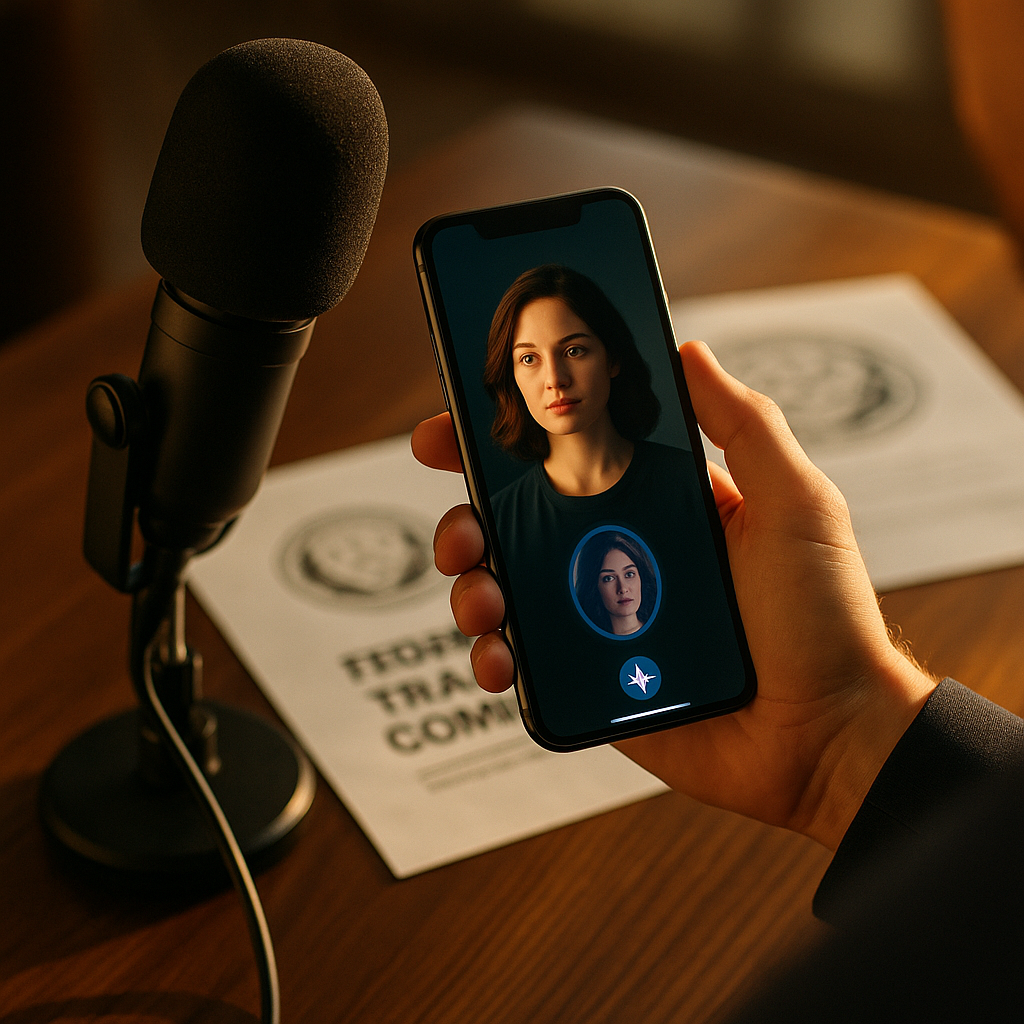
A cloned voice can now sell your product without the celebrity ever recording a word, and the FTC has made clear it considers that just as actionable as a fake review. If your brand has tested AI voice clone endorsements, synthetic dubbing, or “digital twin” audio for ads, you’re sitting on a compliance question most legal teams haven’t fully mapped yet. The gap between what’s technically possible and what’s legally defensible is widening fast.
Why Synthetic Audio Changed the FTC’s Calculus
The FTC’s Endorsement Guides were written for a world where a person actually said the words attributed to them. Voice cloning breaks that assumption entirely. Tools like ElevenLabs, Resemble AI, and various in-house studio pipelines can now generate a celebrity, influencer, or even an “average customer” voice from a few minutes of sample audio. The output is convincing enough that listeners can’t tell it’s synthetic, which is exactly the problem regulators care about.
The FTC has already signaled this territory matters. Its 2024 rule targeting AI-enabled impersonation and its ongoing enforcement sweeps on fake reviews and deceptive endorsements both rest on the same principle: consumers must not be misled about who is actually speaking and whether that speaker was paid. Swap “written review” for “cloned voice” and the legal theory holds up perfectly.
If a listener would reasonably believe a real person recorded that endorsement, and they didn’t, you have a material misrepresentation problem regardless of how good the technology is.
What Counts as an “Endorsement” When Nobody Actually Spoke?
This is where a lot of marketing teams get tripped up. The FTC defines an endorsement broadly: any message that consumers reasonably believe reflects the opinions, findings, or experience of someone other than the advertiser. It doesn’t require the person to be present, alive, or even aware their voice was used, if the output creates that impression.
That means synthetic audio triggers endorsement rules in at least three common scenarios:
- A celebrity or creator’s cloned voice reads ad copy they never approved or recorded.
- A generic “customer testimonial” voice is generated entirely by AI to sound authentic and relatable.
- A brand spokesperson’s real voice is used in dubbed, translated, or regionally localized versions without disclosure that the audio was synthetically generated.
Each of these creates a different flavor of risk. The first raises right of publicity issues on top of FTC exposure. The second is arguably the riskiest because there’s no real person to misrepresent, yet the deception (implying authentic customer experience) is still squarely covered. The third is often overlooked because the actual person did say something, just not in that language or tone, and brands assume that’s a technical detail rather than a disclosure trigger.
The Disclosure Standard: Clear, Conspicuous, Unavoidable
The FTC’s language for all endorsement disclosures applies here without modification: disclosures must be clear and conspicuous, meaning a reasonable consumer notices and understands them without having to search. For audio, that’s harder than for a text caption or a video overlay.
Practically, this means:
- Verbal disclosure inside the audio itself. A visual “AI-generated” badge on a video doesn’t help a podcast listener or a radio spot. If the medium is audio-first, the disclosure needs to be audio too.
- Placement before the persuasive content, not buried at the end. A disclaimer read quickly at the tail of a 30-second spot after the pitch has landed likely fails the “clear and conspicuous” test.
- Plain language, not legal hedging. “This voice was generated using AI technology to replicate [Name]’s voice with permission” beats vague phrasing like “enhanced audio experience.”
This overlaps heavily with platform-specific labeling requirements too. TikTok already mandates AI content flags for realistic synthetic media, and brands running voice-cloned ads there need to satisfy both the platform’s rule and the FTC’s standard simultaneously. For a breakdown of how that labeling mandate works, see our guide on the TikTok AI content disclosure mandate.
Consent Isn’t the Same as Compliance
Here’s a mistake we see constantly: brands assume that because they have a signed release or licensing agreement from the talent whose voice was cloned, they’re covered on the FTC side. Consent solves the right of publicity problem. It does nothing for the disclosure problem.
A celebrity can fully authorize their voice clone’s use in an ad, and the brand can still violate FTC rules if consumers aren’t told the audio is synthetic. These are two separate legal tracks that require two separate fixes: a contract that covers likeness and voice rights, and a media plan that covers disclosure. Skipping either one leaves exposure.
If you’re negotiating talent agreements that involve voice or face cloning, make sure the contract language actually anticipates FTC disclosure obligations rather than just licensing terms. We cover the contractual side in detail in AI voice and face clone contracts, which pairs well with this compliance discussion.
Where Brands Are Getting Burned Right Now
A few recurring patterns show up in the cases and complaints regulators and consumer groups have flagged:
- Dubbed international campaigns without disclosure. A brand’s US spokesperson is cloned into fluent Spanish or Mandarin for regional markets. The voice sounds native and authentic, and nobody flags that it’s synthetic. Local regulators, including bodies that mirror FTC-style consumer protection standards, have started asking questions.
- AI-generated “customer voice” testimonials in retail media and CTV ads. These are functionally fabricated reviews with an audio wrapper, and they map directly onto the FTC’s fake review enforcement priorities. If you’re already auditing written review practices, read our piece on the FTC fake review rules for the underlying legal theory that extends to audio.
- Podcast and radio host-read ads generated entirely by AI voice clones of the actual host. Listeners trust host-read ads specifically because they believe the host is personally vouching for the product. A cloned version without disclosure undermines the entire premise of that ad format and arguably deepens the deception.
Enforcement in this space will likely follow the same pattern as fake reviews: a handful of high-visibility cases first, then a wave of smaller actions once the legal theory is settled and precedent exists.
Building a Synthetic Audio Compliance Checklist
Legal and marketing teams don’t need to reinvent governance from scratch here. Most of the infrastructure already exists in adjacent compliance work, it just needs to be extended to cover audio specifically.
- Inventory every synthetic audio use case. Ad dubbing, IVR systems, chatbots with voice, testimonial-style spots, podcast reads. List them all before deciding on disclosure treatment.
- Match disclosure format to medium. Video gets on-screen text plus verbal cue where possible. Pure audio gets verbal disclosure only, placed early.
- Separate consent tracking from disclosure tracking. Two different compliance owners, two different checklists, one shared campaign brief.
- Document your reasonable consumer test. Would someone unfamiliar with your production process assume this is a real, unscripted voice? If yes, disclose.
- Loop in whoever manages your other disclosure standards. If you’re already juggling multiple disclosure formats across platforms, this is a good moment to consolidate. Our guide to reconciling multiple FTC disclosure standards on a single piece of content applies directly to synthetic audio decisions too.
For teams already navigating the EU’s stricter labeling regime, the compliance bar is even higher. The EU AI Act treats synthetic voice and video with specific transparency obligations that go beyond current FTC language, and getting ahead of that standard tends to satisfy US requirements automatically. See our EU AI Act synthetic media guide for the fuller regulatory picture if you run global campaigns.
What About Internal or B2B Uses?
Not every synthetic voice use case is a consumer-facing endorsement, and it’s worth drawing that line clearly so compliance teams don’t over-apply the rule. An AI voice reading internal training material, a customer service IVR menu, or a B2B sales deck narration generally falls outside FTC endorsement territory because there’s no implied personal experience or opinion being represented.
The line gets blurry fast, though, once that same synthetic voice shows up in anything resembling a testimonial, review, or personal recommendation, even internally generated employee content shared externally. If your team is already producing employee-generated content for social proof, the same disclosure logic from our employee-generated content compliance guide extends to any synthetic voice layered on top of that content.
Practical Guardrails for Marketing and Legal Teams
A few operational habits reduce risk without slowing production to a crawl:
- Build disclosure language into your creative brief templates so it’s not an afterthought added in post-production.
- Require a compliance sign-off step specifically for any asset using synthetic voice, separate from general creative approval.
- Keep a record of which voice model, provider, and consent documentation was used for every asset, in case of a future inquiry.
- Train your media buying team to check platform-specific AI labeling rules before launch, since a compliant FTC disclosure doesn’t automatically satisfy a platform’s separate synthetic media policy.
Industry data on AI ad adoption keeps climbing. eMarketer’s research on AI-generated advertising shows brands scaling synthetic content faster than their internal governance can keep pace, which is exactly the gap regulators tend to exploit. Pairing that with guidance directly from the FTC’s endorsement and advertising resources gives legal teams a defensible baseline to build from rather than guessing at intent.
The takeaway is simple: treat every synthetic voice as an endorsement until proven otherwise, disclose inside the audio itself, and keep consent and disclosure as two separate compliance tracks. Do that consistently, and you’re ahead of where most of the industry currently sits.
Frequently Asked Questions
Does the FTC require disclosure for AI-cloned voices even with the talent’s permission?
Yes. Consent from the person whose voice was cloned addresses right of publicity concerns but does not satisfy FTC disclosure requirements. Consumers still need to be told the audio is synthetically generated.
Where should the disclosure appear in an audio-only ad?
It should appear early, ideally before the persuasive claims, and be spoken in plain language. A disclosure buried at the very end of a spot is unlikely to meet the “clear and conspicuous” standard.
Are AI-generated customer testimonial voices treated differently from cloned celebrity voices?
Both trigger FTC endorsement rules, but fabricated customer voices are arguably higher risk because there’s no real person’s experience behind the claim at all, which mirrors the agency’s fake review enforcement approach.
Does a visual “AI-generated” label on video content cover audio disclosure requirements?
Not fully. If consumers primarily experience the content as audio (podcasts, radio, background audio on autoplay video), a text-only disclosure may not be noticed, so a verbal disclosure is safer.
How does this intersect with platform rules like TikTok’s AI labeling policy?
Platform labeling requirements and FTC disclosure rules are separate obligations that often need to be satisfied simultaneously. Meeting one does not automatically satisfy the other.
Top Influencer Marketing Agencies
The leading agencies shaping influencer marketing in 2026
Agencies ranked by campaign performance, client diversity, platform expertise, proven ROI, industry recognition, and client satisfaction. Assessed through verified case studies, reviews, and industry consultations.
Moburst

-
2

The Shelf
Boutique Beauty & Lifestyle Influencer AgencyA data-driven boutique agency specializing exclusively in beauty, wellness, and lifestyle influencer campaigns on Instagram and TikTok. Best for brands already focused on the beauty/personal care space that need curated, aesthetic-driven content.Clients: Pepsi, The Honest Company, Hims, Elf Cosmetics, Pure LeafVisit The Shelf → -
3

Audiencly
Niche Gaming & Esports Influencer AgencyA specialized agency focused exclusively on gaming and esports creators on YouTube, Twitch, and TikTok. Ideal if your campaign is 100% gaming-focused — from game launches to hardware and esports events.Clients: Epic Games, NordVPN, Ubisoft, Wargaming, Tencent GamesVisit Audiencly → -
4

Viral Nation
Global Influencer Marketing & Talent AgencyA dual talent management and marketing agency with proprietary brand safety tools and a global creator network spanning nano-influencers to celebrities across all major platforms.Clients: Meta, Activision Blizzard, Energizer, Aston Martin, WalmartVisit Viral Nation → -
5

The Influencer Marketing Factory
TikTok, Instagram & YouTube CampaignsA full-service agency with strong TikTok expertise, offering end-to-end campaign management from influencer discovery through performance reporting with a focus on platform-native content.Clients: Google, Snapchat, Universal Music, Bumble, YelpVisit TIMF → -
6

NeoReach
Enterprise Analytics & Influencer CampaignsAn enterprise-focused agency combining managed campaigns with a powerful self-service data platform for influencer search, audience analytics, and attribution modeling.Clients: Amazon, Airbnb, Netflix, Honda, The New York TimesVisit NeoReach → -
7

Ubiquitous
Creator-First Marketing PlatformA tech-driven platform combining self-service tools with managed campaign options, emphasizing speed and scalability for brands managing multiple influencer relationships.Clients: Lyft, Disney, Target, American Eagle, NetflixVisit Ubiquitous → -
8

Obviously
Scalable Enterprise Influencer CampaignsA tech-enabled agency built for high-volume campaigns, coordinating hundreds of creators simultaneously with end-to-end logistics, content rights management, and product seeding.Clients: Google, Ulta Beauty, Converse, AmazonVisit Obviously →