


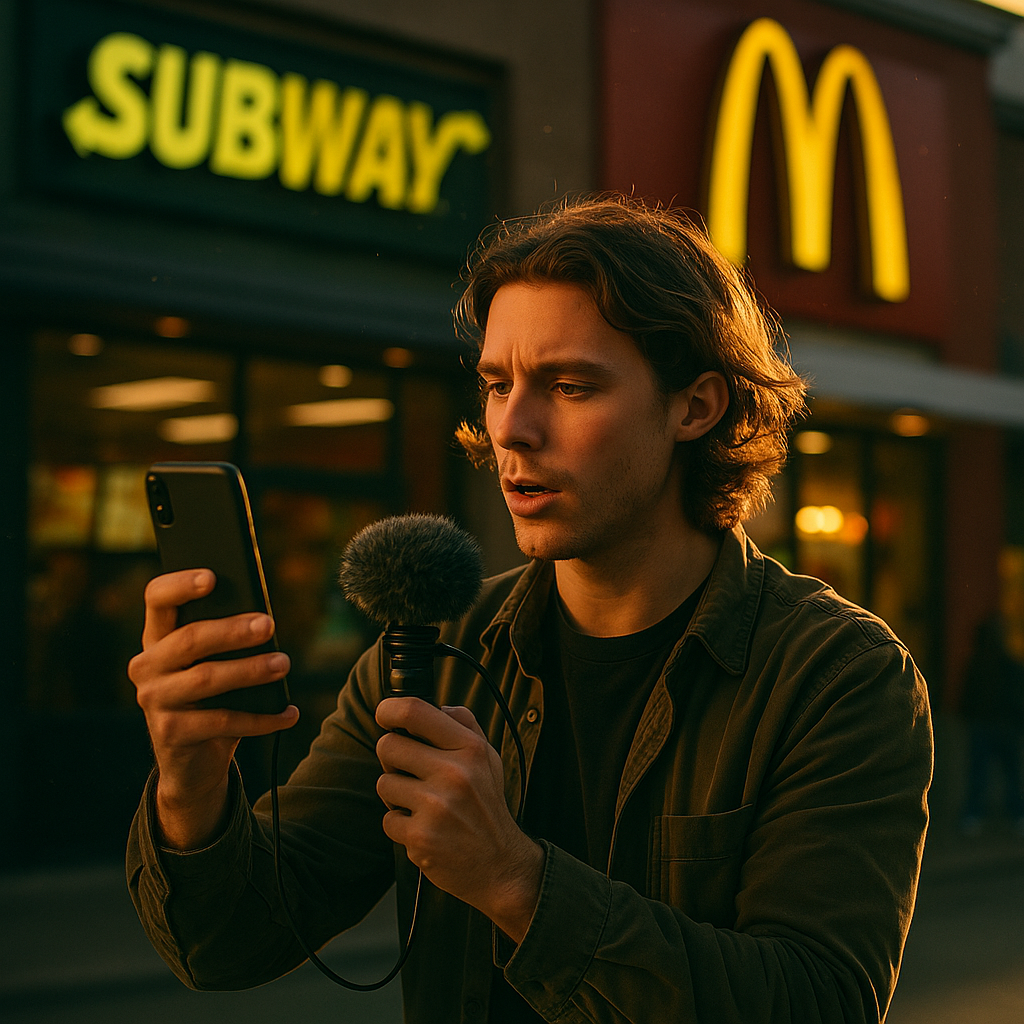
Subway is opening thousands of new locations. McDonald’s just posted another quarter of net unit growth. So why are most franchise marketing budgets still built around national campaigns that a single local creator could outperform for a fraction of the spend? Hyperlocal creator marketing is the gap nobody’s filling, and multi-unit brands are leaving money on the table.
The Franchise Growth Numbers Nobody’s Connecting to Creator Strategy
Subway has been on a quiet rebuild. After years of closures, the chain has pushed aggressive remodel and new-unit plans tied to its “Fresh Forward” design, with international expansion accelerating across Asia and the Middle East. McDonald’s, meanwhile, continues to add thousands of units globally each year, with heavy investment in smaller-format and delivery-only locations in dense urban markets.
Here’s the disconnect. Every new unit is a new local business with its own neighborhood, its own competitive set, and its own audience. Yet most franchise marketing still runs top-down: one national campaign, one set of brand creative, maybe a regional media buy layered on top. Local store marketing budgets often shrink to coupon drops and a Facebook boost.
That model made sense when reach was expensive and attention was centralized around a handful of channels. It doesn’t make sense anymore. Short-form video has fragmented attention down to the zip code level, and audiences now expect content that feels like it was made by someone in their actual neighborhood, not a studio three states away.
Franchise growth without a hyperlocal content strategy is just more real estate chasing the same tired playbook.
What Hyperlocal Creator Marketing Actually Means for Multi-Unit Brands
Hyperlocal creator marketing isn’t just “find a local influencer and send free food.” It’s a systematic approach to matching creator content to the radius a single location actually serves, usually a 3 to 10 mile catchment, and treating that content as a repeatable local acquisition channel rather than a one-off PR stunt.
For a franchise system, that means building infrastructure for scale: a vetted roster of nano and micro creators in each market, a content brief that’s consistent enough to protect brand standards but flexible enough to feel local, and a measurement framework that ties creator posts to foot traffic or local sales lift rather than vanity engagement.
Brands already doing versions of this at scale offer a useful blueprint. Coca-Cola’s AI content platform localizes creator content across dozens of markets without rebuilding campaigns from scratch each time. Sephora’s approach to always-on local casting, detailed in how Squads casting beats seasonal campaigns, shows what happens when a brand treats creator relationships as infrastructure instead of a campaign line item.
Quick service restaurants have an advantage here that most other retail categories don’t: extremely high purchase frequency and extremely low consideration friction. Nobody needs a 14-day research journey to decide on a sandwich. That means hyperlocal creator content can move straight from view to visit, often within the same day.
Why National Campaigns Underperform at the Store Level
National creative is built for the lowest common denominator. It has to work in Tulsa and Toronto and Tampa simultaneously, which means it ends up feeling like it was made for nowhere in particular. Local audiences can smell that instantly, and short-form platforms reward content that feels native to the feed, not content that feels like an ad unit dropped in from corporate.
Franchisees know this intuitively. Ask any multi-unit operator what actually drives walk-ins during a slow Tuesday lunch and they’ll rarely point to the national TV spot. They’ll point to the high school coach who posted about the team meal deal, or the local foodie account that did a drive-through review. That content converts because it carries social proof from someone the audience already trusts.
According to eMarketer, consumer trust in creator recommendations continues to outpace trust in brand-produced advertising, and that gap widens further at the hyperlocal level where the creator and the audience share an actual community. A national campaign can’t replicate that. A franchise-level creator program can, store by store.
The Operational Problem: Scale Without Chaos
Here’s where most franchise marketing teams stall out. Running one creator program is manageable. Running five hundred, one per location, sounds like an operational nightmare, and for a lot of brands it would be without the right systems.
The solution isn’t hiring five hundred local marketers. It’s building a centralized operating system that pushes localized execution down to the store level while keeping brand control, legal compliance, and reporting centralized. This is exactly the model one studio uses to publish thousands of UGC videos monthly, treating content production like a pipeline rather than a series of bespoke projects.
- Creator vetting at scale: Use platforms built for high-volume nano and micro creator discovery rather than manually sourcing talent market by market. e.l.f. Beauty’s approach to vetting thousands of nano creators through CreatorIQ shows how software, not headcount, solves the scale problem.
- Templated briefs, localized details: National messaging pillars stay fixed. Local details (store manager names, neighborhood references, specific menu items tied to regional tastes) get swapped in per market.
- Centralized compliance review: Every piece of sponsored content still needs FTC disclosure compliance, regardless of whether it’s a national ad or a single-location nano creator post. Franchise legal teams need a lightweight review layer, not a bottleneck.
- Paid amplification of organic winners: Once a local post performs organically, push it into paid as a geo-targeted spark ad, similar to how Ryanair turns organic TikTok clips into spark ads within days of seeing early traction.
None of this requires reinventing marketing technology from scratch. Most of the infrastructure already exists in creator marketplaces, influencer relationship management platforms, and paid social tools. The job is stitching it together into a franchise-specific workflow.
Measurement: Tying Creator Content to Store-Level Lift
If you can’t tie a creator post to a measurable outcome at the store level, you’re going to lose budget fights internally, full stop. Franchise CFOs don’t care about impressions. They care about same-store sales and cost per incremental visit.
The good news: quick service and franchise retail are among the easiest categories to measure because of high transaction frequency and short consideration windows. Pair creator posting schedules with POS data, loyalty app redemptions, and location-specific promo codes, and you get a reasonably clean read on lift within a week or two of a post going live.
GameSquare and Chartis have been pushing the industry toward exactly this kind of accountability. Their work making influencer ROI auditable is a useful model for any franchise marketing team building a measurement framework from zero. If a Discord-native gaming brand can build auditable creator ROI, a 2,000-unit sandwich chain certainly can.
A franchise system that can’t measure store-level lift from creator content isn’t running a hyperlocal strategy, it’s just running a scattered version of a national one.
Risk Mitigation: The Part Franchise Legal Teams Will Ask About
Scaling creator content across hundreds of franchise-owned and franchisee-owned locations introduces real compliance exposure. Disclosure requirements don’t shrink just because the creator has four thousand followers instead of four hundred thousand. Every sponsored post, every gifted product arrangement, every paid partnership needs clear disclosure under FTC guidelines, and in markets with stricter rules, under local regulatory bodies like the UK’s Information Commissioner’s Office guidance on advertising standards.
Franchise structures add a wrinkle most direct-to-consumer brands don’t deal with: individual franchisees may try to run their own local influencer outreach without corporate oversight. That’s how brands end up with inconsistent disclosure practices, off-brand messaging, or worse, a local creator making a claim about the product that legal never approved.
The fix is a centralized creator policy with local execution rights. Franchisees get an approved roster, approved messaging guardrails, and a simple reporting mechanism back to corporate. It mirrors how Ryse Supplements structures creator retention, building a system that rewards long-term, compliant participation rather than one-off posts that are harder to track and control.
What This Means for Non-QSR Multi-Unit Brands
This isn’t only a sandwich and burger story. Any multi-unit brand with a local footwork component, gyms, salons, auto service chains, pharmacy retail, insurance agencies, faces the same structural opportunity. If your brand operates through dozens or hundreds of physical locations, you have a built-in distributed creator network sitting one zip code away from every store. Most brands simply haven’t built the system to activate it.
The franchise growth numbers from Subway and McDonald’s matter less as isolated data points and more as a signal: physical retail expansion is accelerating even as national advertising efficiency declines. Brands that figure out how to pair unit growth with hyperlocal creator infrastructure now will have a durable local acquisition advantage before competitors catch up. According to Statista data on consumer ad trust, localized and peer-driven content consistently outperforms broad-reach advertising on trust metrics, which is exactly the metric that predicts foot traffic conversion for physical retail.
The brands that treat every new store opening as a content opportunity, not just a ribbon cutting, will win the next five years of local market share.
Next Step
Audit three franchise locations this quarter: build a local creator roster, run a 30-day test tying posts to store-level sales data, and use that proof point to pitch a system-wide rollout before a competitor beats you to it.
FAQs
What is hyperlocal creator marketing for franchise brands?
It’s a strategy where individual store locations partner with nearby nano and micro creators to produce localized content, rather than relying solely on national brand campaigns. The goal is driving measurable foot traffic and local sales lift at the store level.
How many franchise locations do you need before hyperlocal creator marketing makes sense?
Even a handful of locations can benefit, but the operational efficiencies really kick in once a brand has enough scale to build a centralized creator vetting and compliance system, typically around 20 or more units.
How do you measure ROI on hyperlocal creator campaigns?
Pair creator posting schedules with POS data, location-specific promo codes, and loyalty app redemptions to isolate lift within one to two weeks of content going live. Auditable frameworks similar to those used in gaming and CPG creator campaigns apply directly here.
Who handles compliance when franchisees run their own local creator outreach?
Corporate marketing or legal should maintain an approved creator roster and messaging guardrails, with franchisees executing locally under those rules. This keeps FTC disclosure compliance consistent across hundreds of locations.
Does hyperlocal creator marketing work outside restaurants and QSR?
Yes. Any multi-unit brand with physical locations, including gyms, salons, auto service centers, and retail pharmacies, can apply the same model since the core advantage is proximity and local trust, not the product category.
Top Influencer Marketing Agencies
The leading agencies shaping influencer marketing in 2026
Agencies ranked by campaign performance, client diversity, platform expertise, proven ROI, industry recognition, and client satisfaction. Assessed through verified case studies, reviews, and industry consultations.
Moburst

-
2

The Shelf
Boutique Beauty & Lifestyle Influencer AgencyA data-driven boutique agency specializing exclusively in beauty, wellness, and lifestyle influencer campaigns on Instagram and TikTok. Best for brands already focused on the beauty/personal care space that need curated, aesthetic-driven content.Clients: Pepsi, The Honest Company, Hims, Elf Cosmetics, Pure LeafVisit The Shelf → -
3

Audiencly
Niche Gaming & Esports Influencer AgencyA specialized agency focused exclusively on gaming and esports creators on YouTube, Twitch, and TikTok. Ideal if your campaign is 100% gaming-focused — from game launches to hardware and esports events.Clients: Epic Games, NordVPN, Ubisoft, Wargaming, Tencent GamesVisit Audiencly → -
4

Viral Nation
Global Influencer Marketing & Talent AgencyA dual talent management and marketing agency with proprietary brand safety tools and a global creator network spanning nano-influencers to celebrities across all major platforms.Clients: Meta, Activision Blizzard, Energizer, Aston Martin, WalmartVisit Viral Nation → -
5

The Influencer Marketing Factory
TikTok, Instagram & YouTube CampaignsA full-service agency with strong TikTok expertise, offering end-to-end campaign management from influencer discovery through performance reporting with a focus on platform-native content.Clients: Google, Snapchat, Universal Music, Bumble, YelpVisit TIMF → -
6

NeoReach
Enterprise Analytics & Influencer CampaignsAn enterprise-focused agency combining managed campaigns with a powerful self-service data platform for influencer search, audience analytics, and attribution modeling.Clients: Amazon, Airbnb, Netflix, Honda, The New York TimesVisit NeoReach → -
7

Ubiquitous
Creator-First Marketing PlatformA tech-driven platform combining self-service tools with managed campaign options, emphasizing speed and scalability for brands managing multiple influencer relationships.Clients: Lyft, Disney, Target, American Eagle, NetflixVisit Ubiquitous → -
8

Obviously
Scalable Enterprise Influencer CampaignsA tech-enabled agency built for high-volume campaigns, coordinating hundreds of creators simultaneously with end-to-end logistics, content rights management, and product seeding.Clients: Google, Ulta Beauty, Converse, AmazonVisit Obviously →