


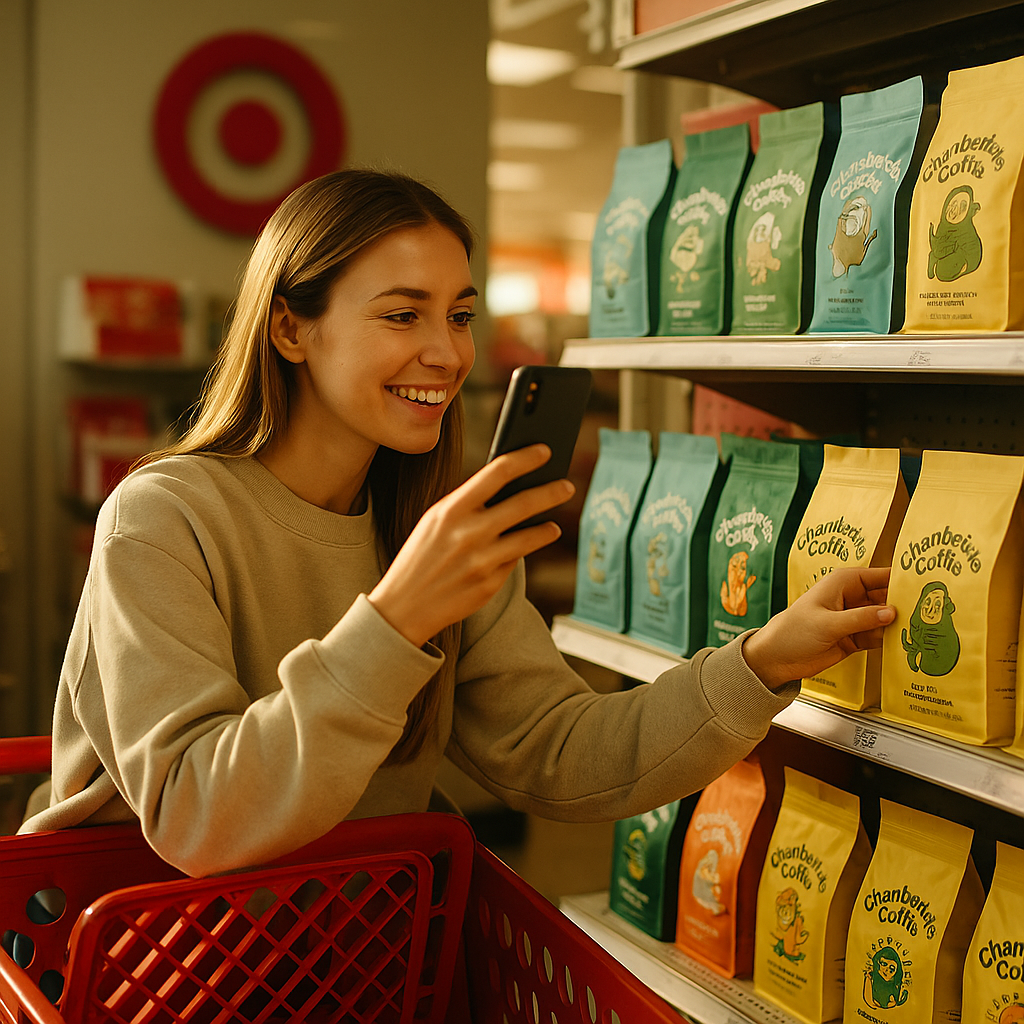
Zero macro influencer deals. No celebrity founder spend beyond the founder herself. Yet Chamberlain Coffee landed prime shelf space at Target, one of the hardest retail gatekeepers in the country. The secret wasn’t reach. It was a nano-creator grocery haul strategy that turned ordinary shoppers into a distributed sales force Target couldn’t ignore.
If you’re a brand manager staring down a retail pitch deck with no celebrity budget line, this case study matters more than it looks at first glance.
The Problem With the Macro-Influencer Playbook for Retail Launches
Most emerging CPG brands assume the path to retail shelf space runs through reach. Get a celebrity or macro creator to post, generate buzz, hope a buyer notices. It’s expensive, slow, and increasingly unreliable. Macro deals can run anywhere from $50,000 to well past six figures for a single post, and retail buyers have grown numb to inflated follower counts that don’t convert to foot traffic.
Target, Kroger, and Walmart category buyers care about one thing above all else: proof of sell-through. Not impressions. Not sentiment. Actual velocity data showing a product moves off shelves faster than the SKU it’s replacing.
That’s the gap macro influence rarely closes. A single celebrity post might spike awareness, but it doesn’t simulate the real shopping behavior a buyer wants to see repeated across regions, demographics, and store formats.
Retail buyers don’t fund brand awareness. They fund proof of repeatable demand, and nano-creators are cheaper, faster proof than any celebrity deal.
What Chamberlain Coffee Did Differently
Chamberlain Coffee, founded by Emma Chamberlain, built its retail case not through a single flashy campaign but through sustained, unglamorous nano-creator seeding: shoppers with 1,000 to 20,000 followers posting grocery haul content featuring Chamberlain products already sitting in their carts or pantries. This wasn’t paid sponsorship in the traditional sense for most participants. Many were product-seeded creators incentivized through affiliate links, gifted product, or small flat fees, the kind of arrangement nano-creator grocery haul strategies depend on at scale.
The format itself matters. Grocery haul content reads as unscripted. A creator holding up a bag of Chamberlain’s cold brew concentrate next to their weekly Target run doesn’t feel like an ad. It feels like a recommendation from someone who actually shops there.
Volume replaced reach. Instead of one creator with two million followers, Chamberlain Coffee worked with hundreds of creators each reaching a few thousand highly engaged followers. The aggregate reach may have matched a single macro deal, but the trust signal was categorically different. Nano-creators post from real stores, tag real locations, and show real shelf placement, giving retail buyers exactly the kind of qualitative evidence that a celebrity post cannot replicate.
This approach echoes a pattern showing up across the grocery and CPG sector. Aldi’s nano-creator grocery hauls outperformed traditional CPG ad spend on cost-per-acquisition, and ThredUp’s resale hauls beat paid social on the same metric. The haul format itself, regardless of category, seems to convert because it mimics real shopping decisions rather than interrupting them.
Why Target Buyers Actually Care About This
Here’s the part most marketing teams miss: retail buyers aren’t swayed by vanity metrics, they’re swayed by evidence that consumer demand already exists independent of retail distribution.
When hundreds of nano-creators organically feature a product in grocery haul content, tagging specific Target locations, that becomes de facto market research. It tells a buyer: shoppers already want this on shelf, and they’re already treating it like a staple even before it has retail placement everywhere.
Chamberlain Coffee reportedly used this organic creator footprint, combined with DTC sales data and regional demand signals, to build its pitch to Target category managers. The narrative wasn’t “we’ll drive traffic if you stock us.” It was “traffic is already happening, you’re just not capturing it yet.” That reframing shifts negotiating leverage entirely.
This mirrors what happened with Trader Joe’s cult following, which grew almost entirely from unpaid customer advocacy rather than brand-funded campaigns. Retailers notice organic demand signals faster than they notice ad spend.
The Operational Playbook, Step by Step
Brands trying to replicate this shouldn’t think of it as a single campaign. It’s an ongoing operational system. Here’s roughly how it breaks down based on how Chamberlain and comparable CPG brands have executed it:
- Recruit at scale, not at reach. Target creators with 1K-20K followers in grocery, budgeting, meal-prep, and lifestyle niches. Platforms like GRIN, Aspire, and even TikTok Creator Marketplace make sourcing hundreds of nano-creators operationally manageable.
- Seed product regionally. Send product specifically to creators located near target retail markets, so haul content naturally features the store you’re trying to win.
- Incentivize authentic formats. Encourage haul-style, unboxing-style, or “what’s in my cart” content rather than scripted ad reads. Authenticity is the entire value proposition here.
- Track UGC volume as a retail sales asset. Compile creator content, engagement data, and geographic tagging into a pitch deck buyers can actually use in internal category reviews.
- Pair with DTC velocity data. Nano-creator content alone isn’t enough. Buyers want to see it correlate with actual sales lift on your direct channels.
None of this requires a seven-figure budget. It requires patience, creator relationship management, and a willingness to trade the ego boost of a celebrity logo for the operational proof retail buyers actually respond to.
Cost Comparison: Nano Network vs. One Macro Deal
Run the math and the case gets even more compelling. A single macro influencer post in the $100,000 range might generate a few million impressions and a short-lived sales bump. That same budget, spread across 200-300 nano-creators at $300-$500 average cost (product plus modest fees), generates sustained content across months, geographies, and shopper demographics.
The CPA math tends to favor nano networks decisively, a pattern documented across multiple categories including Ryobi’s nano-creator network beating Home Depot media spend on cost-per-sale and a credit union cutting cost-per-new-account using the same nano-creator logic in a completely different vertical.
According to industry benchmarks tracked by eMarketer, nano and micro-creator engagement rates consistently outperform macro and celebrity tiers, often by a factor of two to three times on platforms like Instagram and TikTok. Higher engagement at lower cost per creator adds up to materially better efficiency once you scale past a handful of partnerships.
Sprout Social’s creator marketing research similarly points to nano-tier trust as the differentiator, not reach. Followers in that range tend to know the creator personally or feel a parasocial closeness that macro accounts simply cannot replicate.
Risk Mitigation: What Could Go Wrong (And Didn’t)
Nano-creator strategies aren’t risk-free. Managing hundreds of small partnerships creates compliance headaches that a single macro deal avoids. Every creator posting sponsored or gifted content needs proper FTC disclosure, and at volume, monitoring that becomes a real operational task, not an afterthought.
The FTC’s endorsement guidelines apply regardless of follower count or payment size. Brands running nano-creator programs need clear contracts, disclosure training, and monitoring tools, because regulatory risk scales with creator count even if dollar risk per creator is small.
Quality control is the other real challenge. Not every nano-creator produces content on-brand or high enough production value to reuse across owned channels. Chamberlain Coffee’s approach reportedly leaned on volume to offset this: if 30% of creator content underperforms, the remaining 70% still generates enough proof points and usable assets to build a retail case. That math only works if you’re recruiting broadly enough to absorb the variance.
What This Means for Brands Chasing Retail Placement
The Chamberlain Coffee case isn’t really about coffee, or Target, or even nano-creators specifically. It’s about the shift in what retail buyers consider credible proof of demand. Follower count used to be a proxy for market interest. It no longer is.
Buyers increasingly want geographically tagged, authentic, high-volume content showing real people already integrating a product into their routine. That’s a fundamentally different asset than a celebrity endorsement, and it happens to cost less to produce.
This same logic extends beyond grocery. Vessi’s referral engine built from a single TikTok video and Lowe’s creator DIY series driving in-store purchase lift both point to the same underlying trend: retail and DTC brands are learning that creator-driven proof of demand beats celebrity-driven awareness when the goal is a purchase decision, not just a brand impression.
For marketing leaders building a retail pitch this year, the operational lesson is straightforward: stop chasing reach, start banking proof. A distributed nano-creator network, tracked properly and paired with sales data, is a stronger retail negotiating asset than almost anything a macro deal can buy.
Frequently Asked Questions
FAQs
What is a nano-creator grocery haul strategy?
It’s a marketing approach where brands work with creators who have roughly 1,000 to 20,000 followers to produce “grocery haul” or “what’s in my cart” style content featuring their products, often seeded through gifting or affiliate incentives rather than large paid contracts.
Why did Chamberlain Coffee avoid macro influencer deals for its Target push?
Macro deals are expensive and generate short-term buzz without the sustained, location-tagged proof of demand that retail buyers use to justify shelf space decisions. Nano-creator content provided cheaper, more credible, and more geographically relevant evidence.
How do retail buyers actually use creator content in shelf space decisions?
Buyers look for evidence of organic consumer demand before committing shelf space. Aggregated nano-creator content, combined with DTC sales data, helps demonstrate that shoppers already want a product on shelf, shifting negotiation leverage toward the brand.
Is nano-creator marketing cheaper than macro influencer marketing?
Generally yes. A single macro post can cost $50,000 or more, while nano-creator partnerships often run a few hundred dollars each in product and fees. Spreading budget across hundreds of nano-creators typically produces better cost-per-acquisition and more usable content.
What compliance risks come with running large nano-creator programs?
FTC disclosure rules apply regardless of creator size or payment amount. Brands running programs with hundreds of creators need clear contracts, disclosure training, and active monitoring to avoid regulatory exposure at scale.
Can this strategy work outside the grocery and CPG category?
Yes. Similar nano-creator approaches have driven results in categories including home improvement, financial services, and resale retail, suggesting the underlying trust and cost-efficiency dynamics aren’t category-specific.
The next move for any brand watching this from the sidelines: audit your current creator spend, then ask whether a single macro deal is really outperforming what 200 nano-creators could deliver for the same budget. Build the retail pitch on proof, not reach.
Top Influencer Marketing Agencies
The leading agencies shaping influencer marketing in 2026
Agencies ranked by campaign performance, client diversity, platform expertise, proven ROI, industry recognition, and client satisfaction. Assessed through verified case studies, reviews, and industry consultations.
Moburst

-
2

The Shelf
Boutique Beauty & Lifestyle Influencer AgencyA data-driven boutique agency specializing exclusively in beauty, wellness, and lifestyle influencer campaigns on Instagram and TikTok. Best for brands already focused on the beauty/personal care space that need curated, aesthetic-driven content.Clients: Pepsi, The Honest Company, Hims, Elf Cosmetics, Pure LeafVisit The Shelf → -
3

Audiencly
Niche Gaming & Esports Influencer AgencyA specialized agency focused exclusively on gaming and esports creators on YouTube, Twitch, and TikTok. Ideal if your campaign is 100% gaming-focused — from game launches to hardware and esports events.Clients: Epic Games, NordVPN, Ubisoft, Wargaming, Tencent GamesVisit Audiencly → -
4

Viral Nation
Global Influencer Marketing & Talent AgencyA dual talent management and marketing agency with proprietary brand safety tools and a global creator network spanning nano-influencers to celebrities across all major platforms.Clients: Meta, Activision Blizzard, Energizer, Aston Martin, WalmartVisit Viral Nation → -
5

The Influencer Marketing Factory
TikTok, Instagram & YouTube CampaignsA full-service agency with strong TikTok expertise, offering end-to-end campaign management from influencer discovery through performance reporting with a focus on platform-native content.Clients: Google, Snapchat, Universal Music, Bumble, YelpVisit TIMF → -
6

NeoReach
Enterprise Analytics & Influencer CampaignsAn enterprise-focused agency combining managed campaigns with a powerful self-service data platform for influencer search, audience analytics, and attribution modeling.Clients: Amazon, Airbnb, Netflix, Honda, The New York TimesVisit NeoReach → -
7

Ubiquitous
Creator-First Marketing PlatformA tech-driven platform combining self-service tools with managed campaign options, emphasizing speed and scalability for brands managing multiple influencer relationships.Clients: Lyft, Disney, Target, American Eagle, NetflixVisit Ubiquitous → -
8

Obviously
Scalable Enterprise Influencer CampaignsA tech-enabled agency built for high-volume campaigns, coordinating hundreds of creators simultaneously with end-to-end logistics, content rights management, and product seeding.Clients: Google, Ulta Beauty, Converse, AmazonVisit Obviously →