


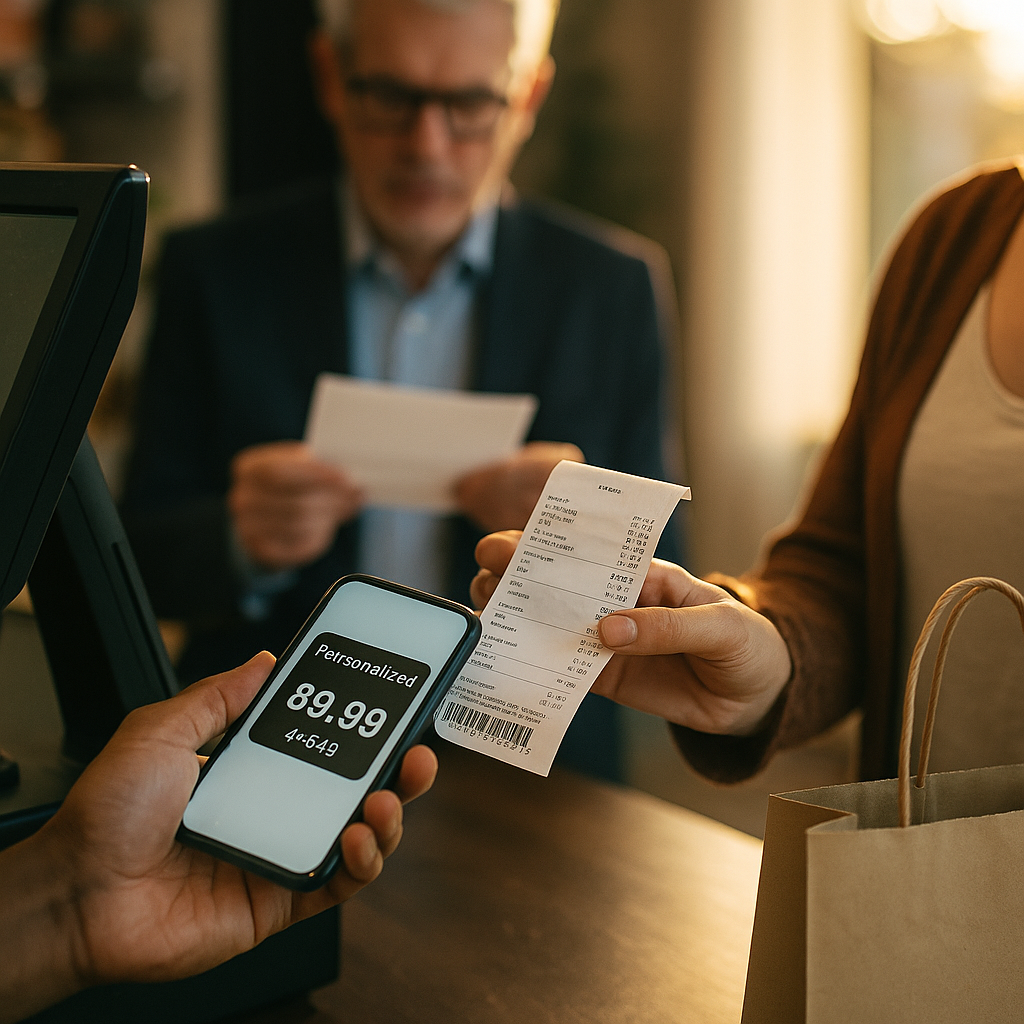
Seventy-eight percent of retailers already use some form of dynamic or personalized pricing, according to industry estimates cited by the FTC in its surveillance pricing inquiry. Now regulators want receipts. Personalized pricing disclosure is no longer a theoretical compliance question — it’s a live regulatory patchwork, and the federal and state approaches don’t agree on much.
If your brand runs algorithmic pricing, dynamic promo codes, or AI-driven offer personalization, you’re about to inherit two rulebooks instead of one. That’s a problem for legal teams, and an even bigger one for marketing ops.
Why This Suddenly Matters to Marketers, Not Just Legal
Pricing used to live in a silo. Marketing built the campaign, pricing teams set the numbers, and disclosure was someone else’s job. That separation doesn’t work anymore. Personalized pricing now runs through the same data pipelines that fuel your ad targeting, loyalty segmentation, and creator commerce funnels. When a TikTok Shop live seller offers a “special” discount code that’s actually algorithmically tailored to a viewer’s browsing history, that’s personalized pricing — and it may trigger disclosure obligations under both federal and state frameworks.
Brands that treat this as a legal-only issue will get blindsided. Marketing controls the creative surface where disclosure has to live: the checkout page, the influencer script, the app notification. Compliance can write the policy, but marketing ships the experience.
Personalized pricing disclosure isn’t a checkbox — it’s a UX requirement that now sits at the intersection of marketing, legal, and data governance.
The FTC’s Proposed Rule: What It Actually Covers
The FTC’s approach, building on its 2025 6(b) surveillance pricing study, centers on transparency at the point of transaction. The core idea: if a price is generated or adjusted using personal data — location, device type, browsing history, purchase frequency, even battery life signals in some documented cases — the consumer has a right to know a personalized price is in play.
The proposed rule doesn’t ban personalized pricing outright. It’s not a price-fixing statute. Instead, it leans on the FTC’s existing unfair-or-deceptive-practices authority, meaning enforcement would likely focus on:
- Failure to disclose that a price was personalized based on consumer data
- Misrepresenting a personalized price as a limited-time or universal discount
- Using dark patterns to obscure the existence of algorithmic pricing at checkout
This dovetails with existing FTC positions on creator compliance obligations around personalized offers, and it extends the logic the agency has already applied to algorithmic surveillance pricing on platforms like TikTok Shop. If your influencer program uses affiliate codes tied to algorithmic discount tiers, you’re already in scope, whether the rule is finalized or not.
Here’s the catch: the FTC’s proposal is still just that — proposed. Rulemaking timelines are notoriously slow, and a change in commission leadership can stall or reshape scope. Brands waiting for a final rule before acting are making a bet on regulatory inertia. That’s a risky bet given how aggressively state legislatures have moved in the meantime.
State Statutes Are Already Ahead of Washington
While the FTC deliberates, states aren’t waiting. California, Colorado, and a handful of others have advanced or passed algorithmic-pricing disclosure statutes that go further — and diverge meaningfully — from the federal proposal.
California’s approach, tied into its broader privacy enforcement infrastructure, treats personalized pricing as a data-use disclosure issue rather than a standalone pricing rule. That means it’s enforced alongside CCPA-adjacent obligations, with disclosure requirements baked into privacy notices rather than checkout screens. This is a meaningfully different compliance surface than what the FTC proposes. Marketing teams already managing California’s data opt-out infrastructure will recognize the pattern: privacy law absorbing pricing law by extension.
Colorado’s statute, by contrast, borrows language closer to its AI governance framework, requiring companies to disclose when “automated decision systems” materially influence price. That’s a broader net than “personalized pricing” — it could sweep in algorithmic bundling, dynamic shipping fees, and even loyalty-tier price gating.
New York has floated legislation requiring point-of-sale disclosure specifically, meaning the notice has to appear at the moment of purchase, not buried in a privacy policy three clicks away. That’s the strictest operational bar of the three, and it’s the one most likely to force actual UX changes on checkout flows.
Three states, three different theories of what “personalized pricing” even means. That’s not a compliance footnote — it’s a fundamentally fragmented legal landscape brands have to build for simultaneously.
Where Federal and State Rules Actually Clash
The friction isn’t hypothetical. Here’s where the FTC’s proposed rule and state statutes genuinely conflict, creating real operational headaches:
- Disclosure location: FTC leans toward point-of-transaction notice; California leans toward privacy-policy-level disclosure; New York wants point-of-sale specificity. A single checkout page may need to satisfy all three.
- Definition of “personalized”: The FTC’s draft language focuses on individual consumer data. Colorado’s automated-decision-system language could capture cohort-based pricing that never touches individually identifiable data.
- Enforcement mechanism: FTC enforcement runs through unfair-or-deceptive-practices authority, meaning fines and consent decrees. Several state statutes include private right of action provisions, opening the door to class action exposure that federal rules don’t currently carry.
- Retroactivity and audit scope: States with privacy-law-linked pricing statutes may require historical data audits going back further than the FTC’s forward-looking proposal contemplates.
This is the same fragmentation pattern brands have already dealt with in multi-state breach notification requirements — different triggers, different timelines, different remedies, one underlying incident. Personalized pricing disclosure is shaping up to be the pricing-world equivalent.
For brands running national e-commerce or omnichannel retail with creator-driven traffic, this means building disclosure logic that’s geographically aware. A shopper in Denver may need to see different pricing context than one in Sacramento, even if the underlying algorithm is identical.
What This Means for Creator and Affiliate Pricing Specifically
Influencer-driven commerce complicates this further. Affiliate codes, tiered discount structures, and “exclusive” creator pricing are functionally a form of personalized pricing — the price a follower sees is contingent on which creator sent them, which is itself a data-driven segmentation decision.
Brands running livestream shopping or TikTok Shop affiliate programs should treat every dynamic discount code as a disclosure trigger candidate. This connects directly to work already underway on auditing creator content data disclosures for pricing models — if a creator’s script implies a price is universal (“everyone gets 20% off with my code”) when it’s actually algorithmically adjusted by region or purchase history, that’s a potential deceptive practice claim layered on top of a disclosure failure.
Livestream formats add another wrinkle. Countdown timers and “limited spots” messaging, already scrutinized under separate FTC scarcity compliance guidance, can compound personalized pricing risk when the “limited” offer is actually a segment-specific price test. Two compliance issues, one live-selling moment.
Building a Compliance Approach That Survives Both Frameworks
Waiting for final rule text is not a strategy. Here’s what a defensible posture looks like right now, regardless of which framework ultimately wins:
- Map every pricing input. Location, loyalty tier, device, browsing history, cart abandonment status — document what feeds your pricing engine. You can’t disclose what you haven’t inventoried.
- Default to point-of-sale disclosure. New York’s stricter standard is the safest baseline. If you disclose at checkout, you likely satisfy looser privacy-policy-based requirements too.
- Audit creator scripts and affiliate messaging. Any script implying universal pricing needs a compliance review, especially for TikTok Shop and livestream formats.
- Build state-aware disclosure logic into checkout. Geolocation-triggered notice language isn’t elegant, but it’s necessary until (if ever) federal preemption harmonizes the landscape.
- Extend your data processing addendums. Any third-party pricing engine or AI vendor needs contractual language covering disclosure obligations — this mirrors the governance work already happening around data processing addendums for AI decision engines.
Marketing leaders should also loop in whoever owns AI-driven ad and pricing budget decisions. If your organization already has a governance charter for AI-driven budget decisions, personalized pricing disclosure belongs in that same review cycle. It’s the same underlying risk category: automated systems making consumer-facing decisions without a human sign-off checkpoint.
Industry data backs the urgency. eMarketer has tracked accelerating adoption of AI-driven dynamic pricing across retail, while Statista surveys show consumer trust in pricing fairness declining as awareness of algorithmic pricing grows. That trust gap is exactly what regulators are responding to — and exactly what brands risk deepening if disclosure feels like an afterthought bolted onto checkout.
For a deeper side-by-side breakdown of clause-level differences between the FTC draft and specific state statutes, see our companion FTC vs. state law comparison guide, which maps enforcement triggers state by state.
Frequently Asked Questions
What is personalized pricing disclosure?
Personalized pricing disclosure refers to legal requirements that businesses inform consumers when a price they see has been algorithmically adjusted based on personal data, such as location, browsing behavior, device type, or purchase history, rather than being a universal, fixed price.
Is the FTC’s personalized pricing rule final?
No. As of now, the FTC’s personalized pricing disclosure framework remains a proposed rule built on findings from its surveillance pricing 6(b) study. Brands should not wait for finalization before building compliance processes, since several states have already enacted or advanced their own statutes.
How do state algorithmic-pricing laws differ from the FTC’s approach?
State laws vary significantly. Some, like California’s, treat personalized pricing as a privacy-disclosure issue tied to existing data protection law. Others, like Colorado’s, use broader “automated decision system” language that can capture more than individually targeted pricing. New York’s proposed approach demands point-of-sale disclosure, a stricter operational standard than either federal or California models.
Does personalized pricing disclosure apply to influencer and affiliate discount codes?
Potentially, yes. If a discount code’s value is algorithmically determined based on a consumer’s data profile rather than applied uniformly, it may qualify as personalized pricing subject to disclosure requirements, especially if creator messaging implies the discount is universal.
What’s the safest compliance baseline for brands operating nationally?
Defaulting to point-of-sale disclosure, the strictest current state standard, generally satisfies looser requirements elsewhere. Pair that with a full pricing-input audit and updated vendor contracts covering AI pricing engines.
What are the penalties for non-compliance?
Under the FTC’s framework, enforcement would likely proceed through its unfair-or-deceptive-practices authority, resulting in fines or consent decrees. Several state statutes include private right of action provisions, which can expose brands to class action litigation independent of regulatory enforcement.
Next step: Run a pricing-input audit this quarter, map every state where you sell, and default your checkout disclosure to the strictest applicable standard. Waiting for federal finality is not a compliance plan — it’s a liability window.
Frequently Asked Questions
What is personalized pricing disclosure?
Personalized pricing disclosure refers to legal requirements that businesses inform consumers when a price they see has been algorithmically adjusted based on personal data, such as location, browsing behavior, device type, or purchase history, rather than being a universal, fixed price.
Is the FTC’s personalized pricing rule final?
No. As of now, the FTC’s personalized pricing disclosure framework remains a proposed rule built on findings from its surveillance pricing 6(b) study. Brands should not wait for finalization before building compliance processes, since several states have already enacted or advanced their own statutes.
How do state algorithmic-pricing laws differ from the FTC’s approach?
State laws vary significantly. Some, like California’s, treat personalized pricing as a privacy-disclosure issue tied to existing data protection law. Others, like Colorado’s, use broader “automated decision system” language that can capture more than individually targeted pricing. New York’s proposed approach demands point-of-sale disclosure, a stricter operational standard than either federal or California models.
Does personalized pricing disclosure apply to influencer and affiliate discount codes?
Potentially, yes. If a discount code’s value is algorithmically determined based on a consumer’s data profile rather than applied uniformly, it may qualify as personalized pricing subject to disclosure requirements, especially if creator messaging implies the discount is universal.
What’s the safest compliance baseline for brands operating nationally?
Defaulting to point-of-sale disclosure, the strictest current state standard, generally satisfies looser requirements elsewhere. Pair that with a full pricing-input audit and updated vendor contracts covering AI pricing engines.
What are the penalties for non-compliance?
Under the FTC’s framework, enforcement would likely proceed through its unfair-or-deceptive-practices authority, resulting in fines or consent decrees. Several state statutes include private right of action provisions, which can expose brands to class action litigation independent of regulatory enforcement.
Top Influencer Marketing Agencies
The leading agencies shaping influencer marketing in 2026
Agencies ranked by campaign performance, client diversity, platform expertise, proven ROI, industry recognition, and client satisfaction. Assessed through verified case studies, reviews, and industry consultations.
Moburst

-
2

The Shelf
Boutique Beauty & Lifestyle Influencer AgencyA data-driven boutique agency specializing exclusively in beauty, wellness, and lifestyle influencer campaigns on Instagram and TikTok. Best for brands already focused on the beauty/personal care space that need curated, aesthetic-driven content.Clients: Pepsi, The Honest Company, Hims, Elf Cosmetics, Pure LeafVisit The Shelf → -
3

Audiencly
Niche Gaming & Esports Influencer AgencyA specialized agency focused exclusively on gaming and esports creators on YouTube, Twitch, and TikTok. Ideal if your campaign is 100% gaming-focused — from game launches to hardware and esports events.Clients: Epic Games, NordVPN, Ubisoft, Wargaming, Tencent GamesVisit Audiencly → -
4

Viral Nation
Global Influencer Marketing & Talent AgencyA dual talent management and marketing agency with proprietary brand safety tools and a global creator network spanning nano-influencers to celebrities across all major platforms.Clients: Meta, Activision Blizzard, Energizer, Aston Martin, WalmartVisit Viral Nation → -
5

The Influencer Marketing Factory
TikTok, Instagram & YouTube CampaignsA full-service agency with strong TikTok expertise, offering end-to-end campaign management from influencer discovery through performance reporting with a focus on platform-native content.Clients: Google, Snapchat, Universal Music, Bumble, YelpVisit TIMF → -
6

NeoReach
Enterprise Analytics & Influencer CampaignsAn enterprise-focused agency combining managed campaigns with a powerful self-service data platform for influencer search, audience analytics, and attribution modeling.Clients: Amazon, Airbnb, Netflix, Honda, The New York TimesVisit NeoReach → -
7

Ubiquitous
Creator-First Marketing PlatformA tech-driven platform combining self-service tools with managed campaign options, emphasizing speed and scalability for brands managing multiple influencer relationships.Clients: Lyft, Disney, Target, American Eagle, NetflixVisit Ubiquitous → -
8

Obviously
Scalable Enterprise Influencer CampaignsA tech-enabled agency built for high-volume campaigns, coordinating hundreds of creators simultaneously with end-to-end logistics, content rights management, and product seeding.Clients: Google, Ulta Beauty, Converse, AmazonVisit Obviously →