


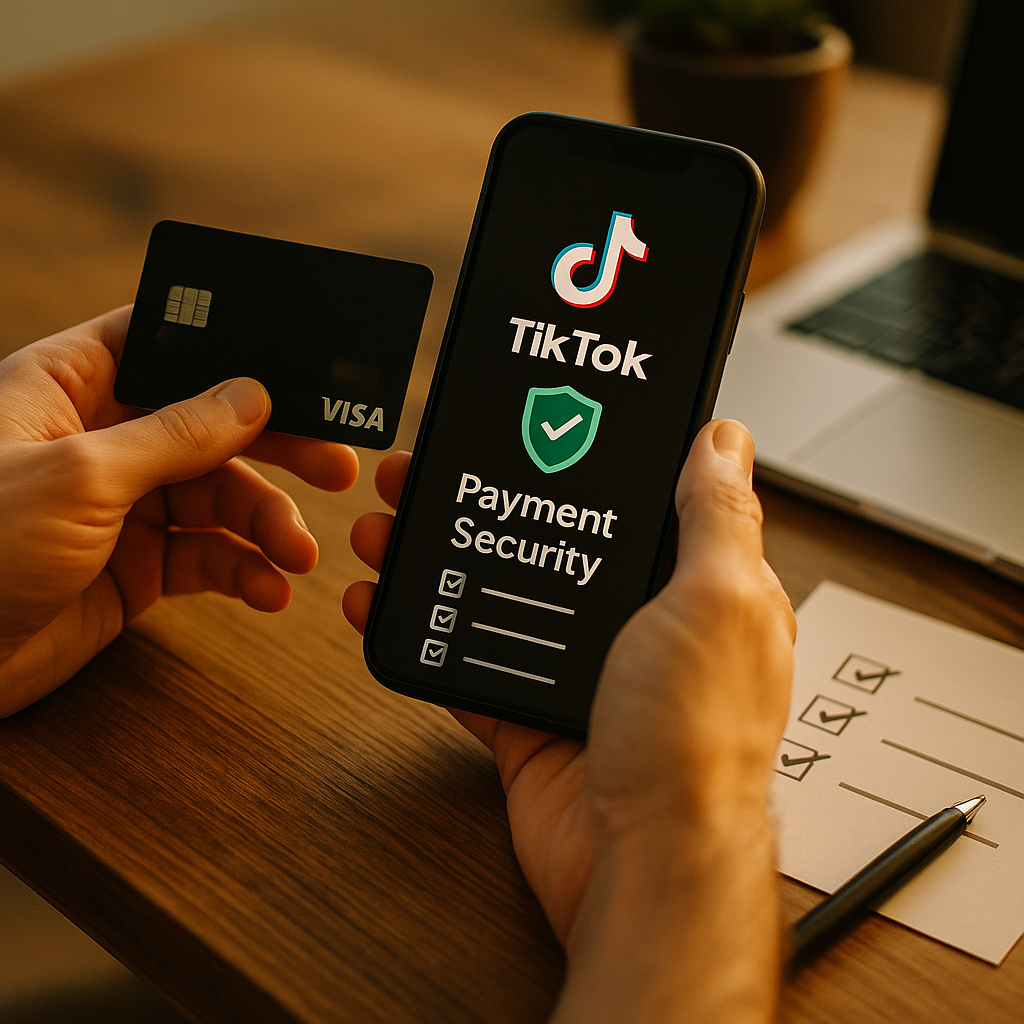
Checkout abandonment on social commerce platforms sits well above 70% industry wide, and payment distrust is a leading cause. TikTok Shop just rolled out a fresh layer of payment security features aimed squarely at that problem, and brands that ignore the shift are leaving GMV on the table. If you run or fund a TikTok Shop storefront, checkout trust just became a budget line, not an afterthought.
This isn’t a cosmetic update. TikTok is adding tokenized payment credentials, enhanced fraud scoring, and clearer buyer-facing security signals at the point of purchase. For brands, that means new compliance checkboxes, new creative opportunities, and a few operational headaches if your finance and legal teams aren’t looped in early.
What Actually Changed in TikTok Shop’s Payment Flow
TikTok Shop’s update centers on three mechanisms: tokenization of stored card data, real-time transaction risk scoring, and visible trust badges at checkout. Tokenization replaces raw card numbers with encrypted tokens, which reduces the attack surface if TikTok’s systems are ever breached. The risk scoring engine flags suspicious orders (mismatched shipping addresses, velocity spikes, device fingerprint anomalies) before they clear, similar to what Shopify and Stripe already run on the backend.
The visible layer matters most for marketers. TikTok is now surfacing security badges, buyer protection messaging, and verified seller indicators directly in the checkout sheet. Think of it as TikTok borrowing Amazon’s trust vocabulary and applying it to a feed-native checkout experience.
Platforms that make security visible at the point of purchase consistently see lower cart abandonment, because buyers aren’t trusting the brand alone anymore. They’re trusting the platform’s infrastructure around that brand.
Why now? TikTok Shop has pushed hard on GMV growth, and fraud losses scale with transaction volume. eMarketer’s social commerce data has repeatedly flagged payment trust as a top-three barrier to conversion on in-app checkout, right behind shipping speed and return policy clarity. TikTok closing that gap isn’t altruism, it’s revenue protection at the platform level that happens to benefit every seller riding on top of it.
Checkout Trust Is Now a Conversion Lever, Not Just a Risk Topic
Here’s the mindset shift brands need to make. Security features used to live entirely in the legal and IT silos. Now they’re a visible part of the funnel, which means marketing owns a piece of this too.
If TikTok is surfacing buyer protection badges and verified seller status, your product listings and live commerce segments can reinforce that messaging instead of ignoring it. A host who says “your payment is protected, and returns are covered” during a live shopping segment is addressing the exact objection that causes cart abandonment in real time. That’s not a compliance script, that’s a conversion tactic hiding inside a trust update.
Brands running high-volume live commerce demo segments should brief hosts on the new badges specifically. Viewers notice unfamiliar UI elements. A host who can explain what the checkmark means, even in one sentence, removes a hesitation point that would otherwise just show up as an abandoned cart in your weekly report.
Where the Operational Risk Actually Lives
The security upgrade also tightens seller-side requirements, and this is where ops teams need to pay attention before finance does.
- Tax and business verification: TikTok’s fraud scoring cross-references seller verification status more aggressively now. Incomplete business documentation can trigger payout holds, not just checkout friction.
- Refund and chargeback thresholds: Elevated fraud flags on a storefront can push a brand into manual review queues, slowing payout cycles that were previously near-instant.
- Affiliate and creator payouts: Brands running large affiliate programs need to confirm that creator payout rails are covered under the same tokenization standard, since a breach anywhere in that chain reflects on the brand, not just TikTok.
- Attribution reporting: Fraud-flagged orders sometimes get excluded from GMV dashboards after the fact, which can quietly shift your reported conversion rate if finance isn’t reconciling numbers weekly.
That last point deserves its own flag. If you’re already tracking revenue proof carefully, this is a good moment to revisit your GMV attribution process, because fraud-adjusted order counts can create discrepancies between what your dashboard shows and what actually settles in your bank account.
Does This Change How Brands Should Vet Affiliate Creators?
Somewhat, yes. TikTok’s new risk scoring doesn’t just look at buyers, it also weighs seller and affiliate behavior patterns. Creators who drive unusually high return rates, or whose audiences show suspicious purchase velocity, can trigger review flags that slow down an entire campaign’s payout, not just one creator’s commission.
This matters more for brands leaning on AI creator pools at scale, where hundreds of affiliates might be pushing the same SKU simultaneously. A handful of bad actors in a large pool can tank the risk score for the whole campaign. Brands should ask their TikTok Shop partner manager directly whether affiliate-level risk scoring rolls up to brand-level account standing, because the answer varies depending on your seller tier.
Pair this with tighter affiliate dashboard monitoring. If you’re not already pulling weekly fraud flag reports from your dashboard, start now. It’s the fastest early warning signal you’ll get that something in your creator funnel needs attention.
Comparing the Trust Stack Across Platforms
TikTok isn’t inventing checkout trust signals from scratch. Amazon has run verified purchase badges and A-to-z Guarantee messaging for years, and brands running the Amazon Live creator program already understand how much weight buyers put on that familiarity. TikTok Shop is effectively catching up to a trust bar that Amazon set over a decade ago.
Where it gets interesting is in head-to-head brand decisions. If you’re splitting budget between TikTok Shop and Amazon, payment security parity removes one of the historical arguments for favoring Amazon by default. Brands reassessing that split should revisit the TikTok Shop vs Amazon payout comparison, because checkout trust was one of the few remaining gaps, and it’s closing fast.
Pinterest has also leaned into secure, low-friction checkout as a differentiator against TikTok’s more impulsive, feed-native buying experience. If your CAC math has favored Pinterest for trust reasons, this update is worth revisiting in your Pinterest vs TikTok Shop CAC model, since the trust gap that used to favor Pinterest just got narrower.
Checkout trust used to be a reason to prefer one platform over another. It’s quickly becoming table stakes everywhere, which means the real differentiator shifts back to creative, pricing, and creator quality.
A Quick Compliance Checklist Before Your Next Campaign
Before launching the next wave of TikTok Shop activity, run through this short list with your ops and legal teams:
- Confirm your seller verification documents are current and matched to your actual business entity, not a holding company name that triggers mismatches.
- Audit your top 20 affiliates for return rate and chargeback history before the next campaign push.
- Update live commerce scripts to reference buyer protection messaging where TikTok’s UI makes it visible.
- Reconcile GMV dashboard numbers against actual settled payouts monthly, not quarterly, while the new risk scoring system stabilizes.
- Loop in whoever owns your FTC disclosure compliance process, since payment trust updates often arrive alongside tightened disclosure enforcement.
None of this is glamorous work. But brands that treat it as a one-time IT update, rather than an ongoing operational discipline, tend to find out the hard way when a payout gets held during a peak sales week.
Benchmarking against broader industry fraud data also helps set realistic expectations. Statista’s e-commerce fraud tracking consistently shows fraud rates climbing fastest on platforms with the steepest GMV growth, which puts TikTok Shop squarely in the highest-risk category right now. That’s not a reason to pull back. It’s a reason to tighten the checklist above.
Frequently Asked Questions
FAQs
What are TikTok Shop’s new payment security features?
The update includes tokenized card data storage, real-time fraud risk scoring on transactions, and visible buyer protection and verified seller badges at checkout.
Will these changes slow down seller payouts?
Possibly, for sellers flagged by the risk scoring engine. Accounts with incomplete verification, high return rates, or unusual order velocity may be routed into manual review, which can delay payout timing.
Do these security features apply to affiliate and creator payouts too?
TikTok has indicated that tokenization standards extend across the payment infrastructure, but brands should confirm directly with their TikTok Shop partner manager how affiliate-level risk scoring interacts with brand account standing.
Should brands change their live commerce scripts because of this update?
It’s worth it. Having hosts briefly reference buyer protection messaging or explain visible security badges can reduce checkout hesitation during live sales segments.
How does TikTok Shop’s payment security compare to Amazon’s?
TikTok Shop is closing a gap that has existed for years, since Amazon’s verified purchase and buyer guarantee programs have been in place for over a decade. The two platforms are now closer to parity on checkout trust signals.
What should brands check before their next campaign launch?
Verify seller documentation accuracy, audit top affiliates for fraud or return flags, update live commerce messaging, and reconcile GMV dashboards against settled payouts monthly.
The bottom line: treat TikTok Shop’s payment security update as a GMV protection project, assign clear ownership across marketing, legal, and ops, and audit your affiliate pool before your next major campaign push.
Top Influencer Marketing Agencies
The leading agencies shaping influencer marketing in 2026
Agencies ranked by campaign performance, client diversity, platform expertise, proven ROI, industry recognition, and client satisfaction. Assessed through verified case studies, reviews, and industry consultations.
Moburst

-
2

The Shelf
Boutique Beauty & Lifestyle Influencer AgencyA data-driven boutique agency specializing exclusively in beauty, wellness, and lifestyle influencer campaigns on Instagram and TikTok. Best for brands already focused on the beauty/personal care space that need curated, aesthetic-driven content.Clients: Pepsi, The Honest Company, Hims, Elf Cosmetics, Pure LeafVisit The Shelf → -
3

Audiencly
Niche Gaming & Esports Influencer AgencyA specialized agency focused exclusively on gaming and esports creators on YouTube, Twitch, and TikTok. Ideal if your campaign is 100% gaming-focused — from game launches to hardware and esports events.Clients: Epic Games, NordVPN, Ubisoft, Wargaming, Tencent GamesVisit Audiencly → -
4

Viral Nation
Global Influencer Marketing & Talent AgencyA dual talent management and marketing agency with proprietary brand safety tools and a global creator network spanning nano-influencers to celebrities across all major platforms.Clients: Meta, Activision Blizzard, Energizer, Aston Martin, WalmartVisit Viral Nation → -
5

The Influencer Marketing Factory
TikTok, Instagram & YouTube CampaignsA full-service agency with strong TikTok expertise, offering end-to-end campaign management from influencer discovery through performance reporting with a focus on platform-native content.Clients: Google, Snapchat, Universal Music, Bumble, YelpVisit TIMF → -
6

NeoReach
Enterprise Analytics & Influencer CampaignsAn enterprise-focused agency combining managed campaigns with a powerful self-service data platform for influencer search, audience analytics, and attribution modeling.Clients: Amazon, Airbnb, Netflix, Honda, The New York TimesVisit NeoReach → -
7

Ubiquitous
Creator-First Marketing PlatformA tech-driven platform combining self-service tools with managed campaign options, emphasizing speed and scalability for brands managing multiple influencer relationships.Clients: Lyft, Disney, Target, American Eagle, NetflixVisit Ubiquitous → -
8

Obviously
Scalable Enterprise Influencer CampaignsA tech-enabled agency built for high-volume campaigns, coordinating hundreds of creators simultaneously with end-to-end logistics, content rights management, and product seeding.Clients: Google, Ulta Beauty, Converse, AmazonVisit Obviously →