


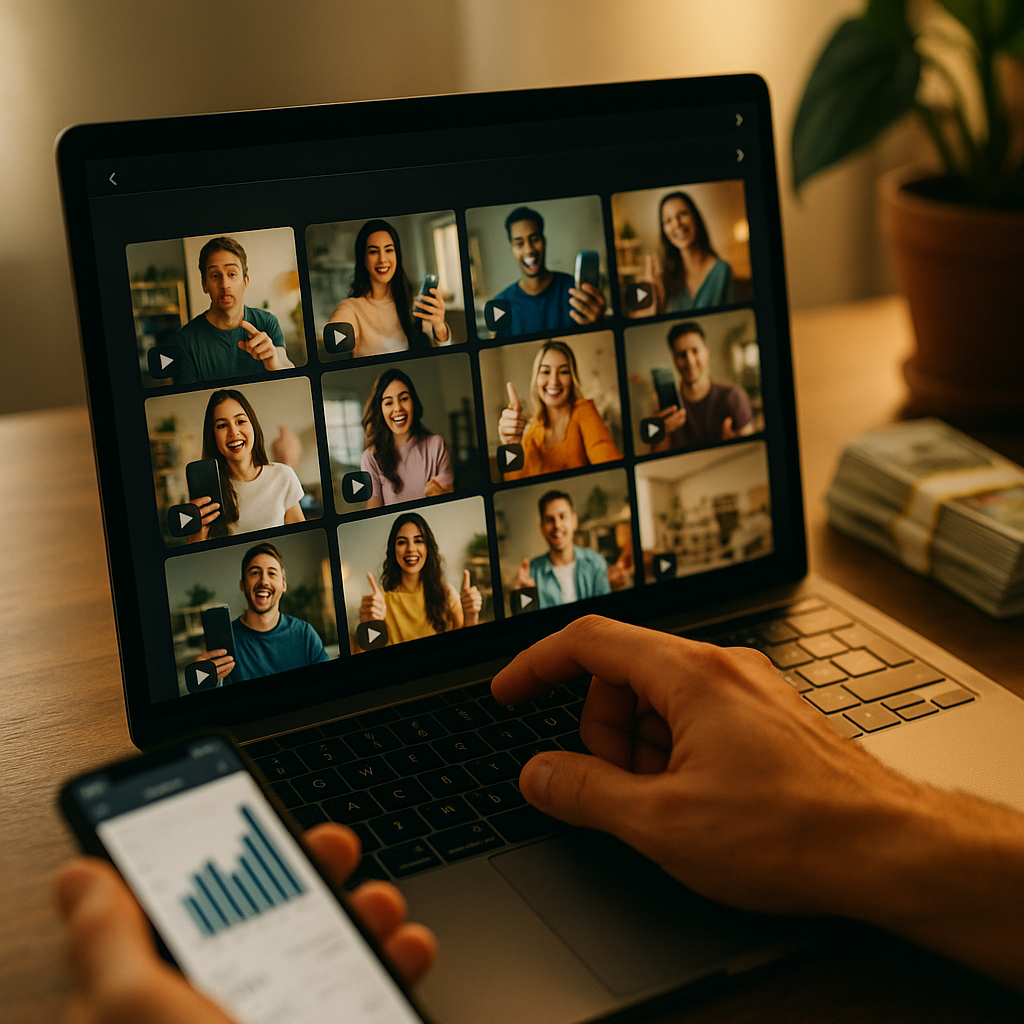
Brands that repurpose one piece of creator content across five placements get more media value than brands that shoot five separate assets for five separate goals. That is not a theory. It is math. A well-built short-form video library is the single biggest unlock most marketing teams are ignoring in favor of chasing the next viral format.
Most teams still treat organic and paid as separate production pipelines, with separate briefs, separate creators, and separate budgets. That split is expensive, slow, and increasingly unnecessary. The smarter approach is building one asset system that feeds both channels from day one.
Why the Organic/Paid Split Is Costing You Money
Here is the pattern we see across mid-market and enterprise programs: the organic social team books creators for feed content, the paid media team separately commissions whitelisted ads, and nobody connects the two. Result? Duplicate briefs, duplicate creator fees, and a content library that is really two disconnected libraries wearing the same brand logo.
This isn’t just inefficient. It actively suppresses performance. Organic content that proves itself with real engagement is exactly the content that should get boosted into paid placements, Spark Ads, Meta Partnership Ads, or whitelisting arrangements. If your paid team is briefing fresh content instead of amplifying proven winners, you are paying twice for the same discovery process.
Treating organic performance data as a paid media targeting signal, rather than a vanity metric, is the single fastest way to cut creator production costs without cutting creator volume.
What a Dual-Purpose Content Library Actually Looks Like
A proper short-form video library isn’t a folder of finished ads. It is a modular asset bank built around three layers: raw footage, edited variants, and performance tags. Each video gets shot and scripted with reuse in mind from the start, not retrofitted after the fact.
Practically, that means every creator brief should specify:
- Multiple hook variants filmed in the same session (3 to 5 opening lines minimum), so you can A/B test paid creative without rebooking the creator.
- Clean B-roll and raw cuts separate from the final edit, so editors can reassemble for different aspect ratios, caption styles, or platform specs later.
- Sound on and sound off versions, since sound off editing approaches change how text overlays carry the message when a video moves from organic autoplay into a paid feed where captions matter more.
- Disclosure language baked in at the script stage, not added as an afterthought, because paid amplification triggers stricter FTC disclosure requirements than organic posting often gets scrutinized for.
This front-loaded planning is the difference between a library that scales and one that becomes a graveyard of single-use clips.
Build the Brief Around Reuse, Not Just the First Post
Most creator briefs are written for a single outcome: get the video live, hit the deadline, move on. A dual-purpose brief asks a different question upfront: where else could this asset live in 90 days? That forces briefs to specify things like whitelisting rights, usage windows, and platform-specific crops before the shoot, not after.
Teams working with retail media placements already know this discipline well. The guidance in retail media ad review processes applies directly here: the more compliance and spec requirements you bake into pre-production, the fewer revision cycles you burn post-production. Scripting for reuse upfront saves weeks of rework later.
Tagging and Taxonomy: The Unsexy Part That Makes Everything Work
A library with no metadata is just a pile of files. The real operational lift is building a tagging system that lets both your organic social manager and your paid media buyer find what they need in under two minutes.
At minimum, tag every asset by:
- Creator tier (nano, micro, mid-tier, macro)
- Content format (tutorial, unboxing, testimonial, skit, duet)
- Platform origin and aspect ratio
- Organic performance metrics (watch time, share rate, comment sentiment)
- Usage rights and expiration date
- Disclosure status and FTC compliance notes
That last point matters more than teams assume. Paid amplification of organic UGC without confirmed usage rights is one of the fastest ways to get a creator complaint or a platform strike. Build the rights tracking into the library from day one, not as a legal fire drill six months later.
Formats like dupe comparison videos and ingredient breakdown content carry extra legal weight because they make comparative or efficacy claims. Those need tighter compliance tagging than a simple lifestyle clip, since paid distribution puts claims in front of regulators and competitors alike.
Scoring Organic Content Before It Ever Touches a Paid Budget
Not every organic post deserves a media spend behind it. The teams getting this right use a scoring threshold before anything graduates from the library into a paid test.
A simple but effective model looks at three signals within the first 48 hours of an organic post: watch-through rate relative to platform benchmark, save-to-view ratio, and comment sentiment (not just volume). Content that clears all three gets flagged for paid testing. Content that clears one or two gets archived for later remixing. Content that clears none gets left alone.
This scoring discipline is what separates brands that treat AI recommendation engines as a black box from those that actually understand what the algorithm is rewarding. If you know why a video performed organically, you can brief more of it deliberately instead of hoping for another lucky hit.
A video that earns a 60 percent average watch-through organically is a far safer paid media bet than a brand-scripted ad with zero real-world signal behind it.
Platforms are increasingly rewarding this approach structurally, too. TikTok’s Spark Ads and Meta’s partnership ad tools both let brands boost existing organic posts directly, which means the infrastructure already favors a library-first mindset over a campaign-by-campaign one.
Formats That Naturally Serve Both Channels
Some content types are built for dual-purpose use almost by design. These tend to perform organically because they feel native, and they convert in paid because they carry proof, not polish.
- Stitched review compilations, which pull multiple creator voices into one trust-building asset. See stitched review compilations for scripting structure.
- Tier list and ranking videos, which generate strong organic comment engagement and double as comparison-driven paid creative. Reference tier list videos for legal-safe scripting.
- Founder-led explainer or rebuttal content, which builds organic trust and performs well as paid creative because it reads as authentic rather than scripted. See founder rebuttal videos.
- Street interview style content, which has high organic shareability and translates into paid social proof when cut correctly. Reference street interview scripting.
Notice the common thread: none of these formats look like traditional ads. That is exactly why they work in both environments. Audiences on Meta and TikTok have gotten extremely good at tuning out polished ad creative, which is the entire reason whitelisting and organic-to-paid pipelines exist in the first place.
Operational Cadence: How Often Should You Refresh the Library?
Static libraries die fast. A library that isn’t refreshed monthly becomes a liability within a quarter, because paid fatigue sets in on the same handful of winning assets long before organic audiences get tired of them.
A reasonable cadence for most mid-size brands running continuous influencer programs:
- Weekly: tag and score new organic posts.
- Biweekly: review paid performance data and rotate underperforming creative out of ad sets.
- Monthly: commission 3 to 5 net-new creator shoots specifically built for library reuse, not single-campaign use.
- Quarterly: audit usage rights and disclosure compliance across the entire library to catch expired agreements before legal does.
Industry benchmarking from eMarketer and Statista continues to show short-form video commanding the largest share of social ad spend growth, which means the libraries feeding that spend need to scale in volume without scaling production cost proportionally. The only way to do that is reuse discipline, not just more shooting.
Tools and Workflow, Not Just Strategy
A library strategy without workflow tooling just becomes a shared drive nobody updates. Most teams need a lightweight digital asset management layer connected to their social scheduling and ad platforms, with enough metadata structure to support the tagging system above. HubSpot’s content tools and Sprout Social’s asset libraries, referenced at HubSpot and Sprout Social, both offer starting points for brands not ready to build custom infrastructure.
Whatever tool you pick, the non-negotiable is a single system both the organic and paid teams check before any new creator brief goes out. If those teams are still working from separate spreadsheets, the dual-purpose library is theoretical, not real.
What About Formats Built for Live or Real-Time Content?
Livestream and real-time formats add a wrinkle, since the raw footage is long-form by default. The fix is treating every livestream as a harvesting opportunity rather than a one-off event. Clip the highlights immediately, tag them the same way as any other library asset, and feed the best moments into the same organic-to-paid pipeline. The approach outlined in livestream replay clips and shoppable countdown lives both treat the live event as a content farm rather than a finished asset, which is exactly the mindset a dual-purpose library requires.
The next step is simple: audit your last quarter of creator content, tag what actually drove organic engagement, and brief your paid team to test those winners before commissioning a single new shoot.
FAQs
What is a short-form video library in the context of influencer marketing?
It is an organized, tagged collection of creator-produced video assets built for reuse across organic social feeds, paid whitelisting, and ad placements, rather than a single-use folder of finished posts.
How do brands decide which organic content gets paid media spend?
Most teams score content on watch-through rate, save-to-view ratio, and comment sentiment within the first 48 hours, then only promote assets that clear a defined performance threshold before committing ad budget.
What legal risks come with reusing organic creator content in paid ads?
The main risks are unconfirmed usage rights and insufficient disclosure language, since paid amplification triggers stricter FTC scrutiny than standard organic posting and can expose brands to creator disputes or regulatory complaints.
How often should a short-form video library be refreshed?
Weekly tagging of new organic content, biweekly paid performance reviews, monthly net-new creator shoots, and quarterly compliance audits is a reasonable cadence for most continuous influencer programs.
Do organic and paid teams need separate content, or can they share the same assets?
They can and should share assets. Building briefs and tagging systems around reuse from the start eliminates duplicate creator fees and lets paid teams amplify proven organic winners instead of testing unproven new creative.
Top Influencer Marketing Agencies
The leading agencies shaping influencer marketing in 2026
Agencies ranked by campaign performance, client diversity, platform expertise, proven ROI, industry recognition, and client satisfaction. Assessed through verified case studies, reviews, and industry consultations.
Moburst

-
2

The Shelf
Boutique Beauty & Lifestyle Influencer AgencyA data-driven boutique agency specializing exclusively in beauty, wellness, and lifestyle influencer campaigns on Instagram and TikTok. Best for brands already focused on the beauty/personal care space that need curated, aesthetic-driven content.Clients: Pepsi, The Honest Company, Hims, Elf Cosmetics, Pure LeafVisit The Shelf → -
3

Audiencly
Niche Gaming & Esports Influencer AgencyA specialized agency focused exclusively on gaming and esports creators on YouTube, Twitch, and TikTok. Ideal if your campaign is 100% gaming-focused — from game launches to hardware and esports events.Clients: Epic Games, NordVPN, Ubisoft, Wargaming, Tencent GamesVisit Audiencly → -
4

Viral Nation
Global Influencer Marketing & Talent AgencyA dual talent management and marketing agency with proprietary brand safety tools and a global creator network spanning nano-influencers to celebrities across all major platforms.Clients: Meta, Activision Blizzard, Energizer, Aston Martin, WalmartVisit Viral Nation → -
5

The Influencer Marketing Factory
TikTok, Instagram & YouTube CampaignsA full-service agency with strong TikTok expertise, offering end-to-end campaign management from influencer discovery through performance reporting with a focus on platform-native content.Clients: Google, Snapchat, Universal Music, Bumble, YelpVisit TIMF → -
6

NeoReach
Enterprise Analytics & Influencer CampaignsAn enterprise-focused agency combining managed campaigns with a powerful self-service data platform for influencer search, audience analytics, and attribution modeling.Clients: Amazon, Airbnb, Netflix, Honda, The New York TimesVisit NeoReach → -
7

Ubiquitous
Creator-First Marketing PlatformA tech-driven platform combining self-service tools with managed campaign options, emphasizing speed and scalability for brands managing multiple influencer relationships.Clients: Lyft, Disney, Target, American Eagle, NetflixVisit Ubiquitous → -
8

Obviously
Scalable Enterprise Influencer CampaignsA tech-enabled agency built for high-volume campaigns, coordinating hundreds of creators simultaneously with end-to-end logistics, content rights management, and product seeding.Clients: Google, Ulta Beauty, Converse, AmazonVisit Obviously →