


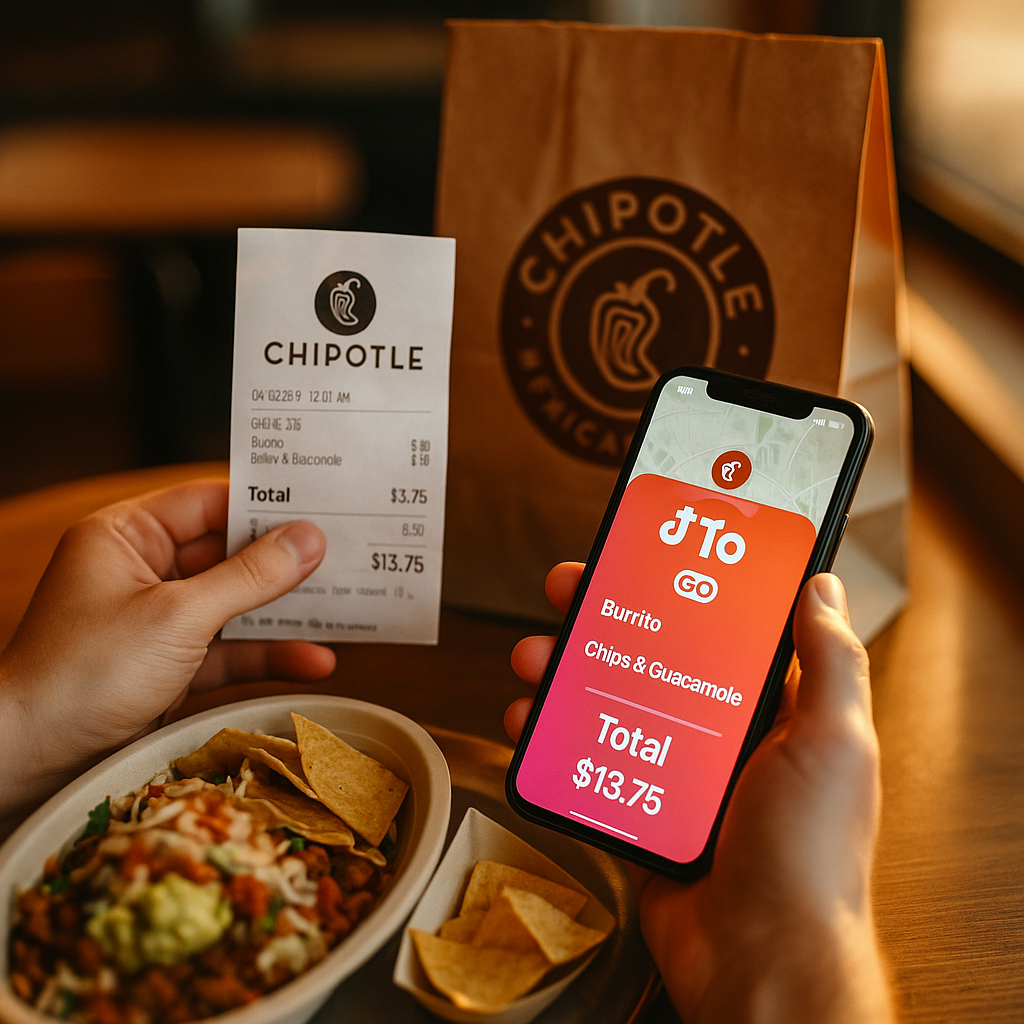
Flat fees are a leap of faith. Commissions are proof. When Chipotle quietly rebuilt its TikTok Go creator program around verified sales instead of guaranteed payouts, it forced a question every brand marketer avoids: are you paying for content, or for revenue? The early data suggests those are very different budgets.
Why Chipotle Blew Up Its Own Playbook
For years, the standard influencer deal looked the same everywhere: negotiate a flat fee, brief the creator, hope the video performs, move on. Chipotle ran that model too. But flat fees have a structural flaw nobody likes to say out loud — they pay the same whether a video sells ten burritos or ten thousand.
Chipotle’s marketing team, already deep into TikTok Shop integration, decided to test something riskier: tying creator compensation directly to verified sales commissions. Not vibes. Not view counts. Actual completed orders, tracked through TikTok’s native attribution and Chipotle’s own POS data. The brand had already laid groundwork here, as detailed in our earlier coverage of how same-day order attribution finally became solvable on TikTok Shop.
That attribution fix mattered more than most marketers realize. You can’t pay commission on sales you can’t verify. Chipotle needed clean data before it could even consider the switch, and that infrastructure work is the unglamorous part of this story that most case studies skip.
The Mechanics of the Rollout
TikTok Go isn’t a single campaign. It’s Chipotle’s ongoing creator program, and the commission pivot rolled out in phases rather than all at once. Here’s roughly how it worked, based on program details our team previously broke down when the shift away from flat fees first became public:
- Creators kept a small base fee for content production, covering the time and cost of filming.
- The bulk of earning potential shifted to a commission percentage on trackable TikTok Shop sales generated from their unique links or Shop tags.
- Chipotle segmented creators by tier, nano to mid-size, with different commission structures based on historical conversion rates rather than follower count alone.
- Payouts synced to a 30-day attribution window, matching TikTok Shop’s standard cookie tracking period.
Notice what’s missing: no reliance on brand-lift surveys, no vague “engagement bonus” tiers. Just sales, verified against Chipotle’s own transaction records. That’s the part agencies should be paying attention to. It closes the loop that flat-fee deals never could.
When creator pay is tied to verified transactions instead of impressions, brands stop guessing at ROI and start measuring it in the same currency as the rest of their marketing budget.
What the Early Sales Data Actually Shows
The numbers from the first 90 days are the real story here, and they’re more nuanced than a simple “commissions win” headline. Our deep dive into the hybrid payout model’s 90-day sales data found that top-performing creators actually earned more under the commission structure than they would have under flat fees. That’s the incentive alignment working as intended: the creators driving real purchase behavior got rewarded proportionally, rather than capped at a negotiated rate.
But there’s a flip side. Mid-tier creators whose content performed well on engagement metrics but poorly on conversion saw their earnings drop, sometimes significantly. Some of them pushed back publicly. That tension is exactly why brands considering this model need to think hard about creator communication before launch, not after.
A few patterns emerged that marketing teams should note:
- Menu-hack and recipe-remix content converted at a noticeably higher rate than lifestyle or “day in the life” formats, echoing what Chipotle already learned when it turned TikTok menu hacks into trackable sales.
- Videos posted within two hours of lunch and dinner dayparts drove disproportionately higher same-day conversion.
- Nano-creators with smaller, more niche audiences often out-converted mid-tier creators on a per-post basis, even though their absolute sales volume was lower.
That last point tracks with a broader trend we’ve covered across the industry: nano and micro-creators consistently punch above their follower count on cost-per-acquisition, a pattern also visible in Aldi’s grocery haul strategy and REI’s trail review program.
Is This Actually Cheaper for Chipotle?
Not necessarily, and that’s an important nuance. The commission model isn’t primarily a cost-cutting move. It’s a risk redistribution move. Under flat fees, Chipotle absorbed all the downside risk of underperforming content while creators absorbed none. Under commissions, that risk shifts partly onto the creator, and Chipotle only pays big when sales are big.
Total program spend, according to the early data, landed roughly flat compared to the prior flat-fee period, but the distribution changed dramatically. Top performers earned more; underperformers earned less. For Chipotle’s finance team, that’s a much easier structure to defend internally, because spend now scales with revenue rather than sitting as a fixed line item regardless of results.
This is the piece other CPG and QSR brands should study closely. It’s not about squeezing creator budgets. It’s about making creator spend behave like a variable cost tied to performance, similar to how brands already treat paid search or affiliate commissions.
What Brands Should Steal From This Model
You don’t need to be Chipotle’s size to test a version of this. A few operational takeaways worth borrowing:
- Fix attribution before you touch compensation. Chipotle’s commission model only works because order-level tracking already existed. Skipping that step means you’re paying commissions on guesswork.
- Keep a small base fee. Pure commission-only deals scare off good creators and invite legal risk around independent contractor classification. A modest base plus commission is the safer structure.
- Segment by conversion history, not follower count. Chipotle’s tiering by past conversion performance, not audience size, is arguably the smartest part of the whole program.
- Communicate the shift early and often. Creator backlash is avoidable if you explain the earning ceiling can actually be higher, not lower, for strong performers.
Brands running comparable hybrid or commission-based creator programs, like Viator’s booking-driven creator model or Ryobi’s cost-per-sale approach, report similar dynamics: better top-line ROI, but real friction with creators who over-index on content quality rather than conversion.
The Compliance Angle Nobody’s Talking About Enough
Sales-commission influencer deals introduce disclosure and endorsement complexities that flat-fee deals mostly sidestepped. When a creator’s income is directly tied to a purchase link, the FTC’s endorsement guidance becomes even more relevant, since affiliate-style compensation must be disclosed clearly, not buried in a caption. Brands moving to commission models should also revisit contract language around performance claims. Creators chasing commission have more incentive to oversell taste, freshness, or ingredients than creators paid a flat rate regardless of outcome. That’s not hypothetical, it’s a predictable behavioral shift, and legal teams should get ahead of it before creators start improvising.
Platforms are watching too. TikTok’s own TikTok Shop advertising resources increasingly emphasize disclosure compliance as commission-based creator deals scale across categories, from food to beauty to retail.
Where This Leaves the Broader Creator Economy
Chipotle isn’t operating in isolation. The shift from flat fees to performance-based creator pay is showing up across categories, from Skims’ seeding strategy to ThredUp’s resale hauls. Industry data from eMarketer has tracked steady growth in affiliate and commission-based creator compensation as a share of total influencer marketing spend, and platforms like HubSpot now publish benchmark data treating creator commissions as a distinct line item from traditional sponsorship fees.
What Chipotle’s rollout adds to that conversation is scale. This isn’t a boutique DTC brand testing affiliate links with a handful of creators. It’s a national QSR chain running commission-based pay across a meaningful creator roster, with real POS data behind the results. That’s the kind of proof point that tends to move the whole industry, not just one brand’s playbook.
The takeaway for brand marketers is simple: before you copy Chipotle’s model, audit your own attribution stack first. Commission-based creator pay only works if you can verify the sale, and that infrastructure question will determine whether this becomes your next win or your next dispute.
Frequently Asked Questions
What is Chipotle’s TikTok Go program?
TikTok Go is Chipotle’s ongoing creator partnership program on TikTok, which recently shifted from flat-fee payments to a hybrid model combining a smaller base fee with sales commissions tied to verified TikTok Shop orders.
How does Chipotle verify sales from creator content?
Chipotle uses TikTok Shop’s native attribution tools combined with its own point-of-sale data to match purchases to specific creator links or Shop tags within a defined attribution window, typically 30 days.
Did the commission model reduce Chipotle’s total creator spend?
Not significantly. Early data suggests total program spend stayed roughly flat compared to the prior flat-fee structure, but distribution shifted, with high-converting creators earning more and low-converting creators earning less.
What type of content performs best under this model?
Menu-hack and recipe-remix videos posted close to lunch and dinner dayparts showed notably higher conversion rates than general lifestyle content in Chipotle’s early sales data.
Should smaller brands try a commission-based creator model?
Yes, but only after establishing reliable sales attribution. Brands without clean order-tracking infrastructure risk disputes over commission accuracy and should start with a hybrid base-plus-commission structure rather than pure commission.
Top Influencer Marketing Agencies
The leading agencies shaping influencer marketing in 2026
Agencies ranked by campaign performance, client diversity, platform expertise, proven ROI, industry recognition, and client satisfaction. Assessed through verified case studies, reviews, and industry consultations.
Moburst

-
2

The Shelf
Boutique Beauty & Lifestyle Influencer AgencyA data-driven boutique agency specializing exclusively in beauty, wellness, and lifestyle influencer campaigns on Instagram and TikTok. Best for brands already focused on the beauty/personal care space that need curated, aesthetic-driven content.Clients: Pepsi, The Honest Company, Hims, Elf Cosmetics, Pure LeafVisit The Shelf → -
3

Audiencly
Niche Gaming & Esports Influencer AgencyA specialized agency focused exclusively on gaming and esports creators on YouTube, Twitch, and TikTok. Ideal if your campaign is 100% gaming-focused — from game launches to hardware and esports events.Clients: Epic Games, NordVPN, Ubisoft, Wargaming, Tencent GamesVisit Audiencly → -
4

Viral Nation
Global Influencer Marketing & Talent AgencyA dual talent management and marketing agency with proprietary brand safety tools and a global creator network spanning nano-influencers to celebrities across all major platforms.Clients: Meta, Activision Blizzard, Energizer, Aston Martin, WalmartVisit Viral Nation → -
5

The Influencer Marketing Factory
TikTok, Instagram & YouTube CampaignsA full-service agency with strong TikTok expertise, offering end-to-end campaign management from influencer discovery through performance reporting with a focus on platform-native content.Clients: Google, Snapchat, Universal Music, Bumble, YelpVisit TIMF → -
6

NeoReach
Enterprise Analytics & Influencer CampaignsAn enterprise-focused agency combining managed campaigns with a powerful self-service data platform for influencer search, audience analytics, and attribution modeling.Clients: Amazon, Airbnb, Netflix, Honda, The New York TimesVisit NeoReach → -
7

Ubiquitous
Creator-First Marketing PlatformA tech-driven platform combining self-service tools with managed campaign options, emphasizing speed and scalability for brands managing multiple influencer relationships.Clients: Lyft, Disney, Target, American Eagle, NetflixVisit Ubiquitous → -
8

Obviously
Scalable Enterprise Influencer CampaignsA tech-enabled agency built for high-volume campaigns, coordinating hundreds of creators simultaneously with end-to-end logistics, content rights management, and product seeding.Clients: Google, Ulta Beauty, Converse, AmazonVisit Obviously →