


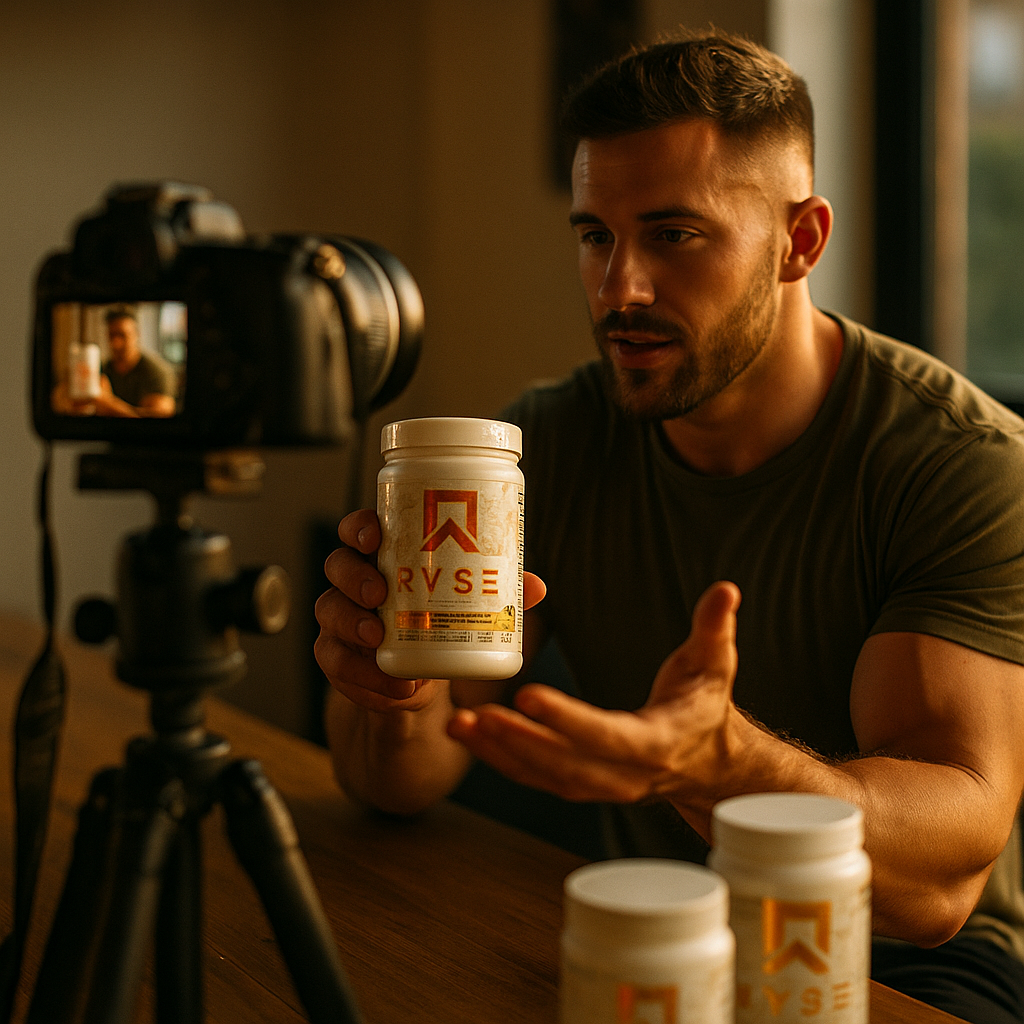
Ryse Supplements moved over $2 million in a single TikTok Shop campaign cycle, according to platform leaderboard data cited across creator forums. That kind of velocity doesn’t happen by accident. It happens because the brand rebuilt its TikTok Shop commission structure around one question most supplement brands never ask: how do you keep your best creators from walking to a competitor the moment a bigger check shows up?
The Commission Problem Every Supplement Brand Faces
Supplements are a brutal category for affiliate economics. Margins are healthy enough to support generous payouts, but customer acquisition cost is punishing, repeat purchase cycles are long, and the FTC watches disclosure practices closely. Add TikTok Shop’s open marketplace dynamics, where any creator can request a sample and start selling, and you get a flood of mid-tier affiliates chasing a flat commission rate with zero loyalty to the brand.
Most brands respond with a single number. Fifteen percent, twenty percent, whatever the finance team approves. It’s simple to administer and easy to explain. It’s also a terrible way to retain the creators actually driving sales velocity, because a flat rate treats your top 1 percent the same as a nano creator who posts once and disappears.
Ryse took a different approach, and it’s worth unpacking because the underlying logic applies far beyond protein powder.
Inside Ryse’s Tiered Commission Model
Rather than one commission rate for everyone, Ryse structures payouts around performance tiers tied to sales volume, content cadence, and tenure in the program. Creators who onboard, post consistently, and convert at scale move into higher brackets that unlock elevated base commissions plus bonus structures tied to GMV milestones.
- Entry tier: standard commission rate available to any approved affiliate, designed to let new creators prove conversion capability.
- Growth tier: creators hitting sustained monthly GMV thresholds graduate to an elevated base rate plus access to exclusive product drops and early codes.
- Top tier: the brand’s highest-performing affiliates receive negotiated rates, often supplemented with flat guarantees, bonus pools tied to leaderboard placement, and first access to new SKUs before public launch.
The structure mirrors what you’d see in a well-run sales comp plan more than a traditional affiliate program. That’s deliberate. Ryse’s team treats top creators as quota-carrying partners, not interchangeable content vendors.
A flat commission rate rewards whoever posts, not whoever sells. Ryse’s tiered structure flips that logic, paying the most to the creators who prove repeatable conversion over time.
Why Flat Rates Fail Top Creators
Here’s the uncomfortable truth flat-rate programs ignore: your best creators have options. A TikTok Shop affiliate doing six figures in monthly GMV for one supplement brand is getting DMs from three competitors offering the same or better rate with less proven inventory. If your commission structure doesn’t differentiate that creator from someone who sold twelve units last month, you’re one DM away from losing your top earner.
Ryse’s bonus pools and milestone-based increases solve for this by making loyalty mathematically rational. A creator earning a 25 percent base plus a volume bonus at $50,000 in monthly sales has a real incentive to concentrate effort on Ryse rather than spreading content across five brands at a flat 15 percent each. This is similar to the logic behind tripling creator commissions during peak windows, where Myntra found that temporary rate increases during high-intent shopping periods pulled disproportionate effort from top affiliates.
Retention Over Acquisition: The Real Math
Marketers love to talk about creator acquisition, but retention is where the ROI actually lives. Recruiting a new TikTok Shop affiliate means sampling costs, onboarding time, and an unproven conversion rate. A retained top performer already has audience trust, proven creative formats, and a track record you can forecast against.
eMarketer and other industry researchers have repeatedly flagged creator churn as one of the biggest hidden costs in affiliate-driven commerce programs. If you’re rebuilding your top 10 percent every quarter, you’re paying onboarding costs on repeat while your conversion data never matures enough to optimize against. Ryse’s tiering effectively pays a retention premium, and that premium is cheaper than constant recruitment.
This logic shows up elsewhere in the TikTok Shop ecosystem too. Scrub Daddy’s open affiliate model took a different route, prioritizing volume of participation over tiered exclusivity, and it worked for a low-consideration household product. Supplements are a higher-trust, higher-repeat category, which is exactly why Ryse’s approach leans toward depth over breadth.
Compliance Still Matters More Than the Spreadsheet
None of this works if disclosure and FTC compliance get sloppy in the pursuit of volume. Tiered commission programs can actually create compliance risk if brands aren’t careful, because top earners sometimes feel pressure to post more frequently, occasionally without consistent #ad or #sponsored tagging. Ryse’s program reportedly builds disclosure checks into its creator onboarding and content review workflow, which matters given the FTC’s ongoing enforcement focus on influencer endorsement guidelines in supplements and wellness categories specifically.
Supplement claims carry additional regulatory weight beyond standard disclosure. Any creator making health or performance claims without proper substantiation exposes the brand to liability, not just the creator. Brands running tiered commission programs in this category need a review layer that checks claims language before content goes live, not after it’s already driving sales.
What Other Brands Can Steal From This Playbook
You don’t need Ryse’s exact tier thresholds to apply the underlying principle. A few operational takeaways for brands evaluating their own TikTok Shop commission structure:
- Build at least two tiers above entry level, so top performers have a visible path to higher payouts rather than a flat ceiling.
- Tie bonus thresholds to GMV or units sold, not follower count or content volume alone.
- Offer early product access or exclusive codes to top tiers. It costs little and signals partnership status beyond cash.
- Build disclosure review into the tiering workflow, especially in regulated categories like supplements, beauty, or finance.
- Revisit tier thresholds quarterly. A threshold that felt aspirational six months ago may already be the median for your top cohort.
Brands like Huda Beauty’s tiered creator mix and Princess Polly’s large-scale creator network show this isn’t a supplement-specific tactic. It’s a category-agnostic fix for a structural problem in affiliate commerce: flat rates can’t differentiate your best partners from your average ones, and TikTok Shop’s open marketplace makes that gap painfully visible in real time leaderboards.
Electronics and other high-consideration categories are wrestling with similar questions as TikTok Shop expands. Best Buy’s recent TikTok Shop launch raises comparable questions about how trust and commission structure interact when the product category carries higher stakes than impulse buys.
The Data Behind the Decision
Platform-level TikTok Shop GMV has grown fast enough that Statista’s e-commerce tracking and eMarketer’s social commerce forecasts both flag it as one of the fastest-growing retail channels in the US market. That growth attracts more affiliates competing for the same shelf space, which pushes commission rates up across the board. Brands that don’t structure payouts strategically end up in a bidding war they can’t win against bigger-budget competitors.
Sprout Social’s research on creator partnership trends has consistently shown that retained, long-term creator relationships outperform one-off sponsorships on trust signals and conversion, which tracks with what Ryse appears to be optimizing for structurally rather than hoping for organically.
FAQs
What is a tiered TikTok Shop commission structure?
A tiered commission structure pays different rates based on creator performance, typically measured by sales volume, GMV thresholds, or tenure in the program. Higher-performing creators unlock elevated base rates and bonus pools rather than everyone earning the same flat percentage.
Why would a brand pay top creators more than new affiliates?
Retention. A proven top performer already has audience trust and a track record of converting, which makes them cheaper to keep than recruiting and onboarding new affiliates at the same volume. Paying a retention premium reduces churn and stabilizes forecasting.
Does a tiered commission model create compliance risk?
It can if disclosure practices aren’t built into the onboarding workflow. Brands running tiered programs, especially in regulated categories like supplements, should review FTC endorsement guidelines and ensure claims language is checked before content publishes, not after.
How does this differ from Scrub Daddy’s open affiliate approach?
Scrub Daddy prioritized broad participation across many creators for a low-consideration household product. Ryse’s model leans toward depth, rewarding a smaller group of top performers more heavily, which fits a higher-trust, repeat-purchase category like supplements.
Can smaller brands replicate this commission structure?
Yes. The core mechanics, entry rate, growth tier, and top tier with bonus incentives, don’t require massive budgets to implement. What matters is tying thresholds to actual GMV data and revisiting them regularly as the creator base matures.
The takeaway: if your TikTok Shop program still runs on a single flat commission rate, you’re not protecting your top earners from competitor offers. Audit your current tier structure against actual GMV data this quarter, and build at least one bonus threshold that makes staying more profitable than leaving.
FAQs
What is a tiered TikTok Shop commission structure?
A tiered commission structure pays different rates based on creator performance, typically measured by sales volume, GMV thresholds, or tenure in the program. Higher-performing creators unlock elevated base rates and bonus pools rather than everyone earning the same flat percentage.
Why would a brand pay top creators more than new affiliates?
Retention. A proven top performer already has audience trust and a track record of converting, which makes them cheaper to keep than recruiting and onboarding new affiliates at the same volume. Paying a retention premium reduces churn and stabilizes forecasting.
Does a tiered commission model create compliance risk?
It can if disclosure practices aren’t built into the onboarding workflow. Brands running tiered programs, especially in regulated categories like supplements, should review FTC endorsement guidelines and ensure claims language is checked before content publishes, not after.
How does this differ from Scrub Daddy’s open affiliate approach?
Scrub Daddy prioritized broad participation across many creators for a low-consideration household product. Ryse’s model leans toward depth, rewarding a smaller group of top performers more heavily, which fits a higher-trust, repeat-purchase category like supplements.
Can smaller brands replicate this commission structure?
Yes. The core mechanics, entry rate, growth tier, and top tier with bonus incentives, don’t require massive budgets to implement. What matters is tying thresholds to actual GMV data and revisiting them regularly as the creator base matures.
Top Influencer Marketing Agencies
The leading agencies shaping influencer marketing in 2026
Agencies ranked by campaign performance, client diversity, platform expertise, proven ROI, industry recognition, and client satisfaction. Assessed through verified case studies, reviews, and industry consultations.
Moburst

-
2

The Shelf
Boutique Beauty & Lifestyle Influencer AgencyA data-driven boutique agency specializing exclusively in beauty, wellness, and lifestyle influencer campaigns on Instagram and TikTok. Best for brands already focused on the beauty/personal care space that need curated, aesthetic-driven content.Clients: Pepsi, The Honest Company, Hims, Elf Cosmetics, Pure LeafVisit The Shelf → -
3

Audiencly
Niche Gaming & Esports Influencer AgencyA specialized agency focused exclusively on gaming and esports creators on YouTube, Twitch, and TikTok. Ideal if your campaign is 100% gaming-focused — from game launches to hardware and esports events.Clients: Epic Games, NordVPN, Ubisoft, Wargaming, Tencent GamesVisit Audiencly → -
4

Viral Nation
Global Influencer Marketing & Talent AgencyA dual talent management and marketing agency with proprietary brand safety tools and a global creator network spanning nano-influencers to celebrities across all major platforms.Clients: Meta, Activision Blizzard, Energizer, Aston Martin, WalmartVisit Viral Nation → -
5

The Influencer Marketing Factory
TikTok, Instagram & YouTube CampaignsA full-service agency with strong TikTok expertise, offering end-to-end campaign management from influencer discovery through performance reporting with a focus on platform-native content.Clients: Google, Snapchat, Universal Music, Bumble, YelpVisit TIMF → -
6

NeoReach
Enterprise Analytics & Influencer CampaignsAn enterprise-focused agency combining managed campaigns with a powerful self-service data platform for influencer search, audience analytics, and attribution modeling.Clients: Amazon, Airbnb, Netflix, Honda, The New York TimesVisit NeoReach → -
7

Ubiquitous
Creator-First Marketing PlatformA tech-driven platform combining self-service tools with managed campaign options, emphasizing speed and scalability for brands managing multiple influencer relationships.Clients: Lyft, Disney, Target, American Eagle, NetflixVisit Ubiquitous → -
8

Obviously
Scalable Enterprise Influencer CampaignsA tech-enabled agency built for high-volume campaigns, coordinating hundreds of creators simultaneously with end-to-end logistics, content rights management, and product seeding.Clients: Google, Ulta Beauty, Converse, AmazonVisit Obviously →