


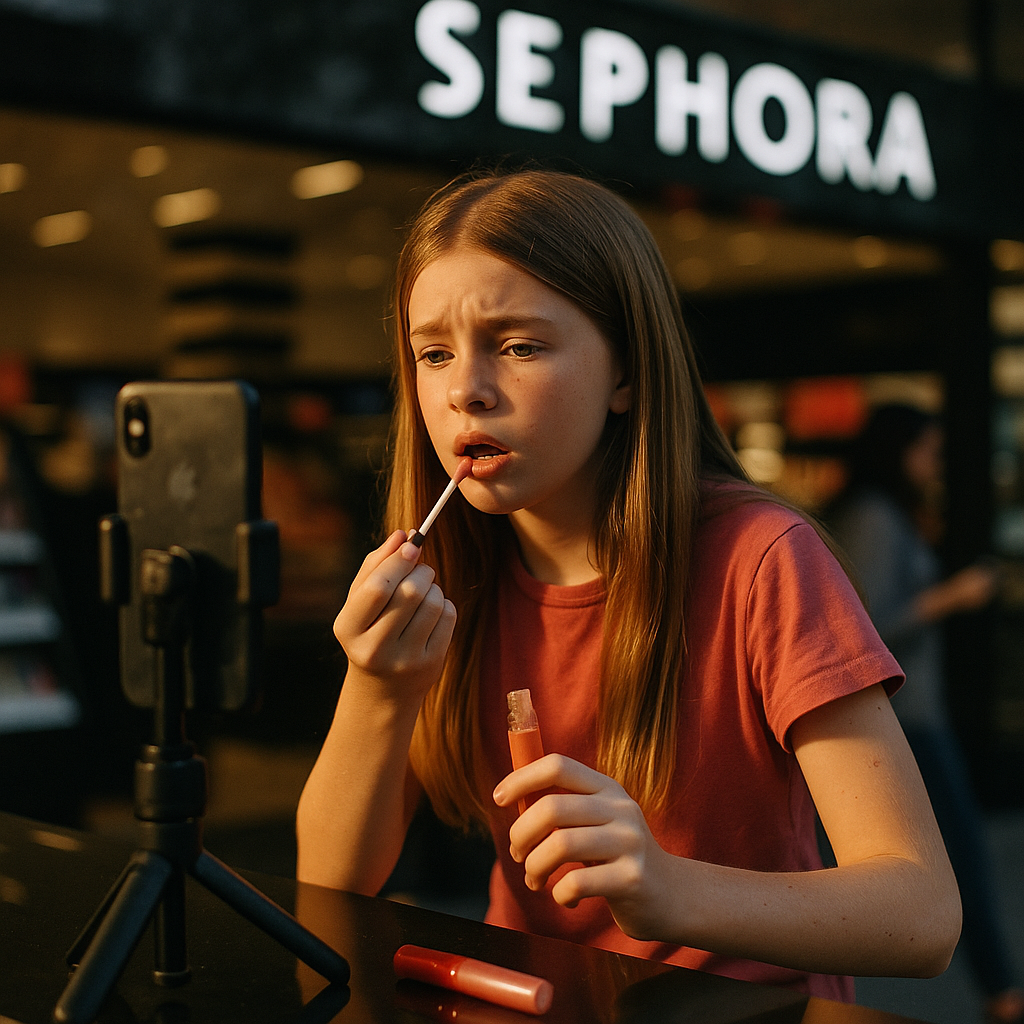
One viral clip of a ten-year-old smearing $68 retinol serum on her face cost Sephora more than a PR headache — it triggered a full-scale creator vetting overhaul that beauty brands are still scrambling to replicate. If your influencer program touches skincare, wellness, or anything with an “anti-aging” claim on the label, this case study is your warning shot.
The Backlash, In Brief
By late 2023, Sephora’s aisles had become a tween pilgrimage site. Kids as young as eight were buying Drunk Elephant, The Ordinary, and Rhode products marketed for adults, then filming “get ready with me” hauls that racked up millions of views. Dermatologists sounded alarms. Parents posted furious TikToks about $200 skincare receipts. Sephora didn’t create this trend directly — but its affiliate and gifting programs had quietly fueled it by seeding product to creators whose audiences skewed far younger than the brand’s stated demographic.
The retailer eventually rolled out a “Skincare Is Not One Size Fits All” campaign and pulled back some kids’-focused in-store displays. But the real story, for marketers, isn’t the apology tour. It’s what happened behind the scenes to the creator vetting process.
The core failure wasn’t a rogue influencer. It was a vetting process that measured engagement and follower count but never asked who’s actually watching.
Why Audience Demographics Broke the Old Vetting Model
Most influencer vetting stacks in beauty and CPG are built around three checks: follower authenticity, engagement rate, and brand safety keywords. None of those catch a 34-year-old creator with a 45% under-13 audience.
That’s the gap Sephora fell into. A creator can have a completely clean content history — no profanity, no controversial takes — and still have an audience that skews dramatically younger than platforms admit publicly. TikTok’s own terms require users to be 13+, but enforcement is porous, and plenty of “adult” beauty influencers have comment sections flooded with kid-coded usernames and phrases. Standard vetting tools weren’t built to flag that pattern because it’s not about the creator’s behavior. It’s about who’s consuming it.
This is the blind spot: brand safety vetting historically asks “is this creator safe to associate with?” It rarely asks “is this creator’s audience safe to market to?” Those are different questions, and beauty brands conflated them for years.
The Regulatory Pressure Nobody Saw Coming
Add to this the tightening regulatory environment. The Federal Trade Commission has increased scrutiny of advertising that reaches children, and state-level laws modeled on California’s Age-Appropriate Design Code are pushing platforms and advertisers toward stricter age-assurance standards. Marketers who assume “we don’t target kids” as a legal shield are misreading the risk. If your product ends up disproportionately consumed and promoted to minors — even unintentionally, via creator audience composition — regulators and plaintiffs’ attorneys are increasingly willing to argue that intent doesn’t matter as much as effect.
Europe’s approach is even less forgiving. The UK’s Information Commissioner’s Office has been explicit that marketing reaching child audiences triggers data protection and advertising standards obligations regardless of the advertiser’s target demo. Brands running global influencer programs can’t treat this as a US-only compliance issue.
What the Vetting Overhaul Actually Looked Like
Sephora and its agency partners didn’t publish a detailed playbook, but industry reporting and vendor case studies point to a few concrete shifts that beauty and wellness brands adopted in response:
- Audience age modeling, not just follower counts. Third-party tools now estimate audience age distribution using comment language patterns, profile signals, and engagement timing (school hours vs. evenings matter more than you’d think).
- Comment section audits as a standard vetting step. Instead of spot-checking a creator’s own posts, teams started scanning the comment sections for kid-coded slang, school references, and parent complaints.
- Category-specific age thresholds. Retinol, exfoliants, and “anti-aging” formulas got flagged as high-risk categories requiring stricter audience verification than, say, lip gloss or body mist.
- Contractual morality and audience clauses. Influencer contracts started including explicit audience-composition warranties, giving brands legal grounds to pull creators whose audience skewed too young after the fact.
- Packaging and messaging review tied to creator brief. Briefs began instructing creators to avoid “GRWM” framing that implicitly invites young viewers to mimic adult routines.
None of this is exotic technology. It’s mostly process discipline that beauty brands had deprioritized because engagement was too good to interrogate.
The Uncomfortable Math Behind the Delay
Here’s the thing nobody likes to say out loud: tween-adjacent beauty content converts extraordinarily well. Kids influence household purchasing, and “unboxing” content from young creators drives genuine parental spend. Brands had every commercial incentive to look the other way on audience composition, right up until the backlash made the reputational cost outweigh the sales lift.
That’s not a Sephora-specific failure. It’s a structural one. Any brand relying on affiliate-style, high-volume creator programs is vulnerable to the same math, especially in beauty, supplements, and fitness categories where the line between “aspirational content” and “kid-targeted content” is blurry by design.
Building a Vetting Process That Actually Catches This
If you’re running or auditing an influencer program with any tween-adjacent risk, here’s where to start:
- Run audience demographic estimation on every creator before onboarding, not just influencers with obvious kid content. Adult-presenting creators with young audiences are the actual blind spot.
- Set category-based risk tiers. Retinol, prescription-adjacent skincare, and anything with active ingredient warnings should trigger the highest scrutiny.
- Audit comments quarterly, not just at onboarding. Audiences shift. A creator who was 90% adult six months ago can drift younger as trends change.
- Write audience-composition clauses into contracts. Give legal and compliance teams the ability to terminate quickly if audience data reveals a problem post-launch.
- Loop in compliance and legal earlier in the creator selection process, not after a campaign goes live. Sephora’s overhaul reportedly involved pulling brand safety and legal teams directly into vetting workflows that used to sit entirely with marketing.
Engagement rate tells you if content works. It tells you nothing about who it’s working on — and that distinction is now a compliance issue, not just a brand safety one.
How This Compares to Other Vetting Failures
Beauty isn’t the only category learning this lesson the hard way. Supplement brands have faced similar scrutiny over creators making unverified health claims to impressionable audiences, which is part of why more sophisticated AI-driven vetting approaches have gained traction across CPG generally. The pattern is consistent: brands that treat vetting as a one-time checkbox get burned; brands that treat it as continuous monitoring catch problems before they go viral.
Skincare and wellness brands running shoppable UGC programs are also rethinking creator selection criteria, as seen in how one skincare brand rebuilt its CPA strategy around tighter creator-audience alignment rather than pure reach. The throughline across these cases: audience quality now matters more than audience size, and the brands catching up fastest are the ones building that into their AI vetting stack early.
What This Means for Budget and Platform Selection
There’s a practical operational shift here too. Programs that lean heavily on affiliate-style, high-volume nano and micro-creator seeding, the kind covered in case studies like Chamberlain Coffee’s retail nano-creator strategy or Liquid Death’s nano-creator approach, need audience vetting built into the discovery tooling itself. You can’t manually review comment sections across 500 creators. That only works with automated demographic scoring layered into your influencer discovery platform from day one.
This also changes vendor selection conversations. When evaluating creator marketing platforms, ask vendors directly: does your tool estimate audience age distribution, or only follower authenticity? Most legacy platforms were built for bot detection, not demographic risk. That’s a different product requirement, and beauty, supplement, and wellness brands should be pushing vendors on it now, not after their own version of the Sephora headline.
Industry data from eMarketer shows influencer marketing spend continuing to climb across beauty and personal care, which means the exposure surface is only growing. More budget flowing into creator programs without corresponding investment in audience vetting is exactly how the next Sephora-style headline gets written.
A Quick Gut-Check for Marketing Leaders
Ask yourself honestly: if a regulator or journalist pulled the comment sections on your top twenty influencer partners tomorrow, would you be comfortable with what they found? If you don’t know the answer, that’s the vetting gap. Fixing it costs a fraction of what a viral backlash costs, and it’s a lot less expensive than a coordinated boycott campaign or an FTC inquiry.
For more on how brands are rebuilding trust after public missteps, the Poppi trust-rebuilding case study offers a useful parallel: reactive campaigns help, but structural fixes to the vetting process are what actually prevent repeat incidents.
Bottom line: Audit your current creator roster for audience-age risk this quarter, not next fiscal year. Build demographic scoring into your vetting stack before a viral clip forces the conversation for you.
Frequently Asked Questions
What exactly triggered Sephora’s tween beauty backlash?
Viral videos showed young children using adult anti-aging and retinol skincare products, often after seeing similar routines from influencers and other kids on TikTok. Dermatologists and parents criticized both the marketing ecosystem and retailers for making these products so accessible to a younger audience.
Is Sephora legally responsible for who buys and promotes its products?
Not directly for purchases, but retailers and brands face growing scrutiny over marketing practices, including influencer content, that reaches minors even unintentionally. Regulatory bodies like the FTC have signaled increased interest in advertising effects on children, regardless of stated target demographics.
How do brands actually measure a creator’s audience age?
Modern vetting tools estimate age distribution using signals like comment language patterns, engagement timing, profile metadata, and cross-referencing follower accounts. It’s not perfectly precise, but it’s far more reliable than assuming an adult-presenting creator has an adult audience.
Does this only apply to beauty and skincare brands?
No. Any category with age-sensitive products or claims, including supplements, wellness, alcohol-adjacent products, and financial services, faces similar audience vetting risk. The Sephora case is simply the most visible recent example in beauty specifically.
What’s the fastest fix for a brand with no audience vetting process today?
Start with a comment-section audit of your top-spending creators and set category-based risk tiers for products with active ingredients or age-sensitive claims. Layer in automated audience demographic scoring before your next campaign cycle rather than waiting for a full platform overhaul.
Top Influencer Marketing Agencies
The leading agencies shaping influencer marketing in 2026
Agencies ranked by campaign performance, client diversity, platform expertise, proven ROI, industry recognition, and client satisfaction. Assessed through verified case studies, reviews, and industry consultations.
Moburst

-
2

The Shelf
Boutique Beauty & Lifestyle Influencer AgencyA data-driven boutique agency specializing exclusively in beauty, wellness, and lifestyle influencer campaigns on Instagram and TikTok. Best for brands already focused on the beauty/personal care space that need curated, aesthetic-driven content.Clients: Pepsi, The Honest Company, Hims, Elf Cosmetics, Pure LeafVisit The Shelf → -
3

Audiencly
Niche Gaming & Esports Influencer AgencyA specialized agency focused exclusively on gaming and esports creators on YouTube, Twitch, and TikTok. Ideal if your campaign is 100% gaming-focused — from game launches to hardware and esports events.Clients: Epic Games, NordVPN, Ubisoft, Wargaming, Tencent GamesVisit Audiencly → -
4

Viral Nation
Global Influencer Marketing & Talent AgencyA dual talent management and marketing agency with proprietary brand safety tools and a global creator network spanning nano-influencers to celebrities across all major platforms.Clients: Meta, Activision Blizzard, Energizer, Aston Martin, WalmartVisit Viral Nation → -
5

The Influencer Marketing Factory
TikTok, Instagram & YouTube CampaignsA full-service agency with strong TikTok expertise, offering end-to-end campaign management from influencer discovery through performance reporting with a focus on platform-native content.Clients: Google, Snapchat, Universal Music, Bumble, YelpVisit TIMF → -
6

NeoReach
Enterprise Analytics & Influencer CampaignsAn enterprise-focused agency combining managed campaigns with a powerful self-service data platform for influencer search, audience analytics, and attribution modeling.Clients: Amazon, Airbnb, Netflix, Honda, The New York TimesVisit NeoReach → -
7

Ubiquitous
Creator-First Marketing PlatformA tech-driven platform combining self-service tools with managed campaign options, emphasizing speed and scalability for brands managing multiple influencer relationships.Clients: Lyft, Disney, Target, American Eagle, NetflixVisit Ubiquitous → -
8

Obviously
Scalable Enterprise Influencer CampaignsA tech-enabled agency built for high-volume campaigns, coordinating hundreds of creators simultaneously with end-to-end logistics, content rights management, and product seeding.Clients: Google, Ulta Beauty, Converse, AmazonVisit Obviously →