


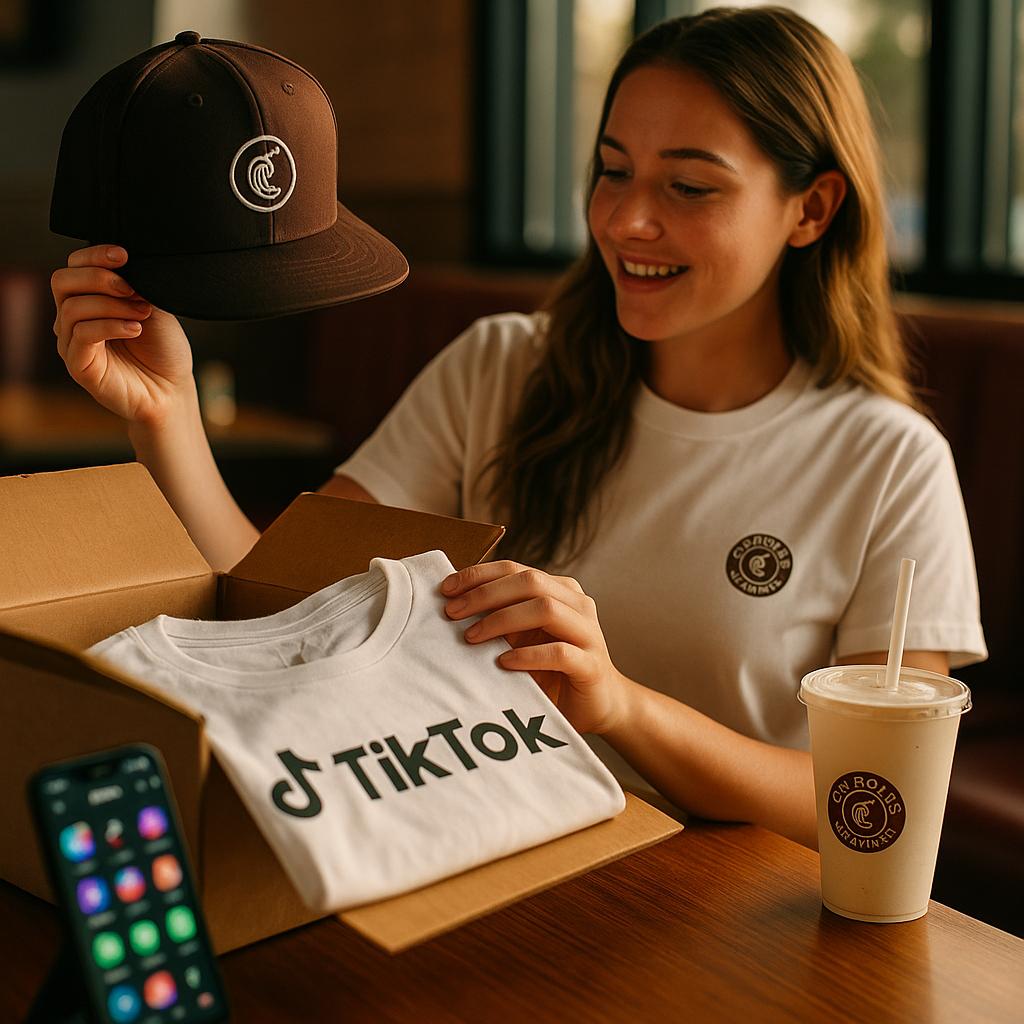
Sixty minutes. That’s how long it took Chipotle’s limited-edition TikTok Shop merch drop to sell out completely, no restock, no extension. If your brand is still treating TikTok Shop as an afterthought bolted onto your influencer program, this TikTok Shop merch drop case study should change your calculus.
Chipotle didn’t do this with a celebrity endorsement or a seven-figure media buy. It did it with a stack of nano-creators, a comedy-first brief, and a scarcity mechanic that would make any streetwear brand jealous. Here’s how the operation actually worked, and what it means for brands trying to replicate it without burning budget on the wrong levers.
Why This Drop Matters Beyond Chipotle
Limited merch drops aren’t new. Supreme built an empire on them. What’s new is a legacy fast-casual chain running the exact same scarcity playbook natively inside a shoppable social feed, using unpaid or low-cost nano-creators instead of paid media to generate the demand signal.
TikTok Shop’s GMV crossed $33 billion globally last year, according to eMarketer estimates, and merch/apparel is one of the fastest-growing verticals on the platform. Chipotle’s drop is a proof point that the format works for non-endemic categories too — a burrito chain selling hoodies and hats, not through a separate DTC store, but inside the same app where the comedy content lives.
The sell-out wasn’t the product. It was the distribution mechanic: dozens of small creators posting near-identical comedic hooks within a tight window, funneling directly into a countdown-timed, quantity-capped TikTok Shop listing.
That’s the operational lesson. Brand teams evaluating TikTok Shop often ask “do we need a celebrity or a mega-influencer to move volume?” The honest answer, increasingly, is no. What you need is coordinated timing and a product mechanic that rewards fast action.
The Nano-Creator Comedy Engine
Chipotle didn’t brief ten creators to talk about “quality ingredients” or “the Chipotle lifestyle.” It briefed them to be funny about the merch itself — the absurdity of a burrito-branded bucket hat, the specific type of person who’d wear a foil-embossed hoodie, the in-jokes only regulars would get.
This mirrors a pattern we’ve tracked repeatedly at Influencers Time: brands that let nano-creators write their own comedic angle consistently outperform brands that hand down scripted talking points. Look at Chubbies’ comedy formula for shorts drops, or Duolingo’s unhinged owl playbook — both rely on creator-native humor rather than brand-safe messaging.
Nano-creators (generally defined as 1,000–50,000 followers) were the right choice here for three operational reasons:
- Cost efficiency: Nano fees run a fraction of macro-influencer rates, letting Chipotle activate 30-40 creators for the cost of one mid-tier partnership.
- Authenticity signal: Audiences read nano content as less produced, more “one of us” — critical for a comedy format where overproduction kills the joke.
- Algorithmic spread: TikTok’s For You distribution doesn’t require follower size to reward engagement velocity. A nano-creator video with strong completion rate can outperform a macro post with weak retention.
None of this is new theory — it’s the same math behind Zara’s nano-creator store-fit strategy and Blueland’s sustainability positioning. What Chipotle added was the scarcity clock.
Scarcity as a Conversion Mechanic, Not a Marketing Gimmick
Here’s the part brand strategists tend to underrate: scarcity only works as a sales driver if it’s operationally real. Chipotle capped quantities publicly, displayed live inventory counters inside the TikTok Shop listing, and gave creators an exact go-live time to coordinate posting.
That coordination is the unlock. Instead of a slow trickle of organic posts over days, dozens of creators posted within the same 30-60 minute window, creating a compressed wave of discovery traffic that hit the product page simultaneously. TikTok Shop’s algorithm rewards that kind of velocity spike with additional organic reach, which compounds the effect.
Compare this to Skimpies’ zero-paid-spend #1 ranking — another case where coordinated organic timing, not ad spend, drove the ranking outcome. Scarcity plus timed creator coordination is becoming a repeatable pattern across TikTok Shop winners, not a one-off fluke.
A live inventory counter isn’t decoration. It’s a conversion trigger that turns “I’ll think about it” into “I need to buy this in the next four minutes.”
What the Compliance Team Needs to Know
Any campaign running dozens of nano-creators simultaneously creates FTC disclosure exposure at scale. If even a handful of those creators forget #ad or #sponsored tags, or bury disclosure below the fold in a caption, the brand carries the risk, not the creator.
Chipotle’s legal and brand teams reportedly built disclosure requirements directly into the creator brief and TikTok Shop’s affiliate terms, which auto-tag commission-based content in many cases. That’s a meaningful risk reducer, but it’s not a substitute for manual spot-checks.
Brands running high-volume nano-creator activations should look at how other companies have hardened this process. Chubbies built FTC compliance directly into its drop workflow, and Ollie’s credentialing approach shows how vetting creators upfront reduces downstream cleanup. Review the FTC’s endorsement guidance directly if you’re building or auditing a similar brief.
The operational rule: disclosure compliance can’t be an afterthought bolted on after content goes live. It has to be in the brief, in the contract, and spot-checked before the drop goes public.
The Attribution Question Every CMO Will Ask
“How do we know the nano-creators actually drove the sale, versus organic Chipotle fans who would’ve bought anyway?” Fair question, and one that’s harder to answer definitively than brand teams would like.
TikTok Shop’s native attribution gives you affiliate link clicks and commission-tagged conversions, which is a real signal, but it undercounts view-through influence — the person who saw three creator videos, didn’t click any of them, then searched the product directly in-app two days later.
Brands serious about proving ROI on these drops should be building attribution models that go beyond last-click affiliate data. L’Oréal Luxe’s AI attribution graph is a useful reference model here — it stitches together multi-touch creator influence rather than crediting a single link. Without that layer, brand teams risk undervaluing the nano-creator wave that built demand before the affiliate click ever happened.
For teams benchmarking overall platform performance, Statista’s social commerce data and Sprout Social’s platform benchmarks are useful sanity checks against your own attribution numbers.
Could This Backfire? The Risks Nobody’s Talking About
Sell-outs generate headlines, but they also generate angry customers. Anyone who saw the TikTok wave, clicked through, and found “sold out” within the hour is a person who just had a mildly negative brand experience. Do that too often, or too aggressively, and scarcity marketing starts to read as manufactured frustration rather than genuine demand.
There’s also a supply chain risk baked into this model: if the drop under-produces to guarantee sell-out optics, and demand data suggests you left real revenue on the table, someone in finance is going to ask why inventory planning didn’t account for the nano-creator wave more accurately.
The fix isn’t complicated, but it does require discipline. Run smaller test drops first. Use creator engagement data from the test to forecast the real drop’s inventory. And always have a “coming back soon” messaging plan ready for the disappointed traffic — don’t just let them hit a dead product page.
How to Adapt This Playbook Without Chipotle’s Brand Recognition
Not every brand has Chipotle’s cultural cachet or built-in fan base. That’s fine — the mechanic scales down. Smaller brands running similar plays, like Chamberlain Coffee’s nano-creator retail push or Vessi’s single-demo referral engine, prove that the format doesn’t require a massive existing audience. It requires a tight brief, real scarcity, and creators who are actually funny.
Here’s a condensed operational checklist for brand teams building their first coordinated nano-creator drop:
- Recruit 15-40 nano-creators in the 1K-50K follower range with genuine audience overlap with your product category.
- Brief for comedic angle, not brand messaging — give creative freedom within brand-safe guardrails.
- Set a hard go-live window and coordinate posting times across all creators.
- Cap real inventory and display live counters inside the TikTok Shop listing.
- Build FTC disclosure requirements into the contract, not just a verbal reminder.
- Pre-build a multi-touch attribution view so you’re not relying solely on last-click affiliate data.
If your team needs a lower-risk starting point, review how Grind Coffee’s 90-second script drove TikTok Shop live conversion — it’s a smaller-scale version of the same coordinated-timing principle.
Chipotle’s drop proves the mechanic works at scale. The next question for your team isn’t whether to try it, it’s whether your inventory planning and legal review can move fast enough to keep up with an hour-long sales window.
FAQs
What made Chipotle’s TikTok Shop merch drop sell out so quickly?
A combination of coordinated nano-creator posting within a tight time window, genuinely capped inventory with live counters, and comedic content that creators were given freedom to write themselves rather than scripted brand messaging.
Why did Chipotle use nano-creators instead of celebrities or macro-influencers?
Nano-creators are cheaper to activate at volume, read as more authentic for comedic content, and their coordinated posting created an engagement velocity spike that TikTok’s algorithm rewarded with additional organic reach.
How does TikTok Shop attribution work for campaigns like this?
TikTok Shop tracks affiliate link clicks and commission-tagged conversions natively, but this last-click model tends to undercount view-through influence from creators whose content built demand without a direct click.
What compliance risks come with running dozens of nano-creators at once?
The main risk is inconsistent FTC disclosure across a large creator roster. Brands should build disclosure requirements directly into contracts and briefs, and spot-check posts before and after the drop goes live.
Can smaller brands without Chipotle’s brand recognition replicate this strategy?
Yes. The mechanic depends on tight creative briefs, real scarcity, and coordinated timing rather than existing brand fame. Smaller brands have run similar coordinated nano-creator drops successfully at lower budgets.
Top Influencer Marketing Agencies
The leading agencies shaping influencer marketing in 2026
Agencies ranked by campaign performance, client diversity, platform expertise, proven ROI, industry recognition, and client satisfaction. Assessed through verified case studies, reviews, and industry consultations.
Moburst

-
2

The Shelf
Boutique Beauty & Lifestyle Influencer AgencyA data-driven boutique agency specializing exclusively in beauty, wellness, and lifestyle influencer campaigns on Instagram and TikTok. Best for brands already focused on the beauty/personal care space that need curated, aesthetic-driven content.Clients: Pepsi, The Honest Company, Hims, Elf Cosmetics, Pure LeafVisit The Shelf → -
3

Audiencly
Niche Gaming & Esports Influencer AgencyA specialized agency focused exclusively on gaming and esports creators on YouTube, Twitch, and TikTok. Ideal if your campaign is 100% gaming-focused — from game launches to hardware and esports events.Clients: Epic Games, NordVPN, Ubisoft, Wargaming, Tencent GamesVisit Audiencly → -
4

Viral Nation
Global Influencer Marketing & Talent AgencyA dual talent management and marketing agency with proprietary brand safety tools and a global creator network spanning nano-influencers to celebrities across all major platforms.Clients: Meta, Activision Blizzard, Energizer, Aston Martin, WalmartVisit Viral Nation → -
5

The Influencer Marketing Factory
TikTok, Instagram & YouTube CampaignsA full-service agency with strong TikTok expertise, offering end-to-end campaign management from influencer discovery through performance reporting with a focus on platform-native content.Clients: Google, Snapchat, Universal Music, Bumble, YelpVisit TIMF → -
6

NeoReach
Enterprise Analytics & Influencer CampaignsAn enterprise-focused agency combining managed campaigns with a powerful self-service data platform for influencer search, audience analytics, and attribution modeling.Clients: Amazon, Airbnb, Netflix, Honda, The New York TimesVisit NeoReach → -
7

Ubiquitous
Creator-First Marketing PlatformA tech-driven platform combining self-service tools with managed campaign options, emphasizing speed and scalability for brands managing multiple influencer relationships.Clients: Lyft, Disney, Target, American Eagle, NetflixVisit Ubiquitous → -
8

Obviously
Scalable Enterprise Influencer CampaignsA tech-enabled agency built for high-volume campaigns, coordinating hundreds of creators simultaneously with end-to-end logistics, content rights management, and product seeding.Clients: Google, Ulta Beauty, Converse, AmazonVisit Obviously →